
Immanuel Kant
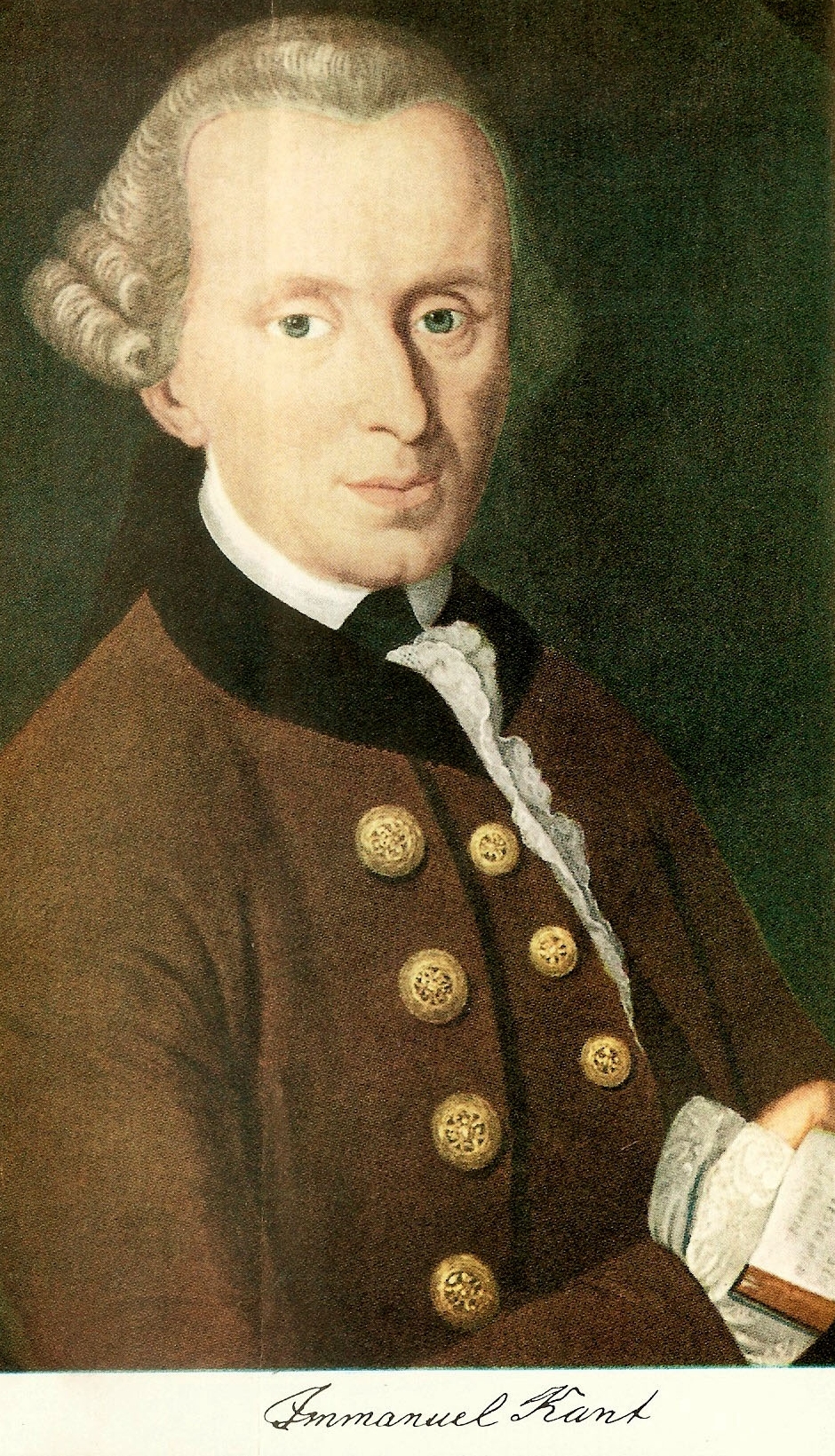
0 sources
Immanuel Kant
Summary
Immanuel Kant is a human[1]. His place of birth was Königsberg[2]. He was born on April 22, 1724[3]. He died in Königsberg[4]. He died on February 12, 1804[5]. He worked as a philosopher[6], anthropologist[7], physicist[8], librarian[9], and writer[10]. He ranks in the top 0.29% of human entities by monthly Wikipedia readership (41,444 views/month, #2,915 of 1,000,298).[11]
Key Facts
- Immanuel Kant's place of birth was Königsberg[2].
- Immanuel Kant died in Königsberg[4].
- Immanuel Kant was born on April 22, 1724[3].
- Immanuel Kant died on February 12, 1804[5].
- Burial took place at Königsberg Cathedral[12].
- Immanuel Kant's father was Johann Georg Kant[13].
- Immanuel Kant's mother was Anna Regina Kant[14].
- Immanuel Kant held citizenship in Kingdom of Prussia[15].
- German was Immanuel Kant's native language[16].
- Immanuel Kant is identified as part of the Germans ethnic group[17].
- Immanuel Kant worked as a philosopher[6].
- Immanuel Kant's professions included anthropologist[7].
- Immanuel Kant worked as a physicist[8].
- Immanuel Kant's professions included librarian[9].
- Immanuel Kant's professions included writer[10].
- Immanuel Kant worked as a pedagogue[18].
- Immanuel Kant's field of work was epistemology[19].
- Immanuel Kant's field of work was metaphysics[20].
- Immanuel Kant's field of work was ethics[21].
- Immanuel Kant was employed by University of Königsberg[22].
- Immanuel Kant's education included a stint at University of Königsberg[23].
- Immanuel Kant's education included a stint at Collegium Fridericianum[24].
- Immanuel Kant was a member of Royal Prussian Academy of Sciences[25].
- Immanuel Kant was a member of Russian Academy of Sciences[26].
- Immanuel Kant's religion is recorded as Lutheranism[27].
Product Details
The following facts are restated verbatim from public-domain and CC0 open-data sources — every line is independently verifiable against the named source's catalog.
MusicBrainz — CC0 open music encyclopedia
-
Type: Person[28]
-
Country: DE[29]
-
Began / founded: 1724-04-22[30]
-
Ended / dissolved: 1804-02-12[31]
-
MusicBrainz ID: 871df78f-da37-417c-a898-a5de1f9a7ef0[32]
Body
Origins and Family
Immanuel Kant's place of birth was Königsberg[2]. He was born on April 22, 1724[3]. His father was Johann Georg Kant[13]. His mother was Anna Regina Kant[14]. He is identified as part of the Germans ethnic group[17]. German was his native language[16].
Education
Educated at University of Königsberg[23], a university[33], in Kingdom of Prussia[34], founded in 1544[35] and Collegium Fridericianum[24], a school[36], in Germany[37], founded in 1698[38].
Career and Affiliations
Recorded occupations include philosopher[6], anthropologist[7], physicist[8], librarian[9], writer[10], and pedagogue[18]. Fields of work include epistemology[19], a branch of philosophy[39]; metaphysics[20], a branch of philosophy[40]; and ethics[21], a branch of philosophy[41]. Among Immanuel Kant's employers was University of Königsberg[22]. Doctoral students include Anton Friedrich Justus Thibaut[42], a jurist[43], 1772–1840[44], of Kingdom of Hanover[45], specialised in jurisprudence[46]; Markus Herz[47], a philosopher[48], 1747–1803[49], of Kingdom of Prussia[50], specialised in epistemology[51]; Johann Gottlieb Fichte[52], a philosopher[53], 1762–1814[54], of Germany[55], specialised in philosophy[56]; and Karl Leonhard Reinhold[57], a philosopher[58], 1757–1823[59], of Austrian Empire[60], awarded the honorary doctor of the University of Jena[61].
Personal Life
Immanuel Kant's religion is recorded as Lutheranism[27].
Death and Burial
Immanuel Kant died on February 12, 1804[5]. He passed away in Königsberg[4]. He is buried at Königsberg Cathedral[12].
Why It Matters
Immanuel Kant ranks in the top 0.29% of human entities by monthly Wikipedia readership (41,444 views/month, #2,915 of 1,000,298).[11] He has Wikipedia articles in 30 language editions, a strong signal of global cultural recognition.[62] He is known by 34 alternative names across languages and contexts.[63]
He has been cited as an influence by Fyodor Dostoyevsky[64], a translator[65], 1821–1881[66], of Russia[67]; Friedrich Nietzsche[68], a philosopher[69], 1844–1900[70], of Kingdom of Prussia[71], specialised in classical philology[72]; Michel Foucault[73], an anthropologist[74], 1926–1984[75], of France[76], specialised in philosophy[77]; Hannah Arendt[78], a philosopher[79], 1906–1975[80], of Prussia[81], awarded the Guggenheim Fellowship[82], specialised in political philosophy[83]; Arthur Schopenhauer[84], a university teacher[85], 1788–1860[86], of Kingdom of Prussia[87], specialised in metaphysics[88]; and Georg Wilhelm Friedrich Hegel[89], a philosopher[90], 1770–1831[91], of Kingdom of Württemberg[92], awarded the Order of the Red Eagle 3rd Class[93], specialised in philosophy[94].
FAQs
Where was Immanuel Kant born?
Immanuel Kant's place of birth was Königsberg[2].
Where did Immanuel Kant die?
Immanuel Kant died in Königsberg[4].
Who were Immanuel Kant's parents?
Immanuel Kant's father was Johann Georg Kant[13]. Immanuel Kant's mother was Anna Regina Kant[14].
What did Immanuel Kant do for work?
Immanuel Kant worked as philosopher[6], anthropologist[7], physicist[8], librarian[9], and writer[10].
Where did Immanuel Kant go to school?
Immanuel Kant was educated at University of Königsberg[23] and Collegium Fridericianum[24].
Who did Immanuel Kant influence?
Immanuel Kant has been cited as an influence by Fyodor Dostoyevsky[64], Friedrich Nietzsche[68], Michel Foucault[73], and Hannah Arendt[78].