
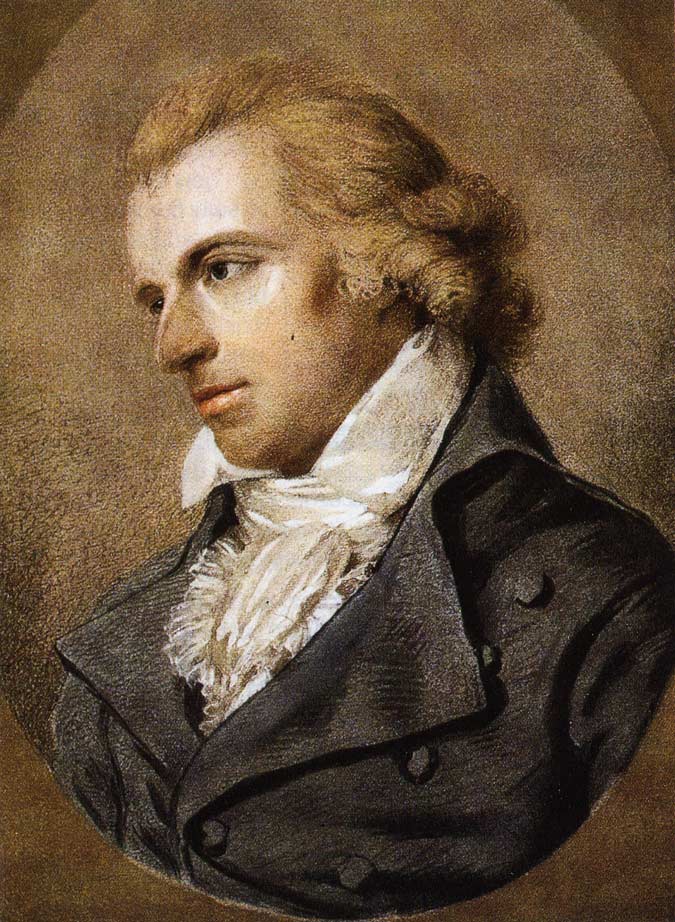
Friedrich Schiller
0 sources
Friedrich Schiller
Summary
Friedrich Schiller is a human[1]. His place of birth was Marbach am Neckar[2]. He was born on November 10, 1759[3]. He passed away in Weimar[4]. He died on May 9, 1805[5]. He worked as a poet[6], philosopher[7], historian[8], librarian[9], and physician writer[10]. He ranks in the top 0.65% of human entities by monthly Wikipedia readership (1,896 views/month, #6,514 of 1,000,298).[11]
Key Facts
- Born in Marbach am Neckar[2], Friedrich Schiller…
- Friedrich Schiller died in Weimar[4].
- Friedrich Schiller was born on November 10, 1759[3].
- Friedrich Schiller died on May 9, 1805[5].
- Friedrich Schiller is buried at Jacobsfriedhof Weimar[12].
- Burial took place at Weimarer Fürstengruft[13].
- Friedrich Schiller's father was Johann Kaspar Schiller[14].
- Friedrich Schiller's mother was Elisabeth Dorothea Schiller[15].
- Among Friedrich Schiller's spouses was Charlotte von Lengefeld[16].
- A child of Friedrich Schiller was Emilie von Gleichen-Rußwurm[17].
- A child of Friedrich Schiller was Ernst von Schiller[18].
- A child of Friedrich Schiller was Karl von Schiller[19].
- A child of Friedrich Schiller was Caroline Junot[20].
- Friedrich Schiller held citizenship in Duchy of Württemberg[21].
- Friedrich Schiller held citizenship in Saxe-Weimar[22].
- Friedrich Schiller is identified as part of the Germans ethnic group[23].
- Friedrich Schiller worked as a poet[6].
- Friedrich Schiller's professions included philosopher[7].
- Friedrich Schiller worked as a historian[8].
- Friedrich Schiller's professions included librarian[9].
- Friedrich Schiller worked as a physician writer[10].
- Friedrich Schiller worked as a playwright[24].
- Friedrich Schiller's field of work was poetry[25].
- Friedrich Schiller's field of work was theatre art[26].
- Friedrich Schiller's field of work was philosophy[27].
Body
Origins and Family
Friedrich Schiller's place of birth was Marbach am Neckar[2]. He was born on November 10, 1759[3]. His father was Johann Kaspar Schiller[14]. His mother was Elisabeth Dorothea Schiller[15]. He is identified as part of the Germans ethnic group[23].
Education
Educated at Karlsschule Stuttgart[28], a school[29], in Germany[30] and Friedrich Schiller University Jena[31], a public university[32], in Germany[33], founded in 1558[34], headquartered in Jena[35]. His doctoral advisor was Johann Wolfgang Döbereiner[36].
Career and Affiliations
Recorded occupations include poet[6], philosopher[7], historian[8], librarian[9], physician writer[10], and playwright[24]. Fields of work include poetry[25], a literary form[37]; theatre art[26], a performing arts genre[38]; philosophy[27], an academic discipline[39]; history[40], an academic discipline[41]; and literature[42], a type of arts[43]. Friedrich Schiller was employed by Friedrich Schiller University Jena[44].
Personal Life
Among Friedrich Schiller's spouses was Charlotte von Lengefeld[16]. Children include Emilie von Gleichen-Rußwurm[17], a writer[45], 1804–1872[46], of Saxe-Weimar-Eisenach[47]; Ernst von Schiller[18], a judge[48], 1796–1841[49], of Germany[50]; Karl von Schiller[19], a forestry scientist[51], 1793–1857[52]; and Caroline Junot[20], an educator[53], 1799–1850[54]. His religion is recorded as Lutheranism[55].
Death and Burial
Friedrich Schiller died on May 9, 1805[5]. He died in Weimar[4]. The cause of death was tuberculosis[56]. Recorded place of burial include Jacobsfriedhof Weimar[12] and Weimarer Fürstengruft[13].
Works and Contributions
Things named for Friedrich Schiller include University of Jena[57], Schiller[58], Frederick Schiller Faust[59], Schaumrolle[60], Schiller International University[61], Schillerhaus[62], Schiller Memorial Prize[63], and Goethe and Schiller Archives[64].
Why It Matters
Friedrich Schiller ranks in the top 0.65% of human entities by monthly Wikipedia readership (1,896 views/month, #6,514 of 1,000,298).[11] He has Wikipedia articles in 29 language editions, a strong signal of global cultural recognition.[65] He is known by 142 alternative names across languages and contexts.[66]
He has been cited as an influence by Fyodor Dostoyevsky[67], a translator[68], 1821–1881[69], of Russia[70]; Ayn Rand[71], a playwright[72], 1905–1982[73], of Russian Empire[74], awarded the Prometheus Award - Hall of Fame[75], specialised in objectivism[76]; Alexander Pushkin[77], a poet[78], 1799–1837[79], of Russian Empire[80], specialised in study of history[81]; Jacques Rancière[82], a philosopher[83], b. 1940[84], of France[85], awarded the Commandeur des Arts et des Lettres[86], specialised in philosophy[87]; France Prešeren[88], a poet[89], 1800–1849[90], of Austrian Empire[91]; and Almeida Garrett[92], a writer[93], 1799–1854[94], of Kingdom of Portugal[95], awarded the Commander of the Order of the Immaculate Conception of Vila Viçosa[96].
Works attributed to him include Ode to Joy[97], For the Man Who Has Everything[98], The Robbers[99], Song of the Bell[100], William Tell[101], and Intrigue and Love[102]. Entities named for him include University of Jena[57], Schiller[58], Frederick Schiller Faust[59], Schaumrolle[60], Schiller International University[61], and Schillerhaus[62].
FAQs
Where was Friedrich Schiller born?
Born in Marbach am Neckar[2], Friedrich Schiller…
Where did Friedrich Schiller die?
Friedrich Schiller died in Weimar[4].
Who were Friedrich Schiller's parents?
Friedrich Schiller's father was Johann Kaspar Schiller[14]. Friedrich Schiller's mother was Elisabeth Dorothea Schiller[15].
Who was Friedrich Schiller married to?
Friedrich Schiller's spouses include Charlotte von Lengefeld[16].
What did Friedrich Schiller do for work?
Friedrich Schiller worked as poet[6], philosopher[7], historian[8], librarian[9], and physician writer[10].
Where did Friedrich Schiller go to school?
Friedrich Schiller was educated at Karlsschule Stuttgart[28] and Friedrich Schiller University Jena[31].
Who did Friedrich Schiller influence?
Friedrich Schiller has been cited as an influence by Fyodor Dostoyevsky[67], Ayn Rand[71], Alexander Pushkin[77], and Jacques Rancière[82].