
Friedrich Wilhelm Joseph Schelling
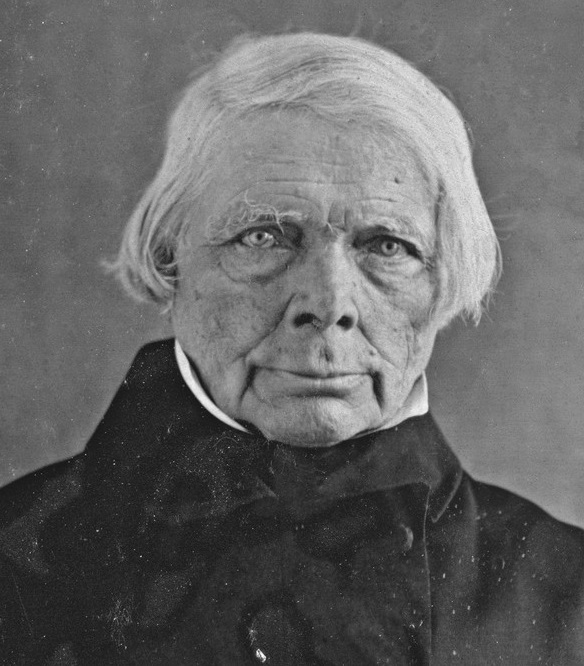
0 sources
Friedrich Wilhelm Joseph Schelling was born January 27, 1775, in Leonberg.[1][2][3][4][5][6][7][8][9][10][11][12][13][14][15] He held citizenship in the Kingdom of Württemberg and Switzerland.[15] He worked as a philosopher, university teacher, writer, and librettist.[1][12][13][14][15][16] He held the position of professor.
He was the child of Joseph Friedrich Schelling and Gottliebin Maria Schelling.[15][15] His siblings were Carl Eberhard Ritter von Schelling and August Ludwig Schelling.[15] His spouses were Pauline Gotter and Caroline Schelling (1803–1809).[15] His children were Clara Waitz, Hermann Schelling, Julie von Eichhorn, Carl Friedrich August Schelling, and Paul Heinrich Joseph Schelling.[15]
He was educated at the University of Tübingen, Leipzig University, and Tübinger Stift. He received the Pour le Mérite for Sciences and Arts order and the Bavarian Maximilian Order for Science and Art. He died August 20, 1854, in Bad Ragaz.[1][2][3][4][5][6][7][8][9][10][12][13][14][15].
Key Facts
- Father: Joseph Friedrich Schelling[10]
- Mother: Gottliebin Maria Schelling[11]
- Spouse: Pauline Gotter[12], Caroline Schelling[13]
- Child: Clara Waitz[14], Hermann Schelling[15], Julie von Eichhorn[16], Carl Friedrich August Schelling[17], Paul Heinrich Joseph Schelling[18]
- Country of citizenship: Kingdom of Württemberg[19], Switzerland[20]
- Field of work: natural philosophy[21], natural science[22], aesthetics[23], metaphysics[24], epistemology[25]
- Position held: professor[26]
- Employer: Ludwig-Maximilians-Universität München[27], University of Würzburg[28], Friedrich Schiller University Jena[29], Humboldt-Universität zu Berlin[30], Friedrich-Alexander-Universität Erlangen-Nürnberg[31]
- Educated at: Q131826027[32], University of Tübingen[33], Leipzig University[34], Tübinger Stift[35], Q137643128[36]
- Award received: Pour le Mérite for Sciences and Arts order[37], Bavarian Maximilian Order for Science and Art[38]
- Member of: Bavarian Academy of Sciences and Humanities[39], Hungarian Academy of Sciences[40], Royal Prussian Academy of Sciences[41]
- Religion or worldview: Lutheranism[42]
- Influenced by: Plato[43], Giordano Bruno[44], Jakob Böhme[45], Benedictus de Spinoza[46], Gottfried Wilhelm Leibniz[47], Immanuel Kant[48], Jean-Baptiste Robinet[49], Friedrich Heinrich Jacobi[50], Johann Gottfried Herder[51]
- Sex or gender: male[52]
- Movement: German idealism[53]
- Doctoral student: Ludwig Wihl[54], Georg Wilhelm Friedrich Hegel[55]
- Commons category: Friedrich Wilhelm Schelling[56]
- Archives at: Bavarian State Library[57], University Library of LMU Munich[58]
- Family name: Schelling[59]
- Given name: Friedrich[60], Wilhelm[61], Joseph[62]
Body
Works and Contributions
Things named for Friedrich Wilhelm Joseph Schelling include Schelling Price[63].
Why It Matters
Friedrich Wilhelm Joseph Schelling has Wikipedia articles in 29 language editions, a strong signal of global cultural recognition.[64] He is known by 89 alternative names across languages and contexts.[65]
He has been cited as an influence by Georg Wilhelm Friedrich Hegel[66], a philosopher[67], 1770–1831[68], of Kingdom of Württemberg[69], awarded the Order of the Red Eagle 3rd Class[70], specialised in philosophy[71]; Søren Kierkegaard[72], a philosopher[73], 1813–1855[74], of Kingdom of Denmark[75], specialised in philosophy[76]; Slavoj Žižek[77], a philosopher[78], b. 1949[79], of Slovenia[80], awarded the Ambassador of Science of the Republic of Slovenia[81], specialised in ideology[82]; Alexander von Humboldt[83], a geologist[84], 1769–1859[85], of Kingdom of Prussia[86], awarded the Merit Order of the Bavarian Crown[87], specialised in geobotany[88]; Jürgen Habermas[89], a sociologist[90], 1929–2026[91], of Germany[92], awarded the Geschwister-Scholl-Preis[93], specialised in philosophy[94]; and Nikolai Berdyaev[95], a philosopher[96], 1874–1948[97], of France[98], specialised in philosophy[99].
Entities named for him include Schelling Price[63].
His notable doctoral advisees include Georg Wilhelm Friedrich Hegel[100].
FAQs
Where was Friedrich Wilhelm Joseph Schelling born?
Friedrich Wilhelm Joseph Schelling was born in Leonberg[2].
Where did Friedrich Wilhelm Joseph Schelling die?
Friedrich Wilhelm Joseph Schelling died in Bad Ragaz[4].
Who were Friedrich Wilhelm Joseph Schelling's parents?
Friedrich Wilhelm Joseph Schelling's father was Joseph Friedrich Schelling[10]. Friedrich Wilhelm Joseph Schelling's mother was Gottliebin Maria Schelling[11].
Who was Friedrich Wilhelm Joseph Schelling married to?
Friedrich Wilhelm Joseph Schelling's spouses include Pauline Gotter[12] and Caroline Schelling[13].
What did Friedrich Wilhelm Joseph Schelling do for work?
Friedrich Wilhelm Joseph Schelling worked as a philosopher[5], university teacher[6], writer[7], and librettist[8].
Where did Friedrich Wilhelm Joseph Schelling go to school?
Friedrich Wilhelm Joseph Schelling was educated at Q131826027[32], University of Tübingen[33], Leipzig University[34], and Tübinger Stift[35].
What awards did Friedrich Wilhelm Joseph Schelling receive?
Honors received include Pour le Mérite for Sciences and Arts order[37] and Bavarian Maximilian Order for Science and Art[38].
Who did Friedrich Wilhelm Joseph Schelling influence?
Friedrich Wilhelm Joseph Schelling has been cited as an influence by Georg Wilhelm Friedrich Hegel[66], Søren Kierkegaard[72], Slavoj Žižek[77], and Alexander von Humboldt[83].