
Europe
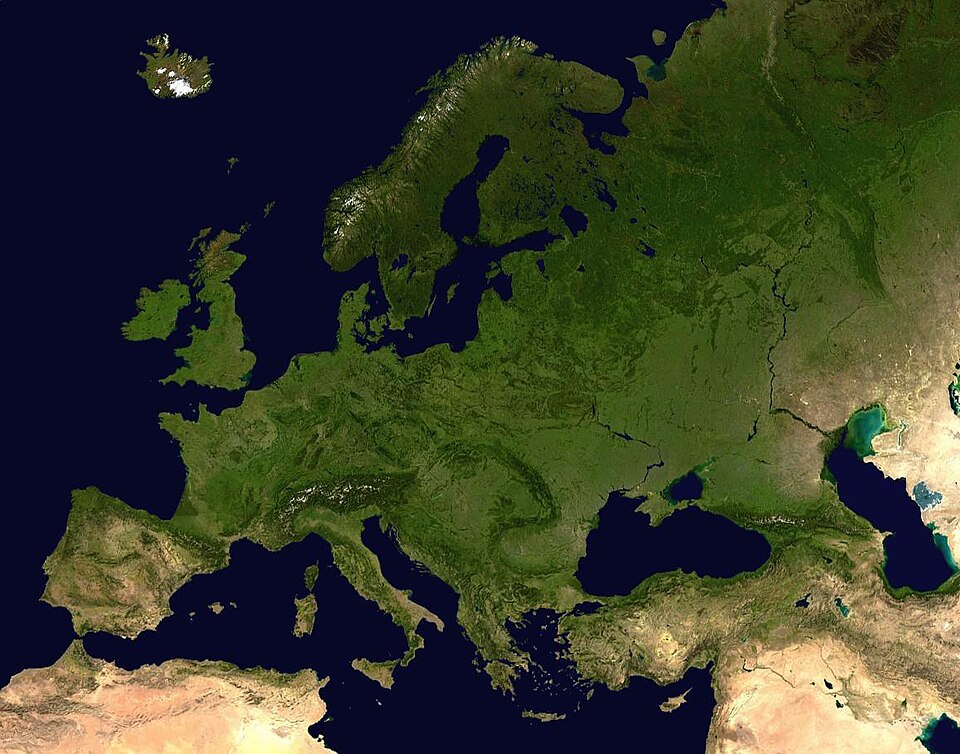
0 sources
Europe
Summary
Europe is a part of the world[1]. Europe draws 51,275 Wikipedia views per month (part_of_the_world category, ranking #1 of 2).[2]
Key Facts
- Europe's instance of is recorded as part of the world[3].
- Europe's instance of is recorded as continent[4].
- Europe's instance of is recorded as region[5].
- Europe's instance of is recorded as geographic location[6].
- Europe's shares border with is recorded as Asia[7].
- Europa is named after Europe[8].
- Europe's flag is recorded as flag of Europe[9].
- Europe is part of Eurasia[10].
- Europe is part of Ostfeste[11].
- Europe is part of Earth[12].
- Europe is part of Afro-Eurasia[13].
- Europe's Commons category is recorded as Europe[14].
- Europe's located in time zone is recorded as Europe/Athens[15].
- Europe's located in time zone is recorded as Europe/Brussels[16].
- Europe's located in time zone is recorded as Europe/London[17].
- Europe's located in time zone is recorded as Kaliningrad Time[18].
- Europe's located in time zone is recorded as Europe/Moscow[19].
- Europe's located in time zone is recorded as Europe/Istanbul[20].
- Europe comprises Northern Europe[21].
- Europe comprises Northeastern Europe[22].
- Europe comprises Southern Europe[23].
- Europe comprises Southeast Europe[24].
- Europe comprises Eastern Europe[25].
- Europe comprises Western Europe[26].
- Europe comprises Central Europe[27].
Body
Geography
Part of include Eurasia[10], a supercontinent[28]; Ostfeste[11], a region[29]; Earth[12], an inner planet of the Solar System[30], founded in -4540000000[31]; and Afro-Eurasia[13], a supercontinent[32].
Physical Characteristics
Population counts include {'amount': '+423000000'}[33], {'amount': '+320000000'}[34], {'amount': '+742452000'}[35], {'amount': '+741447158'}[36], {'amount': '+694500000'}[37], and {'amount': '+744831142'}[38].
Designation and Status
Recorded instance of include part of the world[3], continent[4], region[5], and geographic location[6].
History and Context
Europa is named after Europe[8].
Cultural Significance
Things named for Europe include Indo-European[39], a language family[40]; euro[41], a currency[42], in Austria[43], founded in 1999[44]; Europe[45], a musical group[46], founded in 1978[47]; Europa-Park[48]; European Central Bank[49]; Atlantropa[50]; European Article Number[51]; and Eurasian Nuthatch[52].
Why It Matters
Europe draws 51,275 Wikipedia views per month (part_of_the_world category, ranking #1 of 2).[2] Europe has Wikipedia articles in 30 language editions, a strong signal of global cultural recognition.[53] Europe is known by 66 alternative names across languages and contexts.[54]
Europe has been cited as an influence by Lydia Cabrera[55], an anthropologist[56], 1899–1991[57], of Cuba[58], awarded the honorary doctor of the University of Miami[59], specialised in anthropological research[60].
Entities named for Europe include Indo-European[39], a language family[40]; euro[41], a currency[42], in Austria[43], founded in 1999[44]; Europe[45], a musical group[46], founded in 1978[47]; Europa-Park[48]; European Central Bank[49]; and Atlantropa[50].
FAQs
Who did Europe influence?
Europe has been cited as an influence by Lydia Cabrera[55].