
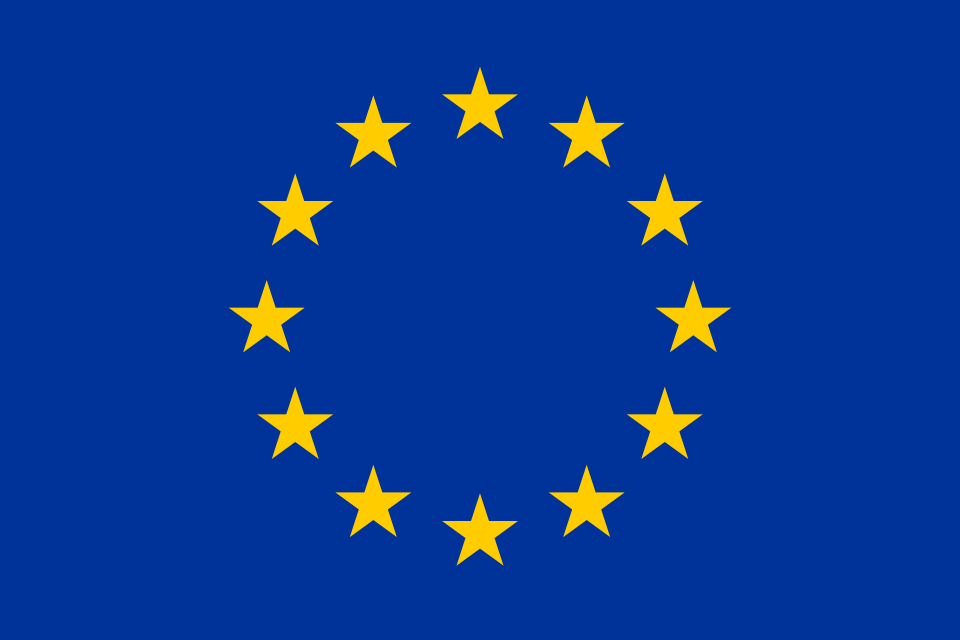
flag of Europe
flag design created by the Council of Europe, then adopted as one of the official symbols of the European Communities and later of the European Union (EU); use Q98055852 for the "flag of EU" and Q105339315 for the "flag of the Council of Europe"
Press Enter · cited answer in seconds
0 sources
flag of Europe
Summary
flag of Europe is a symbols of Europe[1]. It draws 3,196 Wikipedia views per month (symbols_of_europe category, ranking #1 of 1).[2]
Key Facts
- flag of Europe's instance of is recorded as symbols of Europe[3].
- flag of Europe's instance of is recorded as flag[4].
- flag of Europe's instance of is recorded as logo[5].
- flag of Europe's instance of is recorded as flag design[6].
- flag of Europe's depicts is recorded as field[7].
- flag of Europe's depicts is recorded as five-pointed star[8].
- flag of Europe's designed by is recorded as Arsène Heitz[9].
- flag of Europe's designed by is recorded as Paul Michel Gabriel Lévy[10].
- flag of Europe's Commons category is recorded as Flag of Europe[11].
- flag of Europe's color is recorded as blue[12].
- flag of Europe's color is recorded as gold[13].
- flag of Europe's Unicode character is recorded as 🇪🇺[14].
- December 8, 1955 marks the founding of flag of Europe[15].
- flag of Europe's described at URL is recorded as https://european-union.europa.eu/principles-countries-history/symbols/european-flag_en[16].
- flag of Europe's applies to jurisdiction is recorded as Europe[17].
- flag of Europe's represents is recorded as Council of Europe[18].
- flag of Europe's represents is recorded as European Economic Community[19].
- flag of Europe's partially coincident with is recorded as flag of the European Union[20].
- flag of Europe's shape is recorded as rectangle[21].
- flag of Europe's different from is recorded as flag of the Council of Europe[22].
- flag of Europe's different from is recorded as flag of the European Union[23].
- flag of Europe's aspect ratio is recorded as 3:2[24].
Body
Designation and Status
Recorded instance of include symbols of Europe[3], flag[4], logo[5], and flag design[6].
History and Context
December 8, 1955 marks the founding of flag of Europe[15].
Why It Matters
flag of Europe draws 3,196 Wikipedia views per month (symbols_of_europe category, ranking #1 of 1).[2] It has Wikipedia articles in 29 language editions, a strong signal of global cultural recognition.[25] It is known by 41 alternative names across languages and contexts.[26]