
Lev Shestov
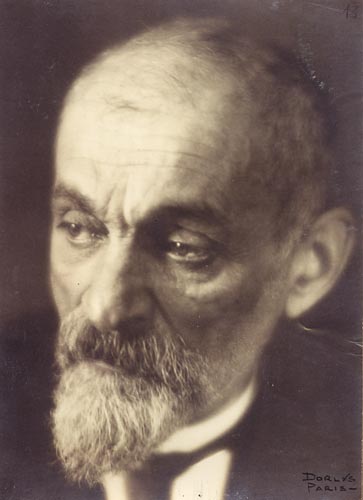
0 sources
Summary
Lev Shestov was born on January 24, 1866[1], in Kyiv[2]. He died on November 19, 1938[3], in Paris[4]. He worked as a philosopher[5], university teacher[6], writer[7], and literary historian[8]. He ranks in the top 0.71% of human entities by monthly Wikipedia readership (3,035 views/month, #7,133 of 1,000,298).[9]
Key Facts
- Date of birth: 1866[10]
- Place of burial: Cimetière de l'avenue Pierre-Grenier[11]
- Child: Nathalie Baranoff[12]
- Country of citizenship: Russian Empire[13], Russian Soviet Federative Socialist Republic[14], Switzerland[15], France[16]
- Field of work: philosophy[17], existentialism[18]
- Employer: University of Paris[19]
- Educated at: Imperial Moscow University[20], Imperial University of St. Vladimir[21]
- Notable work: Athens and Jerusalem[22]
- Influenced by: Friedrich Nietzsche[23], Søren Kierkegaard[24], Fyodor Dostoyevsky[25], Leo Tolstoy[26], Mikhail Lermontov[27], Anton Chekhov[28], William Shakespeare[29], Benedictus de Spinoza[30], Heinrich Heine[31], Martin Luther[32], Blaise Pascal[33], Plotinus[34]
- Sex or gender: male[35]
- Movement: Christian existentialism[36], Western philosophy[37]
- Commons category: Lev Shestov[38]
- Academic degree: university candidate[39]
- Family name: Shestov[40], Shvartsman[41]
- Given name: Lev[42]
- Topic's main category: Category:Lev Shestov[43]
- Commons gallery: Lev Shestov[44]
- Described by source: Nordisk familjebok[45], Jewish Encyclopedia of Brockhaus and Efron[46], Small Brockhaus and Efron Encyclopedic Dictionary[47], Brockhaus and Efron Encyclopedic Dictionary[48], Granat Encyclopedic Dictionary[49], Great Soviet Encyclopedia (1926–1947)[50]
- Languages spoken, written or signed: Russian[51]
Why It Matters
Lev Shestov has Wikipedia articles in 22 language editions, a strong signal of global cultural recognition.[52] He is known by 82 alternative names across languages and contexts.[53]
He has been cited as an influence by Friedrich Nietzsche[54], a philosopher[55], 1844–1900[56], of Kingdom of Prussia[57], specialised in classical philology[58]; Albert Camus[59], a writer[60], 1913–1960[61], of France[62], awarded the Nobel Prize in Literature[63], specialised in philosophy[64]; Georges Bataille[65], a librarian[66], 1897–1962[67], of France[68], specialised in philosophy[69]; Emil Cioran[70], a philosopher[71], 1911–1995[72], of Romania[73], awarded the Prix Rivarol[74], specialised in philosophy[75]; and Czesław Miłosz[76], a poet[77], 1911–2004[78], of Poland[79], awarded the Nobel Prize in Literature[80], specialised in fiction[81].
FAQs
Where was Lev Shestov born?
Lev Shestov was born in Kyiv[2].
Where did Lev Shestov die?
Lev Shestov passed away in Paris[4].
What did Lev Shestov do for work?
Lev Shestov worked as a philosopher[5], university teacher[6], writer[7], and literary historian[8].
Where did Lev Shestov go to school?
Lev Shestov was educated at Imperial Moscow University[20] and Imperial University of St. Vladimir[21].
Who did Lev Shestov influence?
Lev Shestov has been cited as an influence by Friedrich Nietzsche[54], Albert Camus[59], Georges Bataille[65], and Emil Cioran[70].