
Bertrand Russell
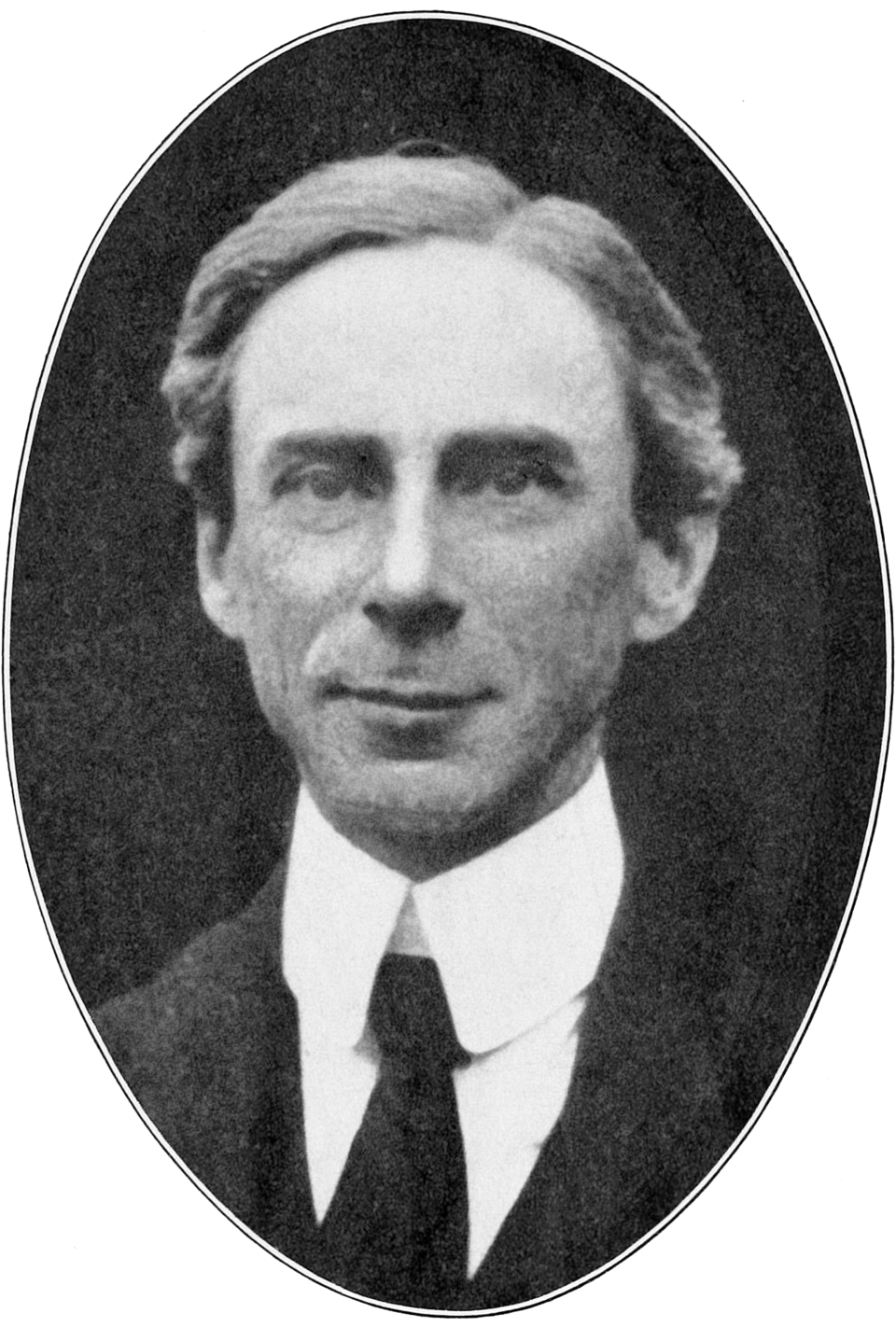
0 sources
Bertrand Russell
Summary
Bertrand Russell is a human[1]. Born in Trellech[2], he… he passed away in Plas Penrhyn[3]. He worked as a mathematician[4], social critic[5], essayist[6], logician[7], and epistemologist[8]. He ranks in the top 0.43% of human entities by monthly Wikipedia readership (46,238 views/month, #4,252 of 1,000,298).[9]
Key Facts
- Bertrand Russell was born in Trellech[2].
- Bertrand Russell died in Plas Penrhyn[3].
- Bertrand Russell passed away in Penrhyndeudraeth[10].
- Bertrand Russell's father was John Russell, Viscount Amberley[11].
- Bertrand Russell's mother was Katharine Russell, Viscountess Amberley[12].
- Bertrand Russell was married to Alys Pearsall Smith[13].
- Among Bertrand Russell's spouses was Dora Russell[14].
- Bertrand Russell was married to Patricia Russell, Countess Russell[15].
- Among Bertrand Russell's spouses was Edith Finch Russell[16].
- A child of Bertrand Russell was Conrad Russell, 5th Earl Russell[17].
- A child of Bertrand Russell was John Russell, 4th Earl Russell[18].
- A child of Bertrand Russell was Katharine Tait[19].
- A child of Bertrand Russell was Lady Harriet Russell[20].
- Bertrand Russell held citizenship in United Kingdom[21].
- Bertrand Russell held citizenship in United Kingdom of Great Britain and Ireland[22].
- English was Bertrand Russell's native language[23].
- Bertrand Russell's professions included mathematician[4].
- Bertrand Russell worked as a social critic[5].
- Bertrand Russell's professions included essayist[6].
- Bertrand Russell's professions included logician[7].
- Bertrand Russell's professions included epistemologist[8].
- Bertrand Russell worked as a philosopher of language[24].
- Bertrand Russell's field of work was set theory[25].
- Bertrand Russell's field of work was history of philosophy[26].
- Bertrand Russell's field of work was epistemology[27].
Product Details
The following facts are restated verbatim from public-domain and CC0 open-data sources — every line is independently verifiable against the named source's catalog.
MusicBrainz — CC0 open music encyclopedia
-
Type: Person[28]
-
Country: GB[29]
-
Began / founded: 1872-05-18[30]
-
Ended / dissolved: 1970-02-02[31]
-
MusicBrainz ID: d90bd17d-7720-4c93-b386-ec8080672241[32]
Body
Origins and Family
Bertrand Russell's place of birth was Trellech[2]. His father was John Russell, Viscount Amberley[11]. His mother was Katharine Russell, Viscountess Amberley[12]. English was his native language[23].
Education
Educated at University of Cambridge[33], a collegiate university[34], in United Kingdom[35], founded in 1209[36], headquartered in Cambridge[37] and Trinity College[38], a college of the University of Cambridge[39], in United Kingdom[40], founded in 1546[41], headquartered in Cambridge[42]. Bertrand Russell's doctoral advisor was Alfred North Whitehead[43].
Career and Affiliations
Recorded occupations include mathematician[4], social critic[5], essayist[6], logician[7], epistemologist[8], and philosopher of language[24]. Fields of work include set theory[25], a branch of mathematics[44]; history of philosophy[26], an aspect of history[45]; epistemology[27], a branch of philosophy[46]; logic[47], a class used in Universal Decimal Classification[48]; mathematics[49]; and philosophy of language[50]. Employers include University of California, Los Angeles[51], Harvard University[52], University of Chicago[53], and London School of Economics and Political Science[54]. Bertrand Russell held the position of member of the House of Lords[55]. He supervised Ludwig Wittgenstein as a doctoral student[56].
Recognition
Awards received include Nobel Prize in Literature[57], Fellow of the Royal Society[58], Medal Carl von Ossietzky[59], Kalinga Prize[60], De Morgan Medal[61], and Sylvester Medal[62].
Personal Life
Spouses include Alys Pearsall Smith[13], a writer[63], 1867–1951[64], of United States[65]; Dora Russell[14], a feminist[66], 1894–1986[67], of United Kingdom[68]; Patricia Russell, Countess Russell[15], a governess[69], 1910–2004[70], of United Kingdom[71]; and Edith Finch Russell[16], a biographer[72], 1900–1978[73], of United States[74]. Children include Conrad Russell, 5th Earl Russell[17], a politician[75], 1937–2004[76], of United Kingdom[77]; John Russell, 4th Earl Russell[18], a politician[78], 1921–1987[79], of United Kingdom[80]; Katharine Tait[19], an essayist[81], 1923–2021[82], of United Kingdom[83]; and Lady Harriet Russell[20], b. 1930[84]. Bertrand Russell's religion is recorded as agnosticism[85]. Political affiliations include Labour Party[86] and Liberal Party[87].
Death and Burial
Recorded place of death include Plas Penrhyn[3], a house[88], in United Kingdom[89] and Penrhyndeudraeth[10], a community[90], in United Kingdom[91].
Works and Contributions
Things named for Bertrand Russell include Russell's paradox[92], Russell's Teapot[93], Russell Tribunal[94], and Bertrand[95].
Why It Matters
Bertrand Russell ranks in the top 0.43% of human entities by monthly Wikipedia readership (46,238 views/month, #4,252 of 1,000,298).[9] He has Wikipedia articles in 30 language editions, a strong signal of global cultural recognition.[96] He is known by 89 alternative names across languages and contexts.[97]
He has been cited as an influence by Stephen Hawking[98], a theoretical physicist[99], 1942–2018[100], of United Kingdom[101], awarded the Albert Einstein Medal[102], specialised in general relativity[103]; Jawaharlal Nehru[104], a writer[105], 1889–1964[106], of British Raj[107], awarded the Bharat Ratna[108], specialised in natural science[109]; Ludwig Wittgenstein[110], a philosopher of language[111], 1889–1951[112], of United Kingdom[113], awarded the Medal for Bravery[114], specialised in philosophy[115]; Richard Dawkins[116], an evolutionary biologist[117], b. 1941[118], of United Kingdom[119], awarded the Fellow of the Royal Society[120], specialised in ethology[121]; Buckminster Fuller[122], an architect[123], 1895–1983[124], of United States[125], awarded the Presidential Medal of Freedom[126], specialised in architect[127]; and Daniel Dennett[128], a philosopher[129], 1942–2024[130], of United States[131], awarded the Guggenheim Fellowship[132], specialised in philosophy of mind[133].
He is credited with the discovery of Russell's paradox[134], Berry paradox[135], logical atomism[136], and theory of descriptions[137]. Works attributed to him include Russell's paradox[138], Principia Mathematica[139], A History of Western Philosophy[140], Why I Am Not a Christian[141], Russell–Einstein Manifesto[142], and In Praise of Idleness and Other Essays[143]. Entities named for him include Russell's paradox[92], Russell's Teapot[93], Russell Tribunal[94], and Bertrand[95].
His notable doctoral advisees include Ludwig Wittgenstein[144].
FAQs
Where was Bertrand Russell born?
Born in Trellech[2], Bertrand Russell…
Where did Bertrand Russell die?
Bertrand Russell passed away in Plas Penrhyn[3].
Who were Bertrand Russell's parents?
Bertrand Russell's father was John Russell, Viscount Amberley[11]. Bertrand Russell's mother was Katharine Russell, Viscountess Amberley[12].
Who was Bertrand Russell married to?
Bertrand Russell's spouses include Alys Pearsall Smith[13], Dora Russell[14], Patricia Russell, Countess Russell[15], and Edith Finch Russell[16].
What did Bertrand Russell do for work?
Bertrand Russell worked as mathematician[4], social critic[5], essayist[6], logician[7], and epistemologist[8].
Where did Bertrand Russell go to school?
Bertrand Russell was educated at University of Cambridge[33] and Trinity College[38].
What awards did Bertrand Russell receive?
Honors received include Nobel Prize in Literature[57], Fellow of the Royal Society[58], Medal Carl von Ossietzky[59], and Kalinga Prize[60].
Who did Bertrand Russell influence?
Bertrand Russell has been cited as an influence by Stephen Hawking[98], Jawaharlal Nehru[104], Ludwig Wittgenstein[110], and Richard Dawkins[116].
What did Bertrand Russell discover?
Bertrand Russell is credited as discoverer of Russell's paradox[134], Berry paradox[135], logical atomism[136], and theory of descriptions[137].