
Pietro Perugino
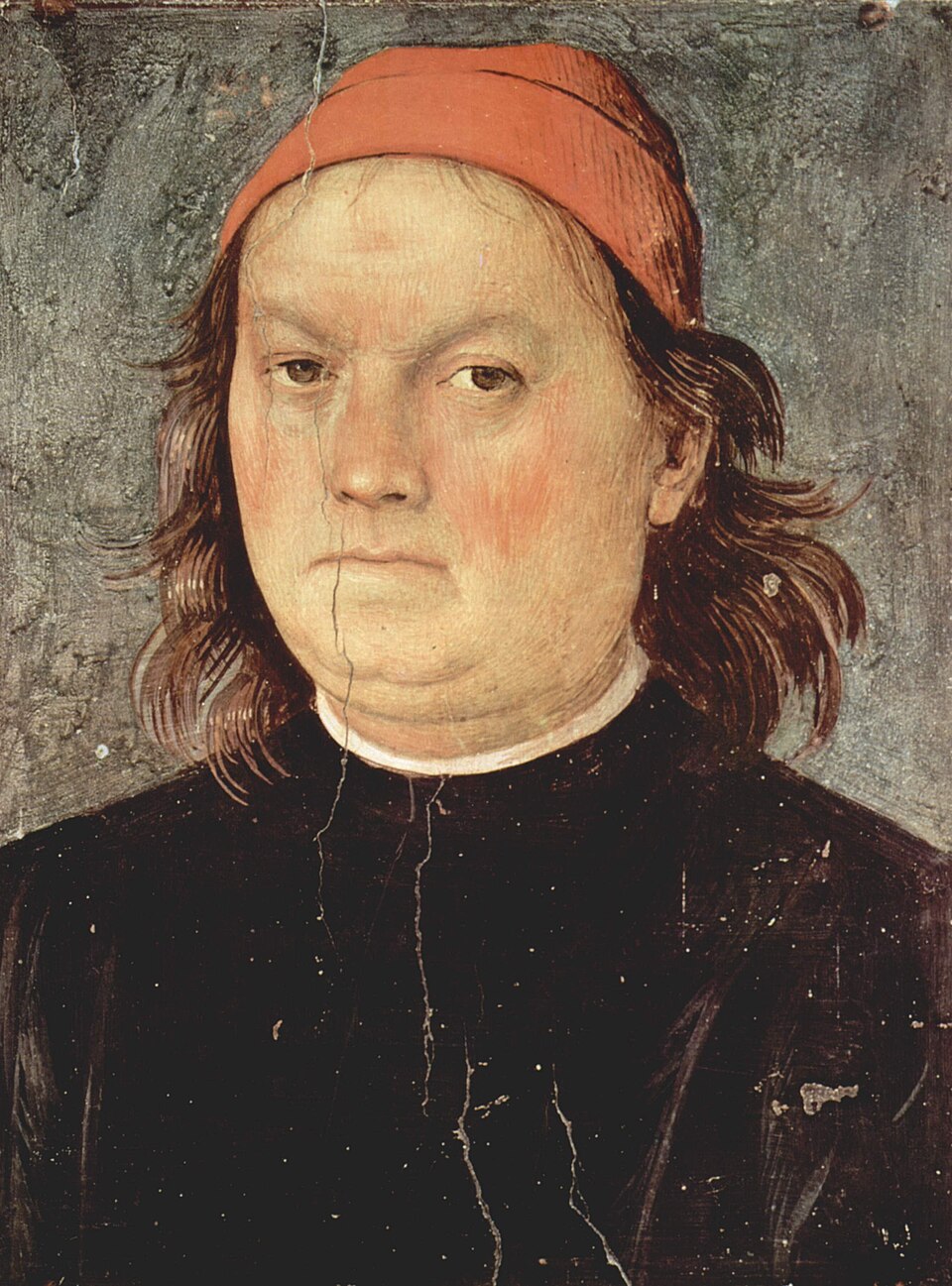
0 sources
Summary
Pietro Perugino was born on 1448[1] in Città della Pieve[2]. He died on 1523[3] in Fontignano[4]. He worked as a painter[5]. He ranks in the top 0.71% of human entities by monthly Wikipedia readership (2,332 views/month, #7,119 of 1,000,298).[6]
Key Facts
- Place of burial: Chiesa dell'Annunziata[7]
- Country of citizenship: Italy[8]
- Field of work: painting[9]
- Student: Raphael[10], Girolamo Genga[11], Lo Spagna[12], Giannicola di Paolo[13], Eusebio da San Giorgio[14], Gerino da Pistoia[15]
- Notable work: Pietà[16], God the Father with Two Saints[17], Banner of Justice[18], Saint Bartholomew[19], Saint John the Baptist; Saint Lucy[20], Saint Sebastian and Saint Apollonia[21], Self-portrait of Pietro Perugino[22], The Virgin and Child with Saint John[23], Crucifixion of Christ with saints[24], Lamentation over the Dead Christ[25], Madonna and Child[26], Madonna in Glory with Saints[27], Nativity of Pala di Sant'Agostino[28], predella of Annunziata altarpiece[29]
- Sex or gender: male[30]
- Movement: Umbrian school[31], Renaissance[32]
- Commons category: Pietro Perugino[33]
- Cause of death: Black Death[34]
- Family name: Perugino[35]
- Given name: Pietro[36]
- Topic's main category: Category:Pietro Perugino[37]
- Commons gallery: Pietro Perugino[38]
- Work location: Florence[39], Cerqueto[40], Rome[41], Perugia[42]
- Described at URL: https://pop.culture.gouv.fr/recherche[43]
- Student of: Andrea del Verrocchio[44]
- Manner of death: natural causes[45]
- Depicted by: Self-portrait of Pietro Perugino[46], Perugino e Raffaello. Modelli nobili per Sassoferrato a Perugia[47], “Italy’s best Maestro”. Perugino and his day[48]
- Described by source: Teutsche Academie der Edlen Bau- Bild- und Mahlerey-Künste[49]
Why It Matters
Pietro Perugino has Wikipedia articles in 27 language editions, a strong signal of global cultural recognition.[50] He is known by 124 alternative names across languages and contexts.[51]
He has been cited as an influence by Pinturicchio[52], a painter[53], 1454–1513[54], of Signoria di Perugia[55], specialised in painting[56].
FAQs
Where was Pietro Perugino born?
Pietro Perugino's place of birth was Città della Pieve[2].
Where did Pietro Perugino die?
Pietro Perugino died in Fontignano[4].
What did Pietro Perugino do for work?
Pietro Perugino worked as a painter[5].
Who did Pietro Perugino influence?
Pietro Perugino has been cited as an influence by Pinturicchio[52].