
Esperanto
0 sources
Summary
Esperanto is a planned language[1]. Esperanto draws 35,805 Wikipedia views per month (planned language category, ranking #1 of 6).[2]
Key Facts
- Discoverer or inventor: L. L. Zamenhof[3]
- Creator: L. L. Zamenhof[4]
- Influenced by: Greek[5], Latin[6], English[7], Polish[8], Yiddish[9], Russian[10], German[11], French[12]
- Country: Esperantujo[13]
- Instance of: international auxiliary language[14], a posteriori language[15], constructed language[16], modern language[17]
- Anthem: La Espero[18]
- Movement: Esperanto movement[19]
- Named after: Doktoro Esperanto[20]
- Follows: Proto-Esperanto[21]
- Flag: Esperanto flag[22]
- Writing system: Esperanto alphabet[23], Esperanto Braille[24]
- Has use: second language[25], lingua franca[26]
- Commons category: Esperanto[27]
- Wikimedia language code: eo[28]
- Foundational text: Unua Libro[29]
- Country of origin: Russian Empire[30]
- Inception: July 26, 1887[31]
- Location of formation: Warsaw[32]
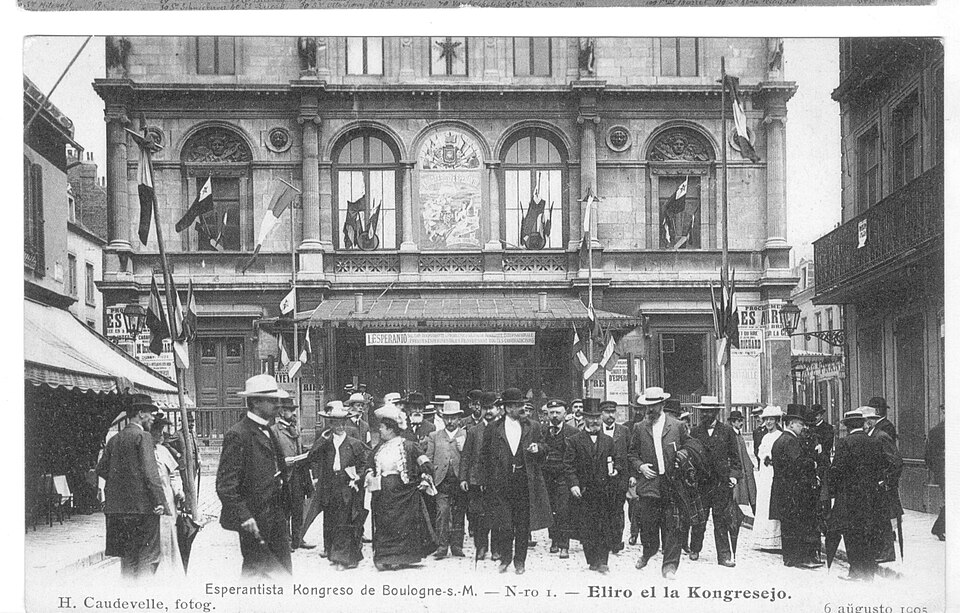
- Significant event: World Esperanto Congress 1905[33], World Esperanto Congress 1987[34]
- Topic's main category: Category:Esperanto[35]
- Described at URL: https://cals.info/language/esperanto/[36], https://database.conlang.org/view/?conlang=195[37], http://inthelandofinventedlanguages.com/index.php?page=languages&id=83[38]
- Language regulatory body: Academy of Esperanto[39]
Body
Influence
Things named for Esperanto include Esperanto Filmoj[40], a film production company[41], founded in 2004[42]; Nursultan Nazarbayev Street[43], a street[44], in Russia[45]; Zamenhof-Esperanto object[46]; Department of Planned Languages and Esperanto Museum[47], an Esperanto museum[48], in Austria[49], founded in 1927[50]; Esperanto Island[51], an island[52]; Esperantic Studies Foundation[53], an Esperanto foundation[54], in Canada[55], founded in 1968[56], headquartered in Montreal[57]; Esperantoplatz, Berlin[58], a square[59], in Germany[60], founded in 1991[61]; and Esperanto Bridge[62], a footbridge[63], in Poland[64].
Why It Matters
Esperanto has Wikipedia articles in 30 language editions, a strong signal of global cultural recognition.[65] Esperanto is known by 44 alternative names across languages and contexts.[66]
Entities named for Esperanto include Esperanto Filmoj[40], a film production company[41], founded in 2004[42]; Nursultan Nazarbayev Street[43], a street[44], in Russia[45]; Zamenhof-Esperanto object[46]; Department of Planned Languages and Esperanto Museum[47], an Esperanto museum[48], in Austria[49], founded in 1927[50]; Esperanto Island[51], an island[52]; and Esperantic Studies Foundation[53], an Esperanto foundation[54], in Canada[55], founded in 1968[56], headquartered in Montreal[57].