
L. L. Zamenhof
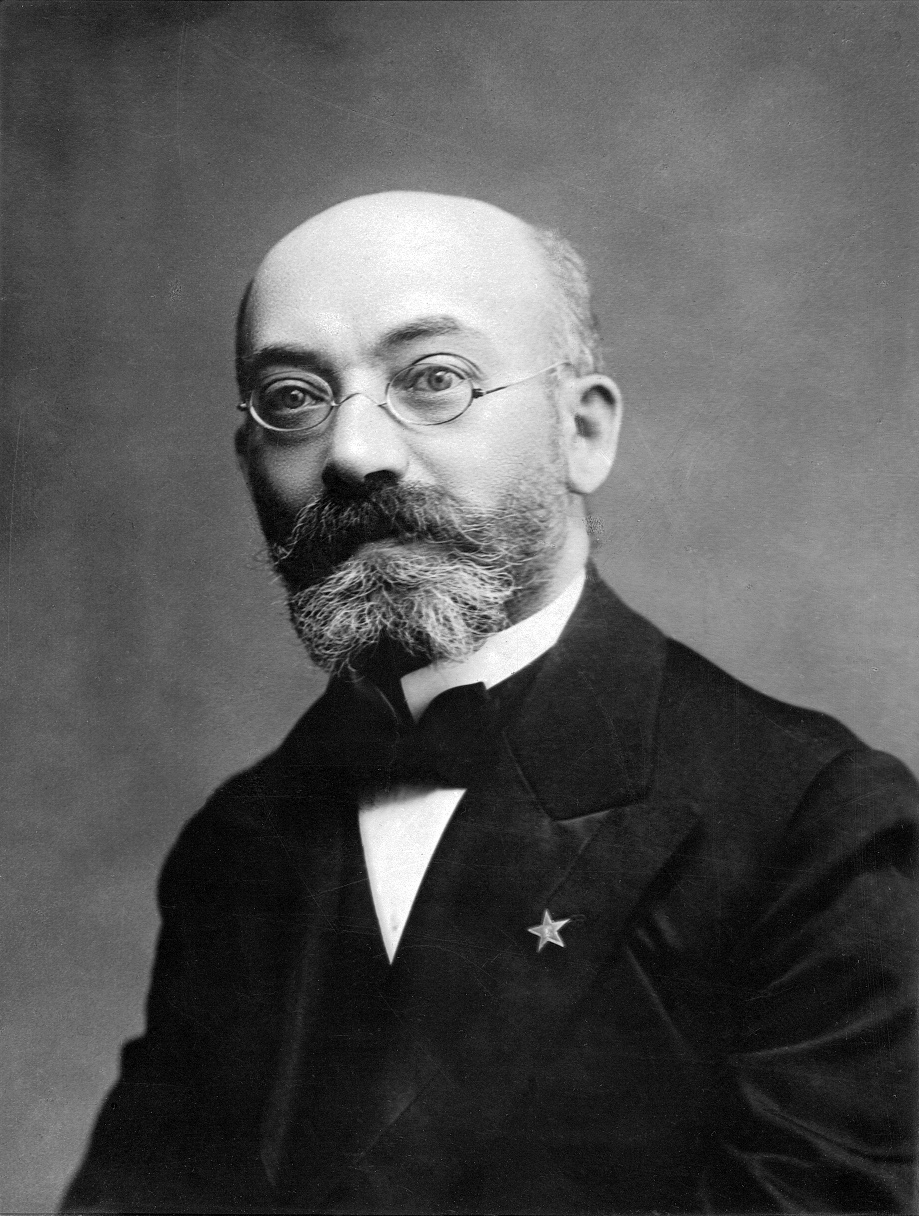
0 sources
Summary
L. L. Zamenhof was born on December 15, 1859[1], in Białystok[2]. He died on April 14, 1917[3], in Warsaw[4]. He worked as a linguist[5], ophthalmologist[6], inventor[7], poet[8], and translator[9]. He ranks in the top 0.68% of human entities by monthly Wikipedia readership (5,361 views/month, #6,823 of 1,000,298).[10]
Key Facts
- Place of burial: Okopowa Street Jewish Cemetery[11], grave of L. L. Zamenhof[12]
- Father: Markus Zamenhof[13]
- Mother: Rozalia Zamenhof[14]
- Spouse: Klara Zamenhof[15]
- Child: Lidia Zamenhof[16], Adam Zamenhof[17], Zofia Zamenhof[18]
- Country of citizenship: Russian Empire[19], Kingdom of Poland[20]
- Native language: Yiddish[21], Russian[22]
- Ethnic group: Jewish people[23]
- Occupation: Esperantist[24], physician[25], physician writer[26], Bible translator[27], esperantologist[28], philologist[29]
- Field of work: Esperanto[30], ophthalmology[31], esperantology[32], philology[33]
- Educated at: Medical faculty of Moscow University[34], Imperial University of Warsaw[35]
- Award received: Knight of the Legion of Honour[36], Honorary President of the World Esperanto Association[37], Commander of the Order of Isabella the Catholic[38]
- Member of: Esperanto Language Committee[39]
- Religion or worldview: Homaranismo[40], Judaism[41]
- Sex or gender: male[42]
- Family: Zamenhof family[43]
- Movement: Esperanto movement[44], Zionism[45]
- Commons category: Ludwik Zamenhof[46]
- Said to be the same as: Doktoro Esperanto[47]
- Academic degree: doctorate[48]
- Residence: Białystok[49], Warsaw[50], Moscow[51], Hrodna[52], Płock[53], Veisiejai[54], Kherson[55], Vienna[56]
Body
Works and Contributions
Things named for L. L. Zamenhof include Zamenhof Day[57], Zamenhof-Esperanto object[58], The Ludwik Zamenhof Centre[59], and Verrucaria zamenhofiana[60].
Why It Matters
L. L. Zamenhof has Wikipedia articles in 30 language editions, a strong signal of global cultural recognition.[61] He is known by 125 alternative names across languages and contexts.[62]
He is credited with the discovery of Esperanto[63], a planned language[64], in Esperantujo[65], founded in 1887[66]. Works attributed to him include Unua Libro[67], a literary work[68]; Fundamento de Esperanto[69], a literary work[70]; Declaration of Boulogne[71], a manifesto[72]; Dua Libro[73], a literary work[74]; 16 Rules of Esperanto[75], a multilingual book[76]; and Ho, mia kor'[77], a work[78]. Entities named for him include Zamenhof Day[57], Zamenhof-Esperanto object[58], The Ludwik Zamenhof Centre[59], and Verrucaria zamenhofiana[60].
FAQs
Where was L. L. Zamenhof born?
L. L. Zamenhof's place of birth was Białystok[2].
Where did L. L. Zamenhof die?
L. L. Zamenhof passed away in Warsaw[4].
Who were L. L. Zamenhof's parents?
L. L. Zamenhof's father was Markus Zamenhof[13]. L. L. Zamenhof's mother was Rozalia Zamenhof[14].
Who was L. L. Zamenhof married to?
L. L. Zamenhof's spouses include Klara Zamenhof[15].
What did L. L. Zamenhof do for work?
L. L. Zamenhof worked as a linguist[5], ophthalmologist[6], inventor[7], poet[8], and translator[9].
Where did L. L. Zamenhof go to school?
L. L. Zamenhof was educated at Medical faculty of Moscow University[34] and Imperial University of Warsaw[35].
What awards did L. L. Zamenhof receive?
Honors received include Knight of the Legion of Honour[36], Honorary President of the World Esperanto Association[37], and Commander of the Order of Isabella the Catholic[38].
What did L. L. Zamenhof discover?
L. L. Zamenhof is credited as discoverer of Esperanto[63].