
Walter Benjamin
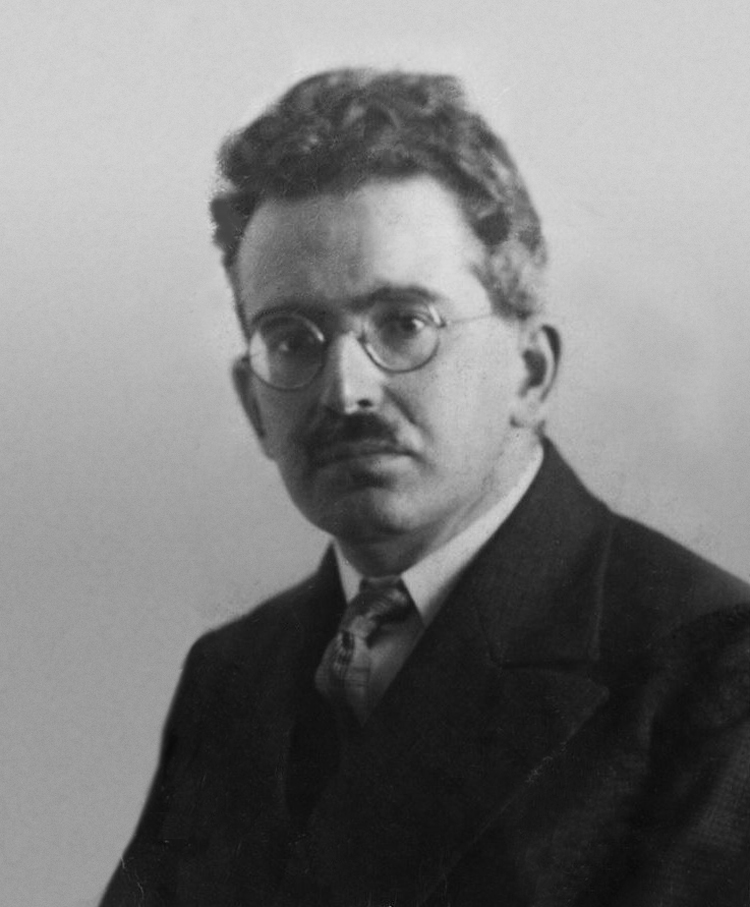
0 sources
Summary
Walter Benjamin was born on July 15, 1892[1], in Berlin[2]. He died on September 26, 1940[3], in Portbou[4]. He worked as a philosopher[5], writer[6], translator[7], essayist[8], and literary critic[9]. He ranks in the top 0.59% of human entities by monthly Wikipedia readership (23,023 views/month, #5,899 of 1,000,298).[10]
Key Facts
- Place of burial: Cementiri de Portbou[11]
- Father: Emil Benjamin[12]
- Spouse: Dora Sophie Kellner[13]
- Child: Stefan Benjamin[14]
- Country of citizenship: Kingdom of Prussia[15], German Reich[16]
- Native language: German[17]
- Occupation: sociologist[18], art critic[19], literary historian[20], translator[21], librettist[22]
- Field of work: philosophy[23]
- Educated at: Ludwig-Maximilians-Universität München[24], University of Bern[25], Humboldt-Universität zu Berlin[26], University of Freiburg[27]
- Doctoral advisor: Richard Herbertz[28]
- Notable work: Theses on the Philosophy of History[29], The Work of Art in the Age of Mechanical Reproduction[30], The Origin of German Tragic Drama[31], One-way Street[32], The arcades project[33]
- Influenced by: Johann Wolfgang von Goethe[34], Charles Baudelaire[35], Karl Marx[36], Georg Lukács[37], Bertolt Brecht[38], Ernst Bloch[39], Gershom Scholem[40]
- Sex or gender: male[41]
- Movement: Marxism[42]
- Commons category: Walter Benjamin[43]
- Archives at: National Library of Israel[44], Museum of Modern Art[45], Archive of the Academy of Arts[46]
- Family name: Benjamin[47]
- Given name: Walter[48], Bendix[49]
- Pseudonym: Benedix Schönflies[50], Detlev Holz[51]
- Significant event: Nazi book burnings[52]
- IPA transcription: ˌvaltɐ ˈbɛnjamiːn[53]
- Topic's main category: Category:Walter Benjamin[54]
- Work location: Berlin[55]
Why It Matters
Walter Benjamin has Wikipedia articles in 27 language editions, a strong signal of global cultural recognition.[56] He is known by 42 alternative names across languages and contexts.[57]
He has been cited as an influence by Hannah Arendt[58], a philosopher[59], 1906–1975[60], of Prussia[61], awarded the Guggenheim Fellowship[62], specialised in political philosophy[63]; Slavoj Žižek[64], a philosopher[65], b. 1949[66], of Slovenia[67], awarded the Ambassador of Science of the Republic of Slovenia[68], specialised in ideology[69]; Jacques Derrida[70], a philosopher[71], 1930–2004[72], of France[73], awarded the Theodor W. Adorno Award[74], specialised in philosophy of language[75]; Theodor W. Adorno[76], a philosopher[77], 1903–1969[78], of United States[79], awarded the Goethe Plaque of the City of Frankfurt[80], specialised in philosophy[81]; Byung-Chul Han[82], a writer[83], b. 1959[84], of South Korea[85], awarded the Salzburg State Prize for Future Research[86]; and Jean Baudrillard[87], a philosopher[88], 1929–2007[89], of France[90], specialised in philosophy[91].
Works attributed to him include The Work of Art in the Age of Mechanical Reproduction[92], Theses on the Philosophy of History[93], The arcades project[94], Capitalism as Religion[95], and Berlin Childhood around 1900[96].
FAQs
Where was Walter Benjamin born?
Walter Benjamin's place of birth was Berlin[2].
Where did Walter Benjamin die?
Walter Benjamin passed away in Portbou[4].
Who were Walter Benjamin's parents?
Walter Benjamin's father was Emil Benjamin[12].
Who was Walter Benjamin married to?
Walter Benjamin's spouses include Dora Sophie Kellner[13].
What did Walter Benjamin do for work?
Walter Benjamin worked as a philosopher[5], writer[6], translator[7], essayist[8], and literary critic[9].
Where did Walter Benjamin go to school?
Walter Benjamin was educated at Ludwig-Maximilians-Universität München[24], University of Bern[25], Humboldt-Universität zu Berlin[26], and University of Freiburg[27].
Who did Walter Benjamin influence?
Walter Benjamin has been cited as an influence by Hannah Arendt[58], Slavoj Žižek[64], Jacques Derrida[70], and Theodor W. Adorno[76].