
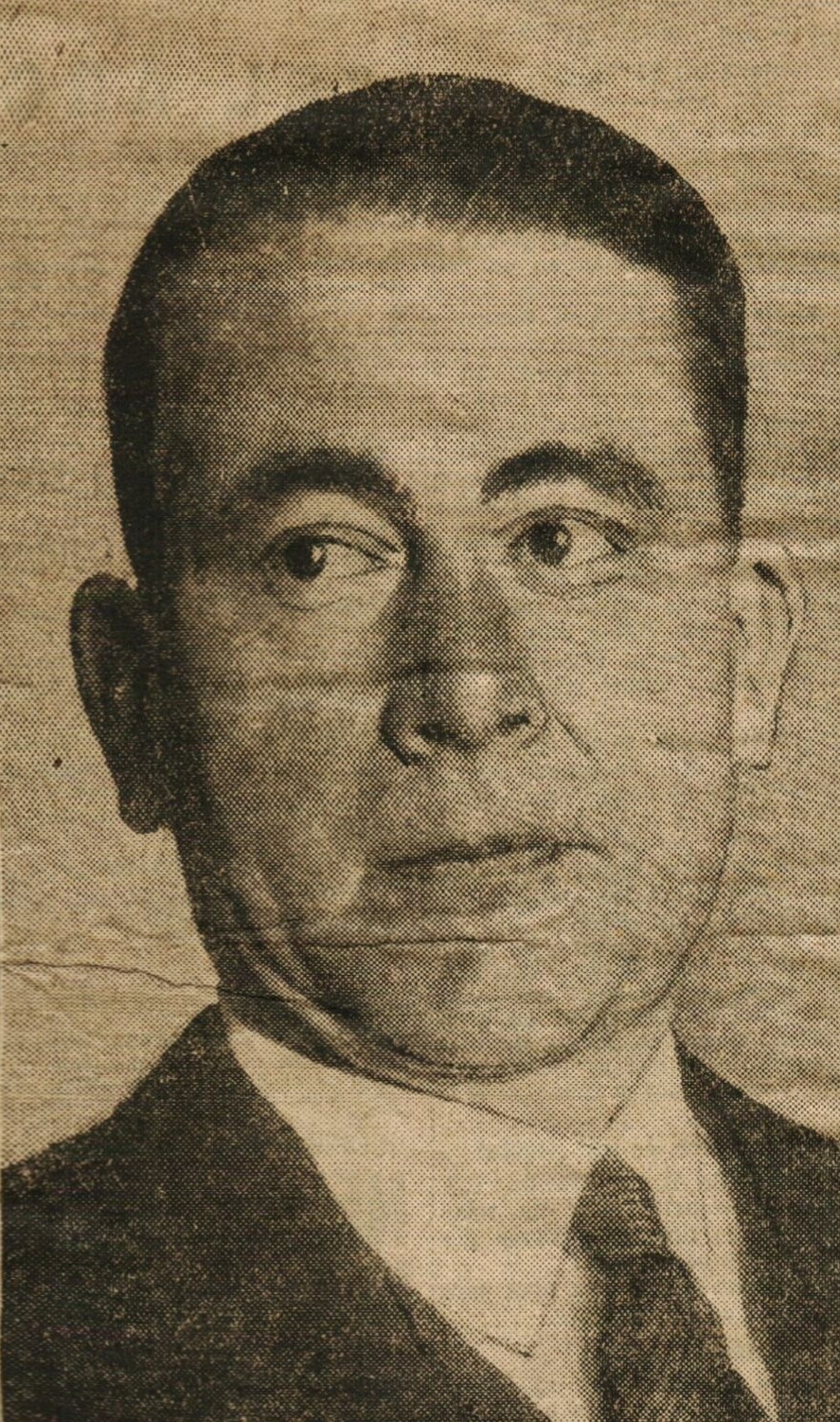
Carl Schmitt
0 sources
Carl Schmitt
Summary
Carl Schmitt is a human[1]. He was born in Plettenberg[2]. He was born on July 11, 1888[3]. He passed away in Plettenberg[4]. He died on April 7, 1985[5]. He worked as a jurist[6], geopolitical analyst[7], politician[8], Staatsrat[9], and university teacher[10]. He ranks in the top 0.63% of human entities by monthly Wikipedia readership (21,121 views/month, #6,281 of 1,000,298).[11]
Key Facts
- Born in Plettenberg[2], Carl Schmitt…
- Carl Schmitt passed away in Plettenberg[4].
- Carl Schmitt was born on July 11, 1888[3].
- Carl Schmitt was born on 1888[12].
- Carl Schmitt died on April 7, 1985[5].
- Carl Schmitt died on 1985[13].
- Burial took place at Plettenberg[14].
- Among Carl Schmitt's spouses was Pavla Dorotić[15].
- Carl Schmitt was married to Duška Schmitt[16].
- A child of Carl Schmitt was Anima Schmitt de Otero[17].
- Carl Schmitt held citizenship in Germany[18].
- Carl Schmitt is identified as part of the Germans ethnic group[19].
- Carl Schmitt's professions included jurist[6].
- Carl Schmitt worked as a geopolitical analyst[7].
- Carl Schmitt worked as a politician[8].
- Carl Schmitt's professions included Staatsrat[9].
- Carl Schmitt's professions included university teacher[10].
- Carl Schmitt worked as a constitutional lawyer[20].
- Carl Schmitt's field of work was political theology[21].
- Carl Schmitt's field of work was constitutional law[22].
- Among Carl Schmitt's employers was Technical University of Munich[23].
- Carl Schmitt was employed by University of Bonn[24].
- Among Carl Schmitt's employers was University of Cologne[25].
- Carl Schmitt was employed by University of Greifswald[26].
- Carl Schmitt was employed by Frederick William University Berlin[27].
Body
Origins and Family
Carl Schmitt's place of birth was Plettenberg[2]. Recorded date of birth include July 11, 1888[3] and 1888[12]. He is identified as part of the Germans ethnic group[19].
Education
Educated at Ludwig-Maximilians-Universität München[28], a public research university[29], in Germany[30], founded in 1472[31], headquartered in Hauptgebäude der Ludwig-Maximilians-Universität München[32]; Frederick William University Berlin[33], a university[34], in Prussia[35], founded in 1828[36]; and University of Strasbourg[37], a university[38], in France[39], founded in 1538[40]. Carl Schmitt's doctoral advisor was Fritz van Calker[41]. Academic degrees include Juris Doctor[42] and habilitation[43].
Career and Affiliations
Recorded occupations include jurist[6], geopolitical analyst[7], politician[8], Staatsrat[9], university teacher[10], and constitutional lawyer[20]. Fields of work include political theology[21], a theology[44] and constitutional law[22], an area of law[45]. Employers include Technical University of Munich[23], an institute of technology[46], in Germany[47], founded in 1868[48], headquartered in Munich[49]; University of Bonn[24], a public research university[50], in Germany[51], founded in 1818[52], headquartered in Bonn[53]; University of Cologne[25], a public university[54], in Germany[55], founded in 1388[56], headquartered in Q127699285[57]; University of Greifswald[26], a public university[58], in Germany[59], founded in 1456[60]; Frederick William University Berlin[27], a university[61], in Prussia[62], founded in 1828[63]; and Handelshochschule Berlin[64], a business school[65], in Germany[66], founded in 1906[67].
Works and Contributions
Notable works include The Concept of the Political[68] and Land und Meer[69].
Personal Life
Spouses include Pavla Dorotić[15] and Duška Schmitt[16], 1903–1950[70]. A child of Carl Schmitt was Anima Schmitt de Otero[17]. His religion is recorded as Catholicism[71]. He was affiliated with the Nazi Party[72].
Death and Burial
Recorded date of death include April 7, 1985[5] and 1985[13]. Carl Schmitt died in Plettenberg[4]. Burial took place at Plettenberg[14].
Why It Matters
Carl Schmitt ranks in the top 0.63% of human entities by monthly Wikipedia readership (21,121 views/month, #6,281 of 1,000,298).[11] He has Wikipedia articles in 25 language editions, a strong signal of global cultural recognition.[73] He is known by 32 alternative names across languages and contexts.[74]
He has been cited as an influence by Peter Thiel[75], a financier[76], b. 1967[77], of New Zealand[78], awarded the Frank Schirrmacher Award[79], specialised in investment[80]; Hannah Arendt[81], a philosopher[82], 1906–1975[83], of Prussia[84], awarded the Guggenheim Fellowship[85], specialised in political philosophy[86]; Curtis Yarvin[87], a computer scientist[88], b. 1973[89], of United States[90]; Alexander Dugin[91], a propagandist[92], b. 1962[93], of Russia[94], specialised in propaganda[95]; Reinhart Koselleck[96], an author[97], 1923–2006[98], of Germany[99], awarded the Sigmund Freud Prize[100], specialised in conceptual history[101]; and Jacob Taubes[102], a philosopher[103], 1923–1987[104], of Austria[105], specialised in sociology of religion[106].
Works attributed to him include The Concept of the Political[107].
FAQs
Where was Carl Schmitt born?
Born in Plettenberg[2], Carl Schmitt…
Where did Carl Schmitt die?
Carl Schmitt died in Plettenberg[4].
Who was Carl Schmitt married to?
Carl Schmitt's spouses include Pavla Dorotić[15] and Duška Schmitt[16].
What did Carl Schmitt do for work?
Carl Schmitt worked as jurist[6], geopolitical analyst[7], politician[8], Staatsrat[9], and university teacher[10].
Where did Carl Schmitt go to school?
Carl Schmitt was educated at Ludwig-Maximilians-Universität München[28], Frederick William University Berlin[33], and University of Strasbourg[37].
Who did Carl Schmitt influence?
Carl Schmitt has been cited as an influence by Peter Thiel[75], Hannah Arendt[81], Curtis Yarvin[87], and Alexander Dugin[91].