
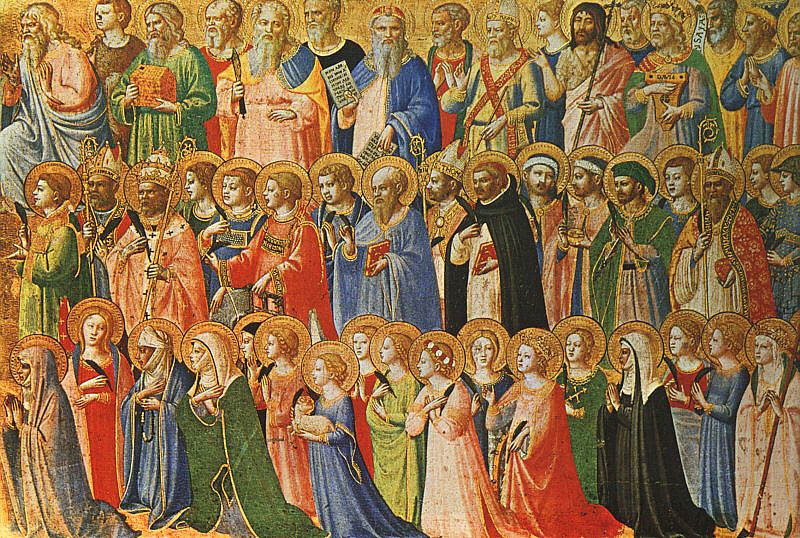
saint
person who has been recognized for having an exceptional degree of holiness, sanctity, and virtue; may or may not be a canonised saint
Press Enter · cited answer in seconds
0 sources
Summary
saint is a title[1]. saint ranks in the top 0.96% of title entities by monthly Wikipedia readership (14,449 views/month, #2 of 209).[2]
Key Facts
- Religion or worldview: Christianity[3], Hinduism[4], Sikhism[5], Islam[6]
- Subclass of: believer[7], rank[8]
- Commons category: Saints[9]
- Topic's main category: Category:Saints[10]
- Topic's main Wikimedia portal: Portal:Saints[11]
- Described by source: Armenian Soviet Encyclopedia[12], Small Brockhaus and Efron Encyclopedic Dictionary[13], Brockhaus and Efron Encyclopedic Dictionary[14], Explanatory Dictionary of the Living Great Russian Language[15], Gujin Tushu Jicheng[16], Metropolitan Museum of Art Tagging Vocabulary[17], The Nuttall Encyclopædia[18], Encyclopædia Britannica 11th edition[19]
- Topic has template: Template:Infobox saint[20]
- Has characteristic: sacredness[21]
- Related Wikidata property: P411[22]
- Main Wikidata property: P2925[23]
- Equivalent class: http://dbpedia.org/ontology/Saint[24]
- Different from: San[25]
- Female form of label: святая[26], sainte[27], santa[28], Heilige[29], Αγία[30], sanktulino[31], светица[32], santino[33], קדושה[34], مقدسہ[35], ولیہ[36], светитељка[37], santes[38], сьвятая[39]
- Male form of label: santulo[40], святой[41], مقدس/بزرگ[42], светец[43], Άγιος[44], saint[45], šventasis[46], santo[47]
Body
Cultural Significance
Things named for saint include Saint[48], a family name[49].
Why It Matters
saint has Wikipedia articles in 29 language editions, a strong signal of global cultural recognition.[50] saint is known by 87 alternative names across languages and contexts.[51]
Entities named for saint include Saint[48], a family name[49].