
Clement I
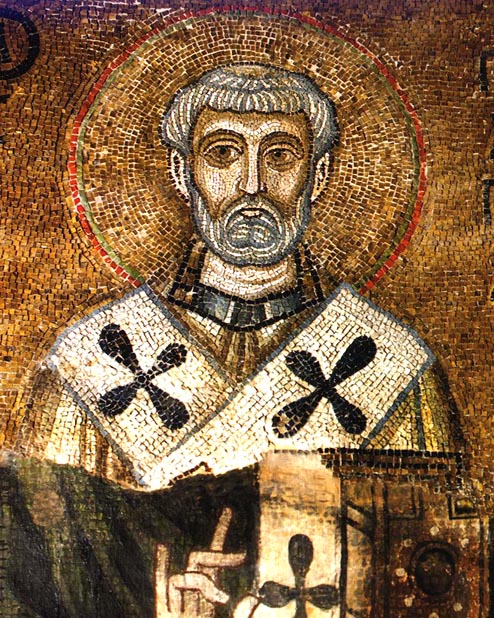
0 sources
Summary
Clement I was born on 100[1] in Rome[2]. He died on 99[3] in Chersonesus[4]. He worked as a theologian[5] and Catholic priest[6]. He ranks in the top 0.63% of human entities by monthly Wikipedia readership (7,663 views/month, #6,285 of 1,000,298).[7]
Key Facts
- Place of burial: Basilica of San Clemente[8]
- Father: Titus Flavius Sabinus[9]
- Mother: Arrecina[10]
- Country of citizenship: Ancient Rome[11]
- Position held: Pope[12]
- Notable work: First Epistle of Clement[13]
- Religion or worldview: Catholic Church[14]
- Sex or gender: male[15]
- Maintained by: WikiProject Biography[16], WikiProject Politicians[17], WikiProject Saints[18], WikiProject Vatican City[19], WikiProject European Microstates[20], WikiProject Catholicism[21], WikiProject Christianity[22], WikiProject Italy[23], Religion in Russia task force[24]
- Commons category: Clemens I[25]
- Canonization status: saint[26]
- Cause of death: execution by drowning[27]
- Given name: Clemens[28]
- Feast day: November 23[29]
- Topic's main category: Category:Clement of Rome[30]
- Work location: Rome[31]
- Manner of death: homicide[32]
- Depicted by: Predella of the Monticelli Sacred Conversation[33]
- Floruit: 100[34]
- Described by source: Nordisk familjebok[35], Vlastenský slovník historický[36], Small Brockhaus and Efron Encyclopedic Dictionary[37], Bible Encyclopedia of Archimandrite Nicephorus[38], Brockhaus and Efron Encyclopedic Dictionary[39], De viris illustribus[40], Pauly–Wissowa[41], The Nuttall Encyclopædia[42], Encyclopædia Britannica 11th edition[43]
- Languages spoken, written or signed: Latin[44]
Body
Works and Contributions
Things named for Clement I include Basilica of San Clemente[45], a minor basilica[46], in Italy[47], founded in 1084[48]; San Clemente Island[49], an island[50], in United States[51]; Santa Cruz Island[52], an island[53], in Ecuador[54]; St Clement Danes[55], a church building[56], in United Kingdom[57], founded in 1680[58]; Sant Climent de Llobregat[59], a municipality of Catalonia[60], in Spain[61]; Aarhus Cathedral[62], a Lutheran cathedral[63], in Denmark[64], founded in 1201[65]; Second Epistle of Clement[66], a literary work[67]; and St Clement's Church, Moscow[68].
Why It Matters
Clement I has Wikipedia articles in 28 language editions, a strong signal of global cultural recognition.[69] He is known by 151 alternative names across languages and contexts.[70]
Works attributed to him include First Epistle of Clement[71], a letter[72]. Entities named for him include Basilica of San Clemente[45], a minor basilica[46], in Italy[47], founded in 1084[48]; San Clemente Island[49], an island[50], in United States[51]; Santa Cruz Island[52], an island[53], in Ecuador[54]; St Clement Danes[55], a church building[56], in United Kingdom[57], founded in 1680[58]; Sant Climent de Llobregat[59], a municipality of Catalonia[60], in Spain[61]; and Aarhus Cathedral[62], a Lutheran cathedral[63], in Denmark[64], founded in 1201[65].
FAQs
Where was Clement I born?
Clement I was born in Rome[2].
Where did Clement I die?
Clement I passed away in Chersonesus[4].
Who were Clement I's parents?
Clement I's father was Titus Flavius Sabinus[9]. Clement I's mother was Arrecina[10].