
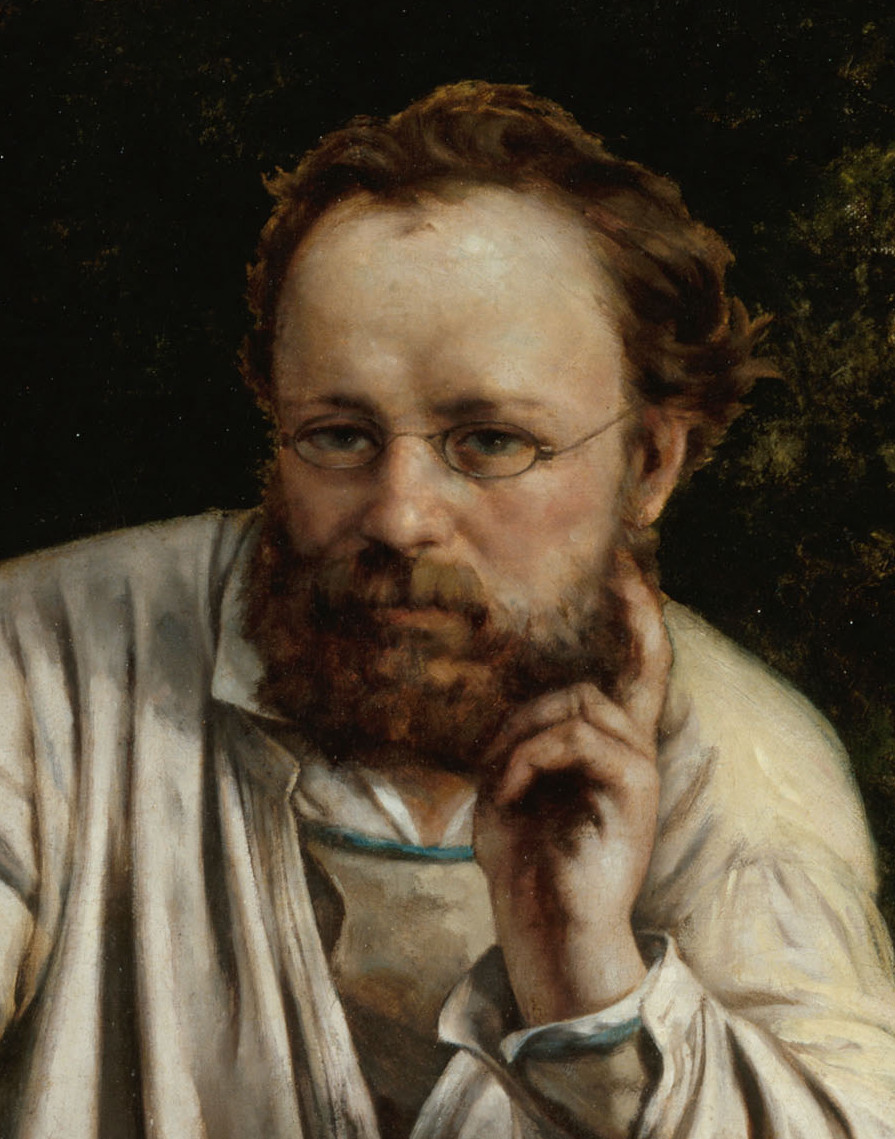
Pierre-Joseph Proudhon
0 sources
Summary
Pierre-Joseph Proudhon was born on January 15, 1809[1], in Besançon[2]. He died on January 19, 1865[3], in Passy[4]. He worked as an economist[5], sociologist[6], politician[7], journalist[8], and philosopher[9]. He ranks in the top 0.65% of human entities by monthly Wikipedia readership (11,156 views/month, #6,453 of 1,000,298).[10]
Key Facts
- Place of death: Paris[11]
- Place of burial: Montparnasse Cemetery[12]
- Spouse: Euphrasie Proudhon[13]
- Child: Catherine Henneguy[14]
- Country of citizenship: France[15], Belgium[16]
- Native language: French[17]
- Occupation: writer[18], printer[19], political economist[20], revolutionary[21], anarchist[22]
- Field of work: philosophy[23], liberty[24], ownership[25], power[26], poverty[27], social justice[28], social equality[29]
- Position held: Member of parliament for the Seine[30]
- Student: Armand Hayem[31]
- Notable work: What Is Property?[32], The Confessions of a Revolutionary[33], The System of Economic Contradictions, or The Philosophy of Poverty[34], The General Idea of the Revolution in the Nineteenth Century[35], social federalism[36]
- Religion or worldview: atheism[37]
- Influenced by: Cicero[38], Hugo Grotius[39], Victor Cousin[40], Jean-Jacques Rousseau[41], Claude Henri de Rouvroy, comte de Saint-Simon[42], Karl Marx[43], Georg Wilhelm Friedrich Hegel[44], Louis de Rouvroy, duc de Saint-Simon[45], Charles Fourier[46]
- Sex or gender: male[47]
- Member of political party: The Mountain (1849–1852)[48]
- Commons category: Pierre-Joseph Proudhon[49]
- Archives at: Archives nationales[50]
- Family name: Proudhon[51]
- Given name: Pierre-Joseph[52]
- Topic's main category: Category:Pierre-Joseph Proudhon[53]
- Commons gallery: Pierre-Joseph Proudhon[54]
- Work location: Paris[55]
Body
Works and Contributions
Things named for Pierre-Joseph Proudhon include Cercle Proudhon[56].
Why It Matters
Pierre-Joseph Proudhon has Wikipedia articles in 28 language editions, a strong signal of global cultural recognition.[57] He is known by 40 alternative names across languages and contexts.[58]
He has been cited as an influence by Leo Tolstoy[59], a writer[60], 1828–1910[61], of Russian Empire[62], awarded the Order of Saint Anna, 4th class[63], specialised in philosophy[64]; Mikhail Bakunin[65], a philosopher[66], 1814–1876[67], of Russian Empire[68], specialised in philosophy[69]; Peter Kropotkin[70], a geographer[71], 1842–1921[72], of Russian Empire[73], specialised in philosophy[74]; Gustav Landauer[75], a politician[76], 1870–1919[77], of Germany[78], specialised in politics[79]; Bonnot Gang[80], a gang[81], in France[82], founded in 1911[83]; and Étienne Chouard[84], a blogger[85], b. 1956[86], of France[87].
He is credited with the discovery of anarchism[88]. Works attributed to him include Property is theft![89], What Is Property?[90], The General Idea of the Revolution in the Nineteenth Century[91], and The System of Economic Contradictions, or The Philosophy of Poverty[92]. Entities named for him include Cercle Proudhon[56].
FAQs
Where was Pierre-Joseph Proudhon born?
Pierre-Joseph Proudhon was born in Besançon[2].
Where did Pierre-Joseph Proudhon die?
Pierre-Joseph Proudhon died in Passy[4].
Who was Pierre-Joseph Proudhon married to?
Pierre-Joseph Proudhon's spouses include Euphrasie Proudhon[13].
What did Pierre-Joseph Proudhon do for work?
Pierre-Joseph Proudhon worked as an economist[5], sociologist[6], politician[7], journalist[8], and philosopher[9].
Who did Pierre-Joseph Proudhon influence?
Pierre-Joseph Proudhon has been cited as an influence by Leo Tolstoy[59], Mikhail Bakunin[65], Peter Kropotkin[70], and Gustav Landauer[75].
What did Pierre-Joseph Proudhon discover?
Pierre-Joseph Proudhon is credited as discoverer of anarchism[88].