
Paul Painlevé
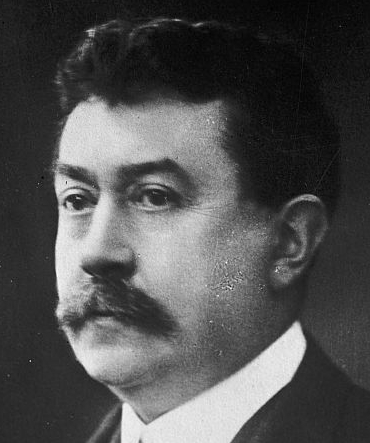
0 sources
Paul Painlevé
Summary
Paul Painlevé is a human[1]. Born in Paris[2], he… he was born on December 5, 1863[3]. He died in Paris[4]. He died on October 29, 1933[5]. He worked as a mathematician[6], politician[7], university teacher[8], head of government[9], and mechanic[10]. He ranks in the top 0.73% of human entities by monthly Wikipedia readership (487 views/month, #7,253 of 1,000,298).[11]
Key Facts
- Born in Paris[2], Paul Painlevé…
- Paul Painlevé died in Paris[4].
- Paul Painlevé was born on December 5, 1863[3].
- Paul Painlevé died on October 29, 1933[5].
- Paul Painlevé is buried at Panthéon[12].
- Burial took place at Montparnasse Cemetery[13].
- Paul Painlevé's father was Léon Louis Painlevé[14].
- A child of Paul Painlevé was Jean Painlevé[15].
- Paul Painlevé held citizenship in France[16].
- French was Paul Painlevé's native language[17].
- Paul Painlevé is identified as part of the French ethnic group[18].
- Paul Painlevé worked as a mathematician[6].
- Paul Painlevé worked as a politician[7].
- Paul Painlevé worked as a university teacher[8].
- Paul Painlevé's professions included head of government[9].
- Paul Painlevé worked as a mechanic[10].
- Paul Painlevé's professions included minister[19].
- Paul Painlevé held the position of member of the French National Assembly[20].
- Paul Painlevé held the position of President of the Council[21].
- Paul Painlevé held the position of President of the Council[22].
- Paul Painlevé held the position of president of the French Academy of Sciences[23].
- Paul Painlevé held the position of Q109929578[24].
- Paul Painlevé held the position of Minister of Finance[25].
- Among Paul Painlevé's employers was University of Lille[26].
- Paul Painlevé was employed by Science Faculty of Paris[27].
Body
Origins and Family
Born in Paris[2], Paul Painlevé… he was born on December 5, 1863[3]. His father was Léon Louis Painlevé[14]. He is identified as part of the French ethnic group[18]. French was his native language[17].
Education
Educated at École Normale Supérieure[28], a école normale supérieure[29], in France[30], founded in 1794[31], headquartered in Paris[32]; Lycée Louis-le-Grand[33], an educational facility[34], in France[35], founded in 1965[36]; University of Paris[37], a former entity[38], in France[39], founded in 1150[40], headquartered in Paris[41]; and Lycée Saint-Louis[42], an educational facility[43], in France[44], founded in 1965[45]. Paul Painlevé's doctoral advisor was Charles Émile Picard[46].
Career and Affiliations
Recorded occupations include mathematician[6], politician[7], university teacher[8], head of government[9], mechanic[10], and minister[19]. Employers include University of Lille[26], a public research university[47], in France[48], founded in 1559[49], headquartered in Lille[50]; Science Faculty of Paris[27], a faculty[51], in France[52], founded in 1811[53]; École polytechnique[54], a grande école[55], in France[56], founded in 1794[57], headquartered in Palaiseau[58]; Collège de France[59], a higher education institution[60], in France[61], founded in 1530[62], headquartered in Paris[63]; École Normale Supérieure[64], a école normale supérieure[65], in France[66], founded in 1794[67], headquartered in Paris[68]; and University of Paris[69], a former entity[70], in France[71], founded in 1150[72], headquartered in Paris[73]. Positions held include member of the French National Assembly[20], a position[74], in France[75], founded in 1789[76]; President of the Council[21], a position[77], in France[78]; president of the French Academy of Sciences[23]; Q109929578[24]; Minister of Finance[25]; and Minister of War[79], a position[80], in France[81]. Doctoral students include Pierre Fatou[82], Auguste Boulanger[83], René Garnier[84], Ernest Esclangon[85], Henri Dulac[86], and Ludovic Zoretti[87].
Recognition
Awards received include Poncelet Prize[88], Knight of the Legion of Honour[89], Concours général[90], Bordin Prize[91], Cross of Liberty[92], and Collar of the Order of Charles III[93].
Personal Life
A child of Paul Painlevé was Jean Painlevé[15]. He was affiliated with the Republican-Socialist Party[94].
Death and Burial
Paul Painlevé died on October 29, 1933[5]. He passed away in Paris[4]. Recorded place of burial include Panthéon[12] and Montparnasse Cemetery[13].
Works and Contributions
Things named for Paul Painlevé include Painlevé transcendents[95], an equation[96] and Painlevé conjecture[97], a conjecture[98].
Why It Matters
Paul Painlevé ranks in the top 0.73% of human entities by monthly Wikipedia readership (487 views/month, #7,253 of 1,000,298).[11] He has Wikipedia articles in 24 language editions, a strong signal of global cultural recognition.[99] He is known by 28 alternative names across languages and contexts.[100]
Entities named for him include Painlevé transcendents[95], an equation[96] and Painlevé conjecture[97], a conjecture[98].
His notable doctoral advisees include Pierre Fatou[101], a mathematician[102], 1878–1929[103], of France[104], awarded the Knight of the Legion of Honour[105], specialised in complex dynamics[106]; Ernest Esclangon[107], a mathematician[108], 1876–1954[109], of France[110], awarded the Officer of the Legion of Honour[111]; Henri Dulac[112], a mathematician[113], 1870–1955[114], of France[115], awarded the Officer of the Legion of Honour[116], specialised in differential calculus[117]; Ludovic Zoretti[118], a mathematician[119], 1880–1948[120], of France[121], specialised in mathematics[122]; and Auguste Boulanger[123], a mathematician[124], 1866–1923[125], of France[126], awarded the Poncelet Prize[127], specialised in mathematics[128].
FAQs
Where was Paul Painlevé born?
Paul Painlevé was born in Paris[2].
Where did Paul Painlevé die?
Paul Painlevé passed away in Paris[4].
Who were Paul Painlevé's parents?
Paul Painlevé's father was Léon Louis Painlevé[14].
What did Paul Painlevé do for work?
Paul Painlevé worked as mathematician[6], politician[7], university teacher[8], head of government[9], and mechanic[10].
Where did Paul Painlevé go to school?
Paul Painlevé was educated at École Normale Supérieure[28], Lycée Louis-le-Grand[33], University of Paris[37], and Lycée Saint-Louis[42].
What awards did Paul Painlevé receive?
Honors received include Poncelet Prize[88], Knight of the Legion of Honour[89], Concours général[90], and Bordin Prize[91].