
Nikolay Semyonov
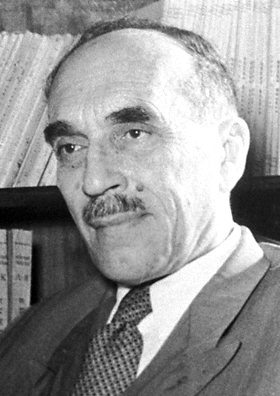
0 sources
Summary
Nikolay Semyonov was born on April 3, 1896[1], in Saratov[2]. He died on September 25, 1986[3], in Moscow[4]. He worked as a physicist[5], chemist[6], professor[7], and politician[8]. He ranks in the top 0.73% of human entities by monthly Wikipedia readership (1,031 views/month, #7,258 of 1,000,298).[9]
Key Facts
- Place of burial: Novodevichy Cemetery[10]
- Spouse: Maria Liverovskaya[11]
- Country of citizenship: Russian Empire[12], Soviet Union[13]
- Field of work: chemical physics[14]
- Position held: deputy of the Supreme Soviet of the Soviet Union[15]
- Employer: Tomsk State University[16], Tomsk Polytechnic University[17], Ioffe Institute[18], Semenov Institute of Chemical Physics[19], Lomonosov Moscow State University[20], Moscow Institute of Physics and Technology[21], Peter the Great Saint Petersburg State Polytechnical University[22], Znanie[23], Russian Academy of Sciences[24]
- Educated at: Imperial St. Petersburg University[25], Samara Real School[26]
- Award received: Stalin Prize, 2nd degree[27], Order of Lenin[28], Hero of Socialist Labour[29], Order of the October Revolution[30], Nobel Prize in Chemistry[31], Order of the Red Banner of Labour[32], Lomonosov Gold Medal[33], Lenin Prize[34], Jubilee Medal "In Commemoration of the 100th Anniversary of the Birth of Vladimir Ilyich Lenin"[35], Foreign Member of the Royal Society[36]
- Member of: Royal Society[37], German Academy of Sciences at Berlin[38], German Academy of Sciences Leopoldina[39], French Academy of Sciences[40], National Academy of Sciences[41], Academy of Sciences of the USSR[42], Hungarian Academy of Sciences[43], New York Academy of Sciences[44], Romanian Academy[45], Bulgarian Academy of Sciences[46], Polish Academy of Sciences[47]
- Sex or gender: male[48]
- Member of political party: Communist Party of the Soviet Union[49]
- Doctoral student: Dmitrii Knorre[50], Aram Nalbandyan[51], Nikolay Yenikolopov[52], Vitalii Goldanskii[53]
- Commons category: Nikolay Nikolayevich Semyonov[54]
- Residence: Saint Petersburg[55], Tomsk[56], Moscow[57]
Why It Matters
Nikolay Semyonov has Wikipedia articles in 28 language editions, a strong signal of global cultural recognition.[58] He is known by 33 alternative names across languages and contexts.[59]
His notable doctoral advisees include Vladimir Fortov[60], a physicist[61], 1946–2020[62], of Soviet Union[63], awarded the USSR State Prize[64], specialised in chemical physics[65]; David Frank-Kamenetsky[66]; Nikolay Emanuel[67]; Nikolay Yenikolopov[68]; Vitalii Goldanskii[69]; and Aram Nalbandyan[70].
FAQs
Where was Nikolay Semyonov born?
Nikolay Semyonov's place of birth was Saratov[2].
Where did Nikolay Semyonov die?
Nikolay Semyonov passed away in Moscow[4].
Who was Nikolay Semyonov married to?
Nikolay Semyonov's spouses include Maria Liverovskaya[11].
What did Nikolay Semyonov do for work?
Nikolay Semyonov worked as a physicist[5], chemist[6], professor[7], and politician[8].
Where did Nikolay Semyonov go to school?
Nikolay Semyonov was educated at Imperial St. Petersburg University[25] and Samara Real School[26].
What awards did Nikolay Semyonov receive?
Honors received include Stalin Prize, 2nd degree[27], Order of Lenin[28], Hero of Socialist Labour[29], and Order of the October Revolution[30].