
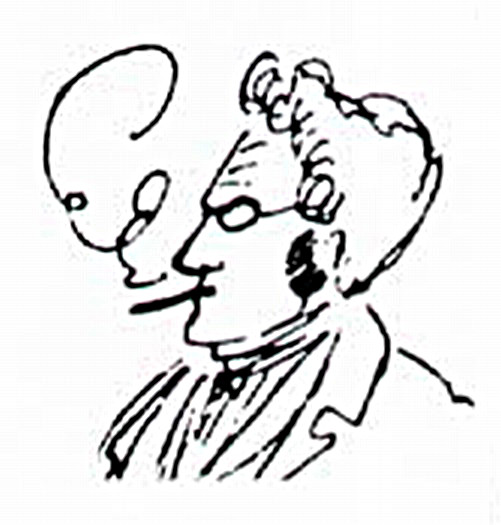
Max Stirner
0 sources
Summary
Max Stirner is a human[1]. Born in Bayreuth[2], he… he was born on October 25, 1806[3]. He died in Berlin[4]. He died on June 26, 1856[5]. He worked as a philosopher[6], journalist[7], translator[8], writer[9], and educator[10]. He ranks in the top 0.62% of human entities by monthly Wikipedia readership (9,296 views/month, #6,201 of 1,000,298).[11]
Key Facts
- Max Stirner was born in Bayreuth[2].
- Max Stirner passed away in Berlin[4].
- Max Stirner was born on October 25, 1806[3].
- Max Stirner died on June 26, 1856[5].
- Max Stirner died on June 25, 1856[12].
- Max Stirner is buried at Friedhof II der Sophiengemeinde Berlin[13].
- Among Max Stirner's spouses was Marie Dähnhardt[14].
- Max Stirner held citizenship in Kingdom of Bavaria[15].
- Max Stirner held citizenship in Kingdom of Prussia[16].
- German was Max Stirner's native language[17].
- Max Stirner's professions included philosopher[6].
- Max Stirner worked as a journalist[7].
- Max Stirner worked as a translator[8].
- Max Stirner worked as a writer[9].
- Max Stirner worked as an educator[10].
- Max Stirner worked as a professor of philosophy[18].
- Max Stirner's field of work was philosophy[19].
- Max Stirner's field of work was ethics[20].
- Max Stirner's field of work was political philosophy[21].
- Max Stirner's field of work was property[22].
- Max Stirner's field of work was axiology[23].
- Max Stirner was educated at Humboldt-Universität zu Berlin[24].
- Max Stirner was educated at Friedrich-Alexander-Universität Erlangen-Nürnberg[25].
- Max Stirner was educated at University of Königsberg[26].
- Max Stirner was educated at Humboldt-Universität zu Berlin[27].
Body
Origins and Family
Max Stirner's place of birth was Bayreuth[2]. He was born on October 25, 1806[3]. German was his native language[17].
Education
Educated at Humboldt-Universität zu Berlin[24], a comprehensive university[28], in Germany[29], founded in 1809[30], headquartered in Berlin[31]; Friedrich-Alexander-Universität Erlangen-Nürnberg[25], a public research university[32], in Germany[33], founded in 1742[34], headquartered in Erlangen[35]; and University of Königsberg[26], a university[36], in Kingdom of Prussia[37], founded in 1544[38]. Max Stirner earned the academic degree of professor of philosophy[39]. Studied under Georg Wilhelm Friedrich Hegel[40], Heinrich Ritter[41], Carl Ritter[42], and Christian Kopp[43].
Career and Affiliations
Recorded occupations include philosopher[6], journalist[7], translator[8], writer[9], educator[10], and professor of philosophy[18]. Fields of work include philosophy[19], an academic discipline[44]; ethics[20], a branch of philosophy[45]; political philosophy[21], a branch of philosophy[46]; property[22], a metaclass[47]; and axiology[23], a branch of philosophy[48].
Works and Contributions
A notable work attributed to Max Stirner is The Ego and Its Own[49].
Personal Life
Among Max Stirner's spouses was Marie Dähnhardt[14]. His religion is recorded as atheism[50].
Death and Burial
Recorded date of death include June 26, 1856[5] and June 25, 1856[12]. Max Stirner passed away in Berlin[4]. The cause of death was insect-inflicted wound[51]. Burial took place at Friedhof II der Sophiengemeinde Berlin[13].
Why It Matters
Max Stirner ranks in the top 0.62% of human entities by monthly Wikipedia readership (9,296 views/month, #6,201 of 1,000,298).[11] He has Wikipedia articles in 26 language editions, a strong signal of global cultural recognition.[52] He is known by 63 alternative names across languages and contexts.[53]
He has been cited as an influence by Karl Marx[54], an economist[55], 1818–1883[56], of Kingdom of Prussia[57], awarded the Fellow of the Royal Society of Arts[58], specialised in political economics[59]; Friedrich Nietzsche[60], a philosopher[61], 1844–1900[62], of Kingdom of Prussia[63], specialised in classical philology[64]; Friedrich Engels[65], an economist[66], 1820–1895[67], of Kingdom of Prussia[68], specialised in philosophy[69]; Emma Goldman[70], an anarchist[71], 1869–1940[72], of Russian Empire[73], specialised in philosophy[74]; Bonnot Gang[75], a gang[76], in France[77], founded in 1911[78]; and Cody Rutledge Wilson[79], an engineer[80], b. 1988[81], of United States[82].
Works attributed to him include The Ego and Its Own[83].
FAQs
Where was Max Stirner born?
Max Stirner's place of birth was Bayreuth[2].
Where did Max Stirner die?
Max Stirner died in Berlin[4].
Who was Max Stirner married to?
Max Stirner's spouses include Marie Dähnhardt[14].
What did Max Stirner do for work?
Max Stirner worked as philosopher[6], journalist[7], translator[8], writer[9], and educator[10].
Where did Max Stirner go to school?
Max Stirner was educated at Humboldt-Universität zu Berlin[24], Friedrich-Alexander-Universität Erlangen-Nürnberg[25], University of Königsberg[26], and Humboldt-Universität zu Berlin[27].
Who did Max Stirner influence?
Max Stirner has been cited as an influence by Karl Marx[54], Friedrich Nietzsche[60], Friedrich Engels[65], and Emma Goldman[70].