
Marie Curie
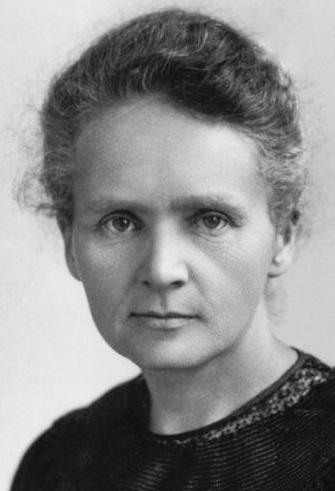
0 sources
Marie Curie
Summary
Marie Curie is a human[1]. She was born in Freta Street[2]. She died in Sancellemoz[3]. She worked as a physicist[4], chemist[5], and university teacher[6]. She ranks in the top 0.14% of human entities by monthly Wikipedia readership (295,433 views/month, #1,409 of 1,000,298).[7]
Key Facts
- Born in Freta Street[2], Marie Curie…
- Marie Curie was born in Warsaw[8].
- Marie Curie passed away in Sancellemoz[3].
- Burial took place at Panthéon[9].
- Burial took place at Cemetery Sceaux[10].
- Marie Curie's father was Władysław Skłodowski[11].
- Marie Curie's mother was Bronisława Skłodowska[12].
- Marie Curie was married to Pierre Curie[13].
- A child of Marie Curie was Irène Joliot-Curie[14].
- A child of Marie Curie was Ève Curie[15].
- Marie Curie held citizenship in Russian Empire[16].
- Marie Curie held citizenship in France[17].
- Polish was Marie Curie's native language[18].
- Marie Curie is identified as part of the Poles ethnic group[19].
- Marie Curie worked as a physicist[4].
- Marie Curie worked as a chemist[5].
- Marie Curie's professions included university teacher[6].
- Marie Curie's field of work was radioactivity[20].
- Marie Curie's field of work was chemistry[21].
- Marie Curie's field of work was physics[22].
- Marie Curie's field of work was radium[23].
- Marie Curie's field of work was polonium[24].
- Marie Curie held the position of professor[25].
- Marie Curie was employed by University of Paris[26].
- Marie Curie was employed by Sorbonne[27].
Product Details
The following facts are restated verbatim from public-domain and CC0 open-data sources — every line is independently verifiable against the named source's catalog.
MusicBrainz — CC0 open music encyclopedia
-
Type: Person[28]
-
Country: FR[29]
-
Began / founded: 1867-11-07[30]
-
Ended / dissolved: 1934-07-04[31]
-
MusicBrainz ID: 73f235f9-98b7-4092-a219-85ad031bcd6d[32]
Body
Origins and Family
Recorded place of birth include Freta Street[2], a street[33], in Poland[34] and Warsaw[8], a city with powiat rights in Poland[35], in Poland[36]. Marie Curie's father was Władysław Skłodowski[11]. Her mother was Bronisława Skłodowska[12]. She is identified as part of the Poles ethnic group[19]. Polish was her native language[18].
Education
Educated at Science Faculty of Paris[37], a faculty[38], in France[39], founded in 1811[40]; Flying University[41], a university[42], in Congress Poland[43]; University of Paris[44], a former entity[45], in France[46], founded in 1150[47], headquartered in Paris[48]; and X LO im. Królowej Jadwigi in Warsaw[49], a general education liceum[50], in Poland[51], founded in 1874[52], headquartered in 28 Ujazdowskie Avenue in Warsaw[53]. Marie Curie's doctoral advisor was Gabriel Lippmann[54].
Career and Affiliations
Recorded occupations include physicist[4], chemist[5], and university teacher[6]. Fields of work include radioactivity[20]; chemistry[21], a branch of science[55]; physics[22], a branch of science[56]; radium[23], a chemical element[57]; and polonium[24], a chemical element[58]. Employers include University of Paris[26], a former entity[59], in France[60], founded in 1150[61], headquartered in Paris[62]; Sorbonne[27]; and Curie Institute[63]. Marie Curie held the position of professor[25]. Doctoral students include André-Louis Debierne[64], Óscar Moreno[65], Marguerite Perey[66], Branca Edmée Marques[67], Zheng Dazhang[68], and Shi Shiyuan[69].
Recognition
Awards received include Nobel Prize in Chemistry[70], Nobel Prize in Physics[71], Willard Gibbs Award[72], honorary doctor of the Jagiellonian University of Krakow[73], John Scott Award[74], and Elliott Cresson Medal[75].
Personal Life
Among Marie Curie's spouses was Pierre Curie[13]. Children include Irène Joliot-Curie[14], a physicist[76], 1897–1956[77], of France[78], awarded the Officer of the Legion of Honour[79], specialised in chemistry[80] and Ève Curie[15], a journalist[81], 1904–2007[82], of France[83], awarded the Officer of the Legion of Honour[84], specialised in music[85]. Her religion is recorded as agnosticism[86].
Death and Burial
Marie Curie passed away in Sancellemoz[3]. Recorded place of burial include Panthéon[9] and Cemetery Sceaux[10].
Works and Contributions
Things named for Marie Curie include curium[87], curie[88], Pierre and Marie Curie University[89], Curie Institute[90], Marie Skłodowska-Curie Actions[91], Maria Curie-Skłodowska University[92], Musée Curie[93], and Maria Skłodowska-Curie Museum[94].
Why It Matters
Marie Curie ranks in the top 0.14% of human entities by monthly Wikipedia readership (295,433 views/month, #1,409 of 1,000,298).[7] She has Wikipedia articles in 30 language editions, a strong signal of global cultural recognition.[95] She is known by 65 alternative names across languages and contexts.[96]
She has been cited as an influence by Marguerite Perey[97], a physicist[98], 1909–1975[99], of France[100], awarded the Officer of the Legion of Honour[101], specialised in physics[102]; Robert Abbe[103], an oncologist[104], 1851–1928[105], of United States[106]; William Duane[107], a physicist[108], 1872–1935[109], of United States[110], awarded the Comstock Prize in Physics[111]; Catherine Chamié[112], a chemist[113], 1888–1950[114], of Russian Empire[115], specialised in nuclear physics[116]; and Sonia Cotelle[117], a physicist[118], 1896–1945[119], of Poland[120], specialised in radiochemistry[121].
She is credited with the discovery of radium[122], a chemical element[123] and polonium[124], a chemical element[125]. Entities named for her include curium[87], curie[88], Pierre and Marie Curie University[89], Curie Institute[90], Marie Skłodowska-Curie Actions[91], and Maria Curie-Skłodowska University[92].
Her notable doctoral advisees include Marguerite Perey[126], André-Louis Debierne[127], Émile Henriot[128], Ștefania Mărăcineanu[129], and Branca Edmée Marques[130].
FAQs
Where was Marie Curie born?
Marie Curie was born in Freta Street[2].
Where did Marie Curie die?
Marie Curie passed away in Sancellemoz[3].
Who were Marie Curie's parents?
Marie Curie's father was Władysław Skłodowski[11]. Marie Curie's mother was Bronisława Skłodowska[12].
Who was Marie Curie married to?
Marie Curie's spouses include Pierre Curie[13].
What did Marie Curie do for work?
Marie Curie worked as physicist[4], chemist[5], and university teacher[6].
Where did Marie Curie go to school?
Marie Curie was educated at Science Faculty of Paris[37], Flying University[41], University of Paris[44], and X LO im. Królowej Jadwigi in Warsaw[49].
What awards did Marie Curie receive?
Honors received include Nobel Prize in Chemistry[70], Nobel Prize in Physics[71], Willard Gibbs Award[72], and honorary doctor of the Jagiellonian University of Krakow[73].
Who did Marie Curie influence?
Marie Curie has been cited as an influence by Marguerite Perey[97], Robert Abbe[103], William Duane[107], and Catherine Chamié[112].
What did Marie Curie discover?
Marie Curie is credited as discoverer of radium[122] and polonium[124].