
Lev Landau
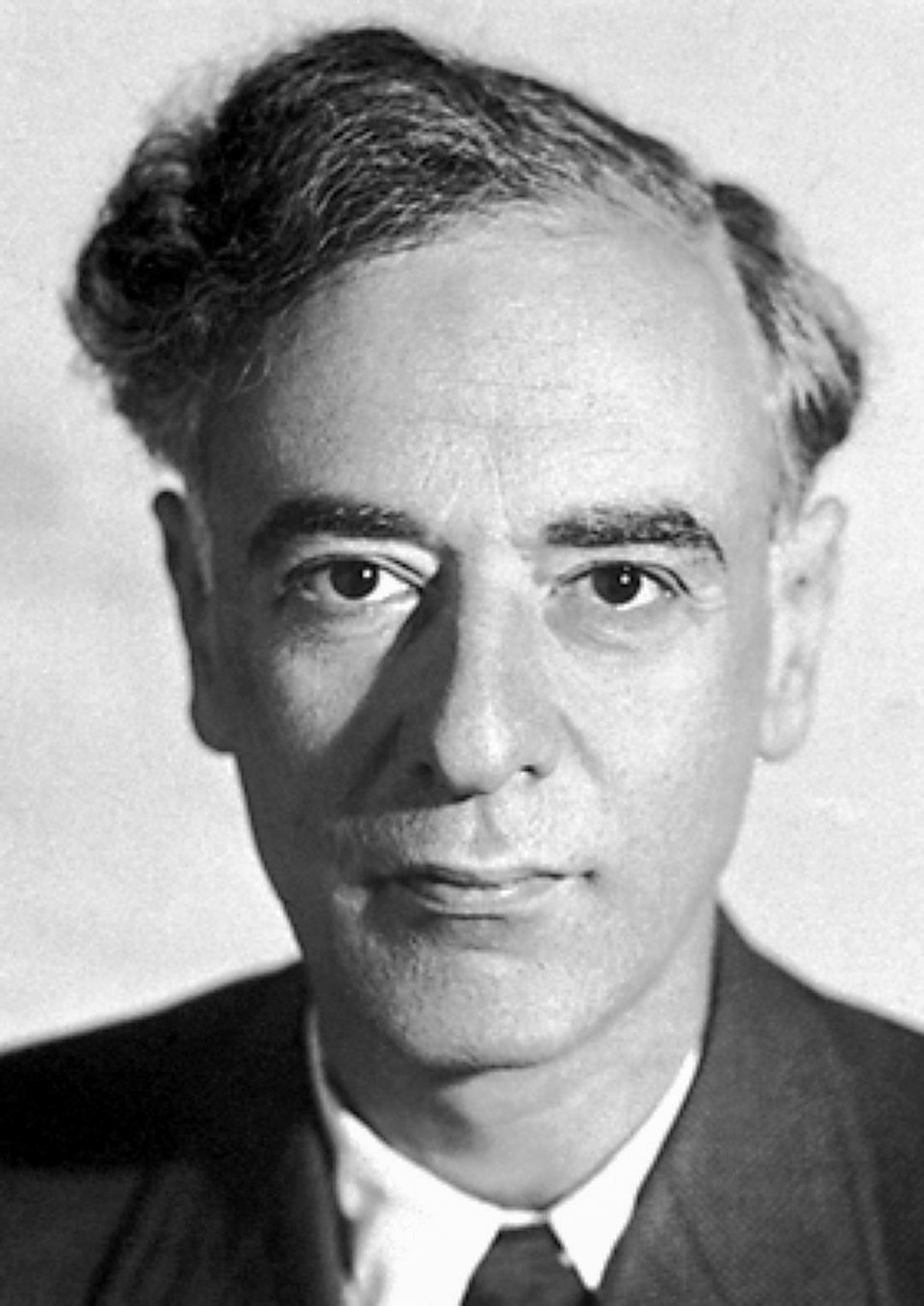
0 sources
Lev Landau was born on January 9, 1908, in Baku [1][2][3][4][5][6][7][8][9][10][11][12] and died on April 1, 1968, in Moscow due to an intestinal disease [1][2][13][3][5][6][7][8][9][11][12][6]. He was buried at Novodevichy Cemetery . His education took place at the Faculty of Physics and Mathematics of the Saint Petersburg University, Baku State University, and Baku Polytechnicum [3].
Landau worked as a physicist, inventor, non-fiction writer, university teacher, theoretical physicist, and mathematician [14][15][16][1][10]. He specialized in the field of theoretical physics and held positions at the Ioffe Institute (1931–1932), Kharkiv Institute of Physics and Technology (1932–1935), National University of Kharkiv (1935–1937), and P.L. Kapitza Institute for Physical Problems RAS (1939–1962) [3]. He adhered to atheism .
He received numerous awards including the Nobel Prize in Physics, Stalin Prize, Order of Lenin, Hero of Socialist Labour, Order of the Badge of Honour, and the Max Planck Medal [17][18][19]. Landau was a member of the Royal Society, German Academy of Sciences Leopoldina, National Academy of Sciences, and Russian Academy of Sciences [20][21][22].
Key Facts
- Place of burial: Novodevichy Cemetery[9]
- Mother: Lyubov Garkavi-Landau[10]
- Spouse: Konkordija Terentʹevna Landau-Drobanceva[11]
- Country of citizenship: Russian Empire[12], Azerbaijan Democratic Republic[13], Soviet Union[14]
- Native language: Russian[15]
- Ethnic group: Jewish people[16]
- Occupation: mathematician[17]
- Field of work: theoretical physics[18]
- Employer: National University of Kharkiv[19], Kharkiv Institute of Physics and Technology[20], P.L. Kapitza Institute for Physical Problems RAS[21], Ioffe Institute[22], Lomonosov Moscow State University[23], Moscow Institute of Physics and Technology[24]
- Educated at: Faculty of Physics and Mathematics of the Saint Petersburg University[25], Baku State University[26], Baku Polytechnicum[27]
- Doctoral advisor: Abram Ioffe[28]
- Award received: Nobel Prize in Physics[29], Stalin Prize[30], Order of Lenin[31], Hero of Socialist Labour[32], Order of the Badge of Honour[33], Max Planck Medal[34], Order of the Red Banner of Labour[35], Fritz London Award[36], Lenin Prize[37], Foreign Member of the Royal Society[38], Stalin Prize, 2nd degree[39], State Stalin Prize, 1st degree[40]
- Member of: Royal Society[41], German Academy of Sciences Leopoldina[42], National Academy of Sciences[43], Russian Academy of Sciences[44], Royal Danish Academy of Sciences and Letters[45], Royal Netherlands Academy of Arts and Sciences[46], American Academy of Arts and Sciences[47], Academy of Sciences of the USSR[48]
- Religion or worldview: atheism[49]
- Sex or gender: male[50]
- Doctoral student: Jakov Abramovič Smorodinskij[51], Alexei Abrikosov[52], Aleksandr Akhiezer[53], Mark Azbel[54], Isaak Pomeranchuk[55], Isaak Khalatnikov[56], Yakov Zeldovich[57], Alexander Patashinski[58], Roald Sagdeev[59], Alexander Andreev[60], Igor Dzyaloshinsky[61], Aleksandr Kompaneyets[62]
- Commons category: Lev Landau[63]
- Cause of death: thrombosis[64], intestinal disease[65]
Body
Works and Contributions
Things named for Lev Landau include Ginzburg–Landau–Abrikosov–Gor'kov theory[66], DLVO theory[67], Landau theory[68], Landau quantization[69], Landau pole[70], Landau damping[71], Landau distribution[72], and Landau Institute for Theoretical Physics[73].
Why It Matters
Lev Landau has Wikipedia articles in 30 language editions, a strong signal of global cultural recognition.[74] He is known by 84 alternative names across languages and contexts.[75]
He is credited with the discovery of density matrix[76] and Landau quantization[77], a formula[78], in Soviet Union[79]. Works attributed to him include Course of Theoretical Physics[80], a book series[81], written by Evgeny Lifshitz[82]. Entities named for him include Ginzburg–Landau–Abrikosov–Gor'kov theory[66], DLVO theory[67], Landau theory[68], Landau quantization[69], Landau pole[70], and Landau damping[71].
His notable doctoral advisees include Yakov Zeldovich[83], Vitaly Ginzburg[84], Evgeny Lifshitz[85], Alexei Abrikosov[86], Roald Sagdeev[87], and Isaak Khalatnikov[88].
FAQs
Where was Lev Landau born?
Lev Landau was born in Baku[1].
Where did Lev Landau die?
Lev Landau passed away in Moscow[2].
Who were Lev Landau's parents?
Lev Landau's mother was Lyubov Garkavi-Landau[10].
Who was Lev Landau married to?
Lev Landau's spouses include Konkordija Terentʹevna Landau-Drobanceva[11].
What did Lev Landau do for work?
Lev Landau worked as a physicist[3], inventor[4], non-fiction writer[5], university teacher[6], and theoretical physicist[7].
Where did Lev Landau go to school?
Lev Landau was educated at Faculty of Physics and Mathematics of the Saint Petersburg University[25], Baku State University[26], and Baku Polytechnicum[27].
What awards did Lev Landau receive?
Honors received include Nobel Prize in Physics[29], Stalin Prize[30], Order of Lenin[31], and Hero of Socialist Labour[32].
What did Lev Landau discover?
Lev Landau is credited as discoverer of density matrix[76] and Landau quantization[77].