
Karl Pearson
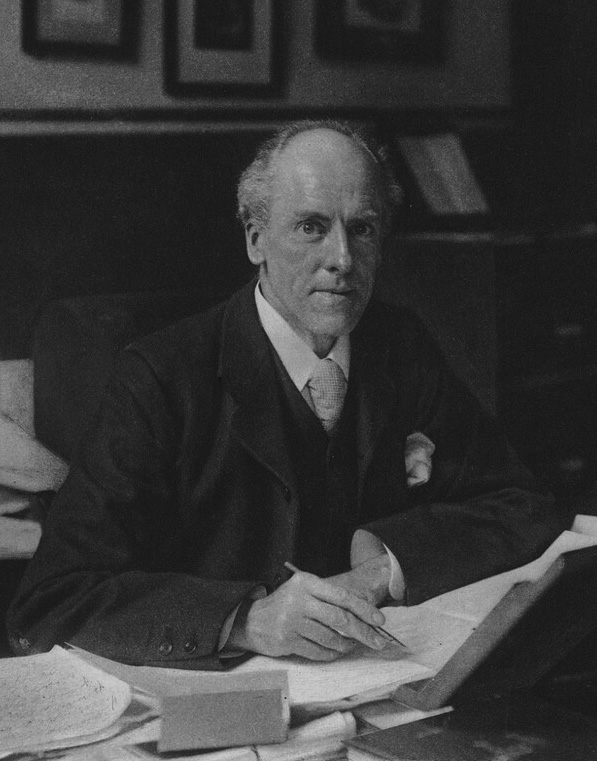
0 sources
Summary
Karl Pearson was born on March 27, 1857[1], in London[2]. He died on April 27, 1936[3], in Coldharbour[4]. He worked as a mathematician[5], historian of mathematics[6], statistician[7], historian[8], and philosopher[9]. He ranks in the top 0.7% of human entities by monthly Wikipedia readership (2,052 views/month, #7,005 of 1,000,298).[10]
Key Facts
- Place of burial: Church of St Michael[11]
- Father: William Pearson[12]
- Spouse: Maria Sharpe[13]
- Child: Egon Pearson[14], Helga Sharpe Pearson[15]
- Country of citizenship: United Kingdom[16]
- Occupation: biographer[17], psychologist[18], eugenicist[19]
- Field of work: mathematical statistics[20], statistics[21], biology[22], eugenics[23]
- Position held: editor[24]
- Employer: University College London[25], Gresham College[26], King's College London[27]
- Educated at: King's College[28], University College London[29], King's College London[30], Heidelberg University[31], University of Cambridge[32], University College School[33]
- Doctoral advisor: Francis Galton[34]
- Student: Nicholas Georgescu-Roegen[35], Kirstine Smith[36]
- Award received: Fellow of the Royal Society[37], Huxley Memorial Medal[38], Darwin Medal[39], Weldon Memorial Prize[40]
- Member of: Royal Society[41], American Academy of Arts and Sciences[42]
- Religion or worldview: Quakers[43]
- Sex or gender: male[44]
- Doctoral student: John Wishart[45], Florence Nightingale David[46], Philip Hall[47], Joseph Oscar Irwin[48], Egon Pearson[49], George Udny Yule[50]
- Commons category: Karl Pearson[51]
- Family name: Pearson[52]
- Given name: Karl[53]
- Topic's main category: Category:Karl Pearson[54]
Body
Works and Contributions
Things named for Karl Pearson include Pearson product-moment correlation coefficient[55], Pearson's chi-squared test[56], and Pearson distribution[57].
Why It Matters
Karl Pearson has Wikipedia articles in 26 language editions, a strong signal of global cultural recognition.[58] He is known by 28 alternative names across languages and contexts.[59]
He has been cited as an influence by Albert Einstein[60], a theoretical physicist[61], 1879–1955[62], of Kingdom of Württemberg[63], awarded the Barnard Medal for Meritorious Service to Science[64], specialised in theoretical physics[65]; Lewis Fry Richardson[66], a cartographer[67], 1881–1953[68], of United Kingdom[69], awarded the Fellow of the Royal Society[70], specialised in physics[71]; Philip Hall[72], a mathematician[73], 1904–1982[74], of United Kingdom[75], awarded the Fellow of the Royal Society[76], specialised in algebra[77]; Julia Bell[78], a geneticist[79], 1879–1979[80], of United Kingdom[81], awarded the Weldon Memorial Prize[82], specialised in genetics[83]; and Major Greenwood[84], an epidemiologist[85], 1880–1949[86], of United Kingdom[87], awarded the Fellow of the Royal Society[88], specialised in epidemiology[89].
He is credited with the discovery of Simpson's paradox[90], a paradox[91] and contingency table[92]. Works attributed to him include Biometrika[93], a scientific journal[94], in United Kingdom[95], founded in 1901[96]. Entities named for him include Pearson product-moment correlation coefficient[55], Pearson's chi-squared test[56], and Pearson distribution[57].
His notable doctoral advisees include Nicholas Georgescu-Roegen[97], George Udny Yule[98], Philip Hall[99], Florence Nightingale David[100], and John Wishart[101].
FAQs
Where was Karl Pearson born?
Karl Pearson's place of birth was London[2].
Where did Karl Pearson die?
Karl Pearson died in Coldharbour[4].
Who were Karl Pearson's parents?
Karl Pearson's father was William Pearson[12].
Who was Karl Pearson married to?
Karl Pearson's spouses include Maria Sharpe[13].
What did Karl Pearson do for work?
Karl Pearson worked as a mathematician[5], historian of mathematics[6], statistician[7], historian[8], and philosopher[9].
Where did Karl Pearson go to school?
Karl Pearson was educated at King's College[28], University College London[29], King's College London[30], and Heidelberg University[31].
What awards did Karl Pearson receive?
Honors received include Fellow of the Royal Society[37], Huxley Memorial Medal[38], Darwin Medal[39], and Weldon Memorial Prize[40].
Who did Karl Pearson influence?
Karl Pearson has been cited as an influence by Albert Einstein[60], Lewis Fry Richardson[66], Philip Hall[72], and Julia Bell[78].
What did Karl Pearson discover?
Karl Pearson is credited as discoverer of Simpson's paradox[90] and contingency table[92].