
Jean-Baptiste Perrin
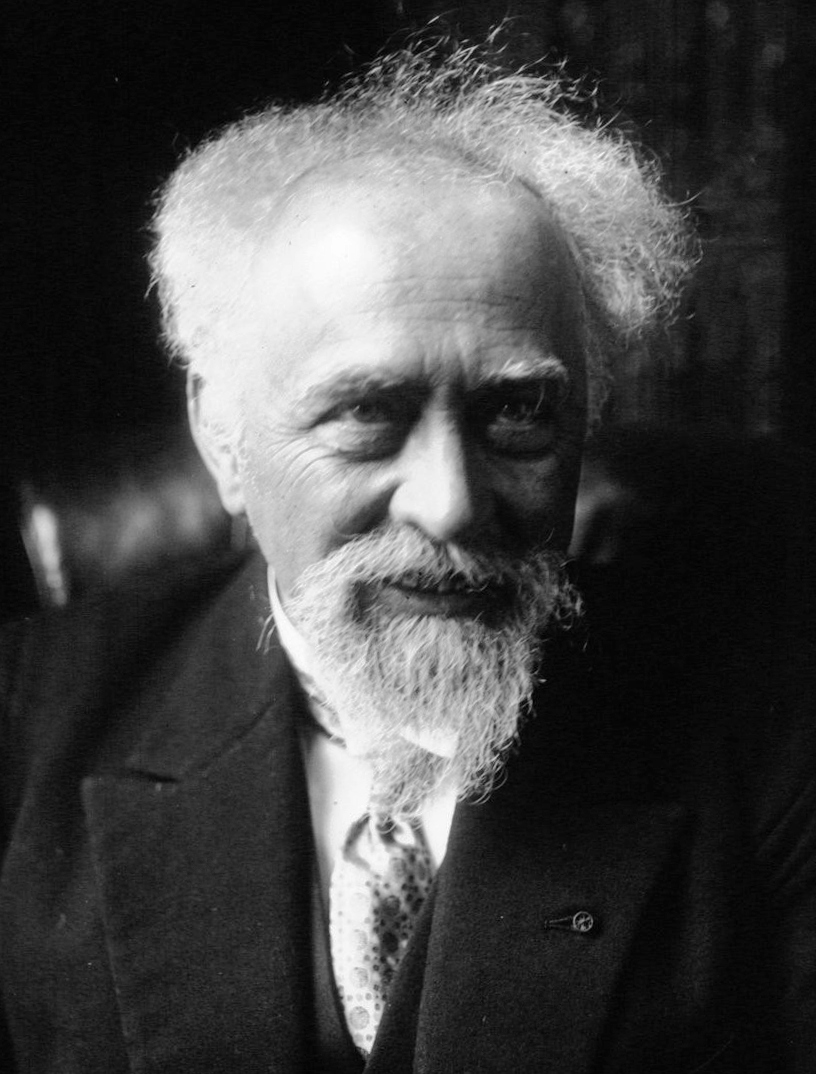
0 sources
Summary
Jean-Baptiste Perrin was born on September 30, 1870[1], in Lille[2]. He died on April 17, 1942[3], in New York City[4]. He worked as a physicist[5], university teacher[6], chemist[7], and theoretical physicist[8]. He ranks in the top 0.73% of human entities by monthly Wikipedia readership (2,123 views/month, #7,260 of 1,000,298).[9]
Key Facts
- Place of burial: Panthéon[10]
- Spouse: Henriette Perrin-Duportal[11]
- Child: Francis Perrin[12], Aline Lapicque[13]
- Country of citizenship: France[14]
- Ethnic group: French[15]
- Field of work: physics[16], physical science[17]
- Position held: president of the French Academy of Sciences[18], president[19]
- Employer: École Normale Supérieure[20], University of Paris[21]
- Educated at: University of Paris[22], École Normale Supérieure[23], Lycée Janson-de-Sailly[24]
- Doctoral advisor: Jules Violle[25], Marcel Brillouin[26]
- Notable work: Les Atomes[27], Œuvres scientifiques de Jean Perrin[28]
- Award received: Nobel Prize in Physics[29], Matteucci Medal[30], Commander of the Legion of Honour[31], Great Gold medal of the Société d'Encouragement au Progrès[32], Commander of the Order of Leopold II[33], La Caze Prize of the Academy of Sciences[34], Foreign Member of the Royal Society[35], Vallauri Prize[36], Q110929260[37], Jean Reynaud Prize[38]
- Member of: Royal Society[39], French Academy of Sciences[40], Royal Swedish Academy of Sciences[41], Russian Academy of Sciences[42], Academy of Sciences of Turin[43]
- Sex or gender: male[44]
- Doctoral student: Horia Hulubei[45], Yvette Cauchois[46], René Gosse[47]
- Commons category: Jean Perrin[48]
- Academic degree: professor[49]
- Family name: Perrin[50]
- Given name: Jean[51], Baptiste[52]
- Topic's main category: Category:Jean Perrin[53]
- Relative: Georges Lapicque[54]
Body
Works and Contributions
Things named for Jean-Baptiste Perrin include Jean-Perrin Prize[55] and 8116 Jeanperrin[56].
Why It Matters
Jean-Baptiste Perrin has Wikipedia articles in 30 language editions, a strong signal of global cultural recognition.[57] He is known by 47 alternative names across languages and contexts.[58]
He is credited with the discovery of Avogadro constant[59], a physical constant[60]. Entities named for him include Jean-Perrin Prize[55] and 8116 Jeanperrin[56].
His notable doctoral advisees include Yvette Cauchois[61], a physicist[62], 1908–1999[63], of France[64], awarded the Knight of the Legion of Honour[65], specialised in spectroscopy[66]; Horia Hulubei[67], a physicist[68], 1896–1972[69], of Romania[70]; and Edmond Bauer[71], a physicist[72], 1880–1963[73], of France[74], awarded the Officer of the Legion of Honour[75], specialised in physical chemistry[76].
FAQs
Where was Jean-Baptiste Perrin born?
Jean-Baptiste Perrin's place of birth was Lille[2].
Where did Jean-Baptiste Perrin die?
Jean-Baptiste Perrin passed away in New York City[4].
Who was Jean-Baptiste Perrin married to?
Jean-Baptiste Perrin's spouses include Henriette Perrin-Duportal[11].
What did Jean-Baptiste Perrin do for work?
Jean-Baptiste Perrin worked as a physicist[5], university teacher[6], chemist[7], and theoretical physicist[8].
Where did Jean-Baptiste Perrin go to school?
Jean-Baptiste Perrin was educated at University of Paris[22], École Normale Supérieure[23], and Lycée Janson-de-Sailly[24].
What awards did Jean-Baptiste Perrin receive?
Honors received include Nobel Prize in Physics[29], Matteucci Medal[30], Commander of the Legion of Honour[31], and Great Gold medal of the Société d'Encouragement au Progrès[32].
What did Jean-Baptiste Perrin discover?
Jean-Baptiste Perrin is credited as discoverer of Avogadro constant[59].