
French Revolution
0 sources
Summary
French Revolution is a historical event[1]. It ranks in the top 2% of historical event entities by monthly Wikipedia readership (97,963 views/month).[2]
Key Facts
- Country: France[3]
- Instance of: revolution[4]
- Location: France[5]
- Commons category: French Revolution[6]
- Has part(s): Reign of Terror[7], proclamation of the abolition of the monarchy[8], Tennis Court Oath[9], Women's March on Versailles[10]
- Start time: July 14, 1789[11]
- End time: November 9, 1799[12]
- Point in time: May 5, 1789[13]
- Participant: Louis Antoine de Saint-Just[14]
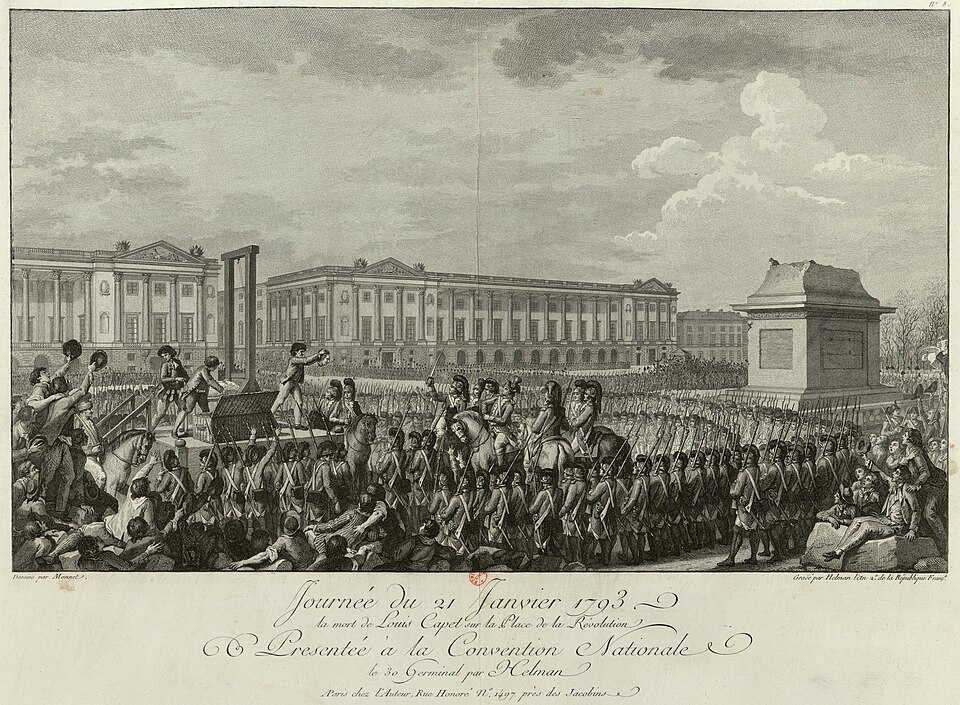
- Significant event: Storming of the Bastille[15], September Massacres[16], execution of Louis XVI[17], Thermidorian Reaction[18], Coup of 18 Fructidor[19], Coup of 30 Prairial Year VII[20], coup of 18 Brumaire[21]
- Topic's main category: Category:French Revolution[22]
- Topic's main Wikimedia portal: Portal:French Revolution[23]
- Described by source: Encyclopædia Britannica 11th edition[24], Brockhaus and Efron Encyclopedic Dictionary[25], The Nuttall Encyclopædia[26], Metropolitan Museum of Art Tagging Vocabulary[27], Meyers Konversations-Lexikon, 4th edition (1885–1890)[28], Granat Encyclopedic Dictionary[29], Meyer’s Universum, Zehnter Band[30], New International Encyclopedia[31]
- Topic has template: Template:French Revolution[32]
- Native label: Révolution française[33]
- Different from: French Revolution[34]
- History of topic: timeline of the French Revolution[35]
- On focus list of Wikimedia project: Wikipedia:List of articles all languages should have[36], Wikipedia:Vital articles/Level/4[37]
Body
Outcome and Impact
Things named for French Revolution include place de la Concorde[38], a square[39], in France[40], founded in 1772[41] and French Revolution Square[42], a square[43], in Slovenia[44].
Why It Matters
French Revolution has Wikipedia articles in 30 language editions, a strong signal of global cultural recognition.[45] It is known by 46 alternative names across languages and contexts.[46]
It has been cited as an influence by fascism[47], a political system[48] and Maximilian von Montgelas[49], a politician[50], 1759–1838[51], of Kingdom of Bavaria[52], awarded the Order of Saint Hubert[53], specialised in politics[54].
Entities named for it include place de la Concorde[38], a square[39], in France[40], founded in 1772[41] and French Revolution Square[42], a square[43], in Slovenia[44].
FAQs
Who did French Revolution influence?
French Revolution has been cited as an influence by fascism[47] and Maximilian von Montgelas[49].