
Clara Immerwahr
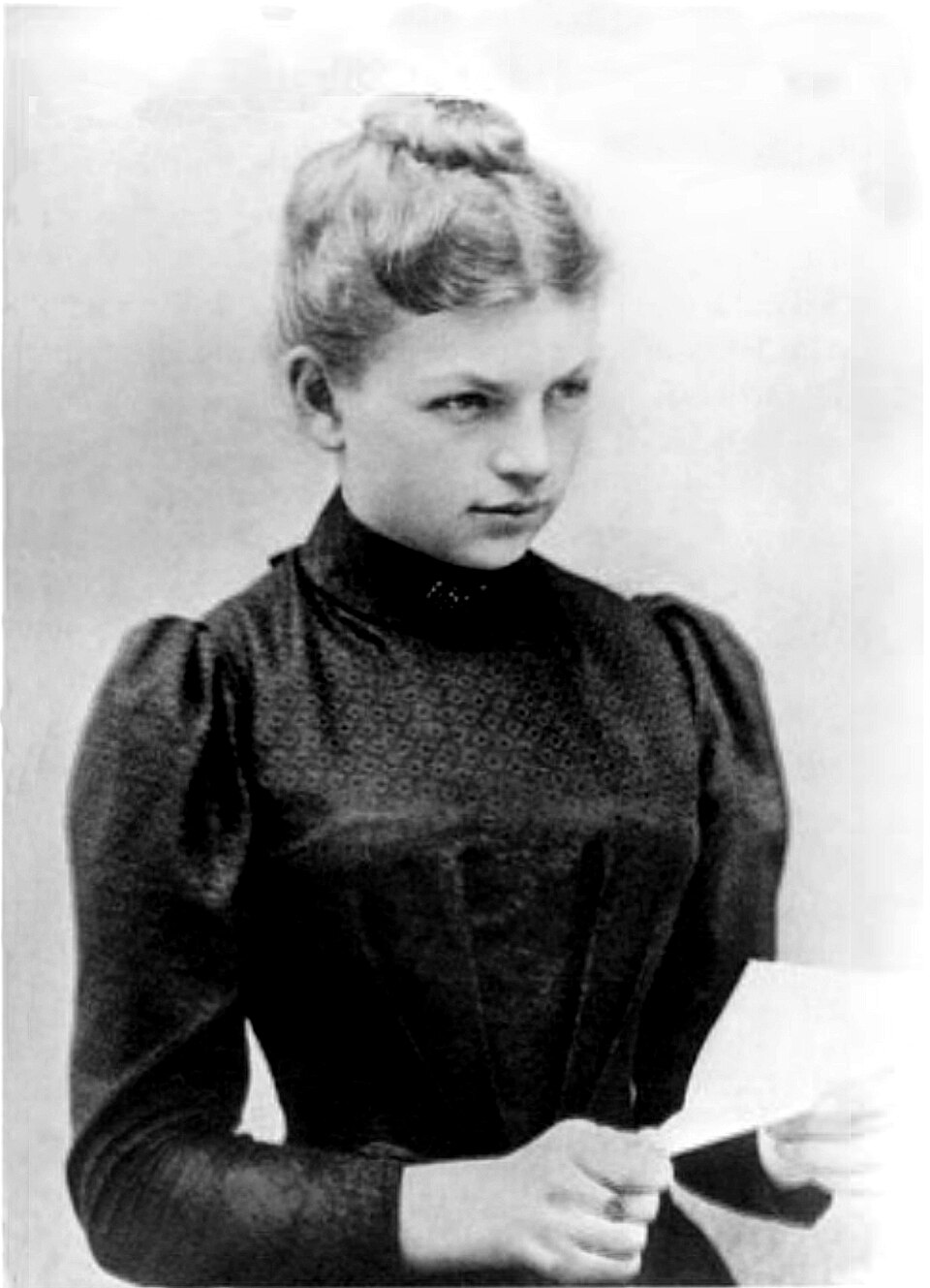
0 sources
Summary
Clara Immerwahr is a human[1]. Her place of birth was Wojczyce[2]. She was born on June 21, 1870[3]. She died in Dahlem[4]. She died on May 2, 1915[5]. She worked as a chemist[6], women's rights activist[7], and peace activist[8]. She ranks in the top 0.7% of human entities by monthly Wikipedia readership (573 views/month, #6,995 of 1,000,298).[9]
Key Facts
- Clara Immerwahr was born in Wojczyce[2].
- Clara Immerwahr passed away in Dahlem[4].
- Clara Immerwahr passed away in Berlin[10].
- Clara Immerwahr was born on June 21, 1870[3].
- Clara Immerwahr died on May 2, 1915[5].
- Clara Immerwahr is buried at Friedhof am Hörnli[11].
- Clara Immerwahr's father was Philipp Immerwahr[12].
- Clara Immerwahr's mother was Anna Immerwahr[13].
- Clara Immerwahr was married to Fritz Haber[14].
- A child of Clara Immerwahr was Hermann Haber[15].
- Clara Immerwahr held citizenship in Kingdom of Prussia[16].
- Clara Immerwahr held citizenship in Germany[17].
- Clara Immerwahr's professions included chemist[6].
- Clara Immerwahr's professions included women's rights activist[7].
- Clara Immerwahr's professions included peace activist[8].
- Clara Immerwahr's field of work was chemistry[18].
- Clara Immerwahr's field of work was physical chemistry[19].
- Clara Immerwahr's education included a stint at University of Wrocław[20].
- Clara Immerwahr's doctoral advisor was Richard Abegg[21].
- Clara Immerwahr's religion is recorded as Lutheranism[22].
- Clara Immerwahr's religion is recorded as Judaism[23].
- Clara Immerwahr is recorded as female[24].
- Clara Immerwahr's instance of is recorded as human[25].
- Clara Immerwahr's Commons category is recorded as Clara Immerwahr[26].
- The cause of death was gunshot wound[27].
Body
Origins and Family
Clara Immerwahr was born in Wojczyce[2]. She was born on June 21, 1870[3]. Her father was Philipp Immerwahr[12]. Her mother was Anna Immerwahr[13].
Education
Clara Immerwahr was educated at University of Wrocław[20]. Her doctoral advisor was Richard Abegg[21]. She earned the academic degree of Doctor of Natural Sciences[28]. She studied under Richard Abegg[29].
Career and Affiliations
Recorded occupations include chemist[6], women's rights activist[7], and peace activist[8]. Fields of work include chemistry[18], a branch of science[30] and physical chemistry[19], a branch of chemistry[31].
Personal Life
Clara Immerwahr was married to Fritz Haber[14]. A child of her was Hermann Haber[15]. Religious affiliations include Lutheranism[22], a Christian denominational family[32], founded in 1517[33] and Judaism[23], a religion[34], founded in -0500[35].
Death and Burial
Clara Immerwahr died on May 2, 1915[5]. Recorded place of death include Dahlem[4], a locality of Berlin[36], in Germany[37] and Berlin[10], a seat of government[38], in Margraviate of Brandenburg[39], founded in 1244[40]. The cause of death was gunshot wound[27]. Burial took place at Friedhof am Hörnli[11].
Works and Contributions
Things named for Clara Immerwahr include Clara Immerwahr Award[41], an award[42].
Why It Matters
Clara Immerwahr ranks in the top 0.7% of human entities by monthly Wikipedia readership (573 views/month, #6,995 of 1,000,298).[9] She has Wikipedia articles in 26 language editions, a strong signal of global cultural recognition.[43] She is known by 24 alternative names across languages and contexts.[44]
Entities named for her include Clara Immerwahr Award[41], an award[42].
FAQs
Where was Clara Immerwahr born?
Clara Immerwahr was born in Wojczyce[2].
Where did Clara Immerwahr die?
Clara Immerwahr died in Dahlem[4].
Who were Clara Immerwahr's parents?
Clara Immerwahr's father was Philipp Immerwahr[12]. Clara Immerwahr's mother was Anna Immerwahr[13].
Who was Clara Immerwahr married to?
Clara Immerwahr's spouses include Fritz Haber[14].
What did Clara Immerwahr do for work?
Clara Immerwahr worked as chemist[6], women's rights activist[7], and peace activist[8].
Where did Clara Immerwahr go to school?
Clara Immerwahr was educated at University of Wrocław[20].