
carbohydrate
organic compound that consists only of carbon, hydrogen, and oxygen
Press Enter · cited answer in seconds
0 sources
carbohydrate
Summary
carbohydrate is a structural class of chemical entities[1]. carbohydrate has Wikipedia articles in 30 language editions, a strong signal of global cultural recognition.[2]
Key Facts
- carbohydrate's instance of is recorded as structural class of chemical entities[3].
- carbohydrate's instance of is recorded as nutrient group[4].
- carbohydrate is a type of polyol[5].
- carbohydrate is a type of carbohydrate derivative[6].
- carbohydrate is part of carbohydrate binding[7].
- carbohydrate is part of carbohydrate metabolic process[8].
- carbohydrate is part of response to carbohydrate[9].
- carbohydrate is part of carbohydrate biosynthetic process[10].
- carbohydrate is part of carbohydrate catabolic process[11].
- carbohydrate is part of cellular response to carbohydrate stimulus[12].
- carbohydrate is part of carbohydrate transmembrane transport[13].
- carbohydrate is part of ABC-type carbohydrate transporter activity[14].
- carbohydrate is part of carbohydrate:proton symporter activity[15].
- carbohydrate is part of carbohydrate:cation symporter activity[16].
- carbohydrate is part of carbohydrate transport[17].
- carbohydrate is part of carbohydrate transmembrane transporter activity[18].
- carbohydrate is part of carbohydrate export[19].
- carbohydrate is part of carbohydrate import across plasma membrane[20].
- carbohydrate is part of carbohydrate homeostasis[21].
- carbohydrate's Commons category is recorded as Carbohydrates[22].
- carbohydrate's said to be the same as is recorded as sugar[23].
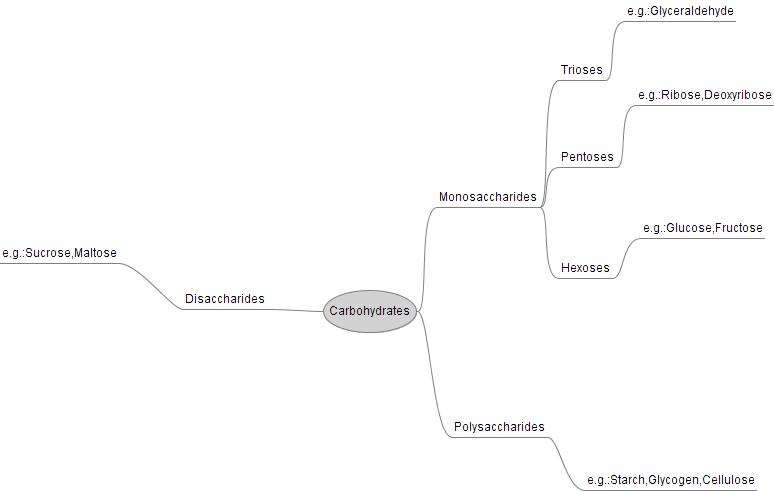
- carbohydrate comprises simple carbohydrates[24].
- carbohydrate comprises complex carbohydrates[25].
- carbohydrate's topic's main category is recorded as Category:Carbohydrates[26].
- carbohydrate's described by source is recorded as Brockhaus and Efron Encyclopedic Dictionary[27].
Why It Matters
carbohydrate has Wikipedia articles in 30 language editions, a strong signal of global cultural recognition.[2] carbohydrate is known by 51 alternative names across languages and contexts.[28]