
Alexander Friedmann
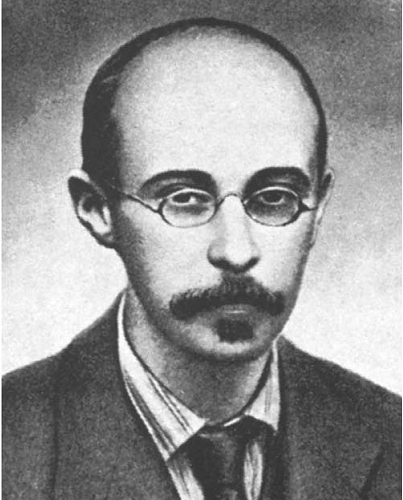
0 sources
Summary
Alexander Friedmann was born on June 16, 1888[1], in Saint Petersburg[2]. He died on September 16, 1925[3], in Saint Petersburg[4]. He worked as a mathematician[5], physicist[6], meteorologist[7], and scientist[8]. He ranks in the top 0.71% of human entities by monthly Wikipedia readership (1,537 views/month, #7,067 of 1,000,298).[9]
Key Facts
- Place of burial: Smolenskoye Orthodox Cemetery[10]
- Father: Alexander Friedmann[11]
- Mother: Ludmila Ignatievna Friedmann[12]
- Country of citizenship: Russian Empire[13], Soviet Union[14]
- Field of work: theoretical physics[15], geophysics[16], theoretical meteorology[17], cosmology[18], mathematics[19], pure mathematics[20], atmospheric sounding[21], aerodynamics[22], physics[23], hydromechanics[24], dynamic meteorology[25]
- Position held: professor[26], dean[27], prorector[28], editor-in-chief[29], director[30], adjunct professor[31]
- Employer: St. Petersburg State Transport University[32], Saint Petersburg Mining University[33], Perm State National Research University[34], Saint Petersburg State University[35], The Voeikov Main Geophysical Observatory[36], Vavilov State Optical Institute JSC[37], Phazotron[38], N.G. Kuznetsov Naval Academy[39], Peter the Great Saint Petersburg State Polytechnical University[40]
- Educated at: The Second Saint Petersburg Gymnasium[41], Faculty of Physics and Mathematics of the Saint Petersburg University[42]
- Doctoral advisor: Vladimir Steklov[43], Paul Ehrenfest[44], Andrey Markov[45]
- Award received: Order of St. George[46], Order of St. Vladimir, 4th class[47], Order of Saint Vladimir 4th class with swords and bow[48], Cross of St. George 4th class[49], Gold Sword for Bravery[50], Order of St. Vladimir[51], Lenin Prize[52]
- Sex or gender: male[53]
- Doctoral student: George Gamow[54], Nikolai Kochin[55], Georgiy Grinberg[56]
- Commons category: Alexander Friedmann[57]
- Military, police or special rank: praporshchik[58]
- Cause of death: typhus[59]
- Academic degree: Master of Science[60]
- Residence: Kyiv[61], Pavlovsk[62], Perm[63], Saint Petersburg[64]
- Participated in conflict: World War I[65]
Body
Works and Contributions
Things named for Alexander Friedmann include Friedmann equations[66], Friedmann–Lemaître–Robertson–Walker metric[67], Friedmann Prize[68], Fridman[69], and Alexander Friedmann Award[70].
Why It Matters
Alexander Friedmann has Wikipedia articles in 28 language editions, a strong signal of global cultural recognition.[71] He is known by 88 alternative names across languages and contexts.[72]
He is credited with the discovery of Friedmann equations[73], a system of differential equations[74] and Friedmann–Lemaître–Robertson–Walker metric[75], an exact solution in general relativity[76]. Entities named for him include Friedmann equations[66], Friedmann–Lemaître–Robertson–Walker metric[67], Friedmann Prize[68], Fridman[69], and Alexander Friedmann Award[70].
His notable doctoral advisees include George Gamow[77], a physicist[78], 1904–1968[79], of Russian Empire[80], awarded the Kalinga Prize[81], specialised in theoretical physics[82] and Nikolai Kochin[83], a mathematician[84], 1901–1944[85], of Soviet Union[86], specialised in physics[87].
FAQs
Where was Alexander Friedmann born?
Alexander Friedmann was born in Saint Petersburg[2].
Where did Alexander Friedmann die?
Alexander Friedmann died in Saint Petersburg[4].
Who were Alexander Friedmann's parents?
Alexander Friedmann's father was Alexander Friedmann[11]. Alexander Friedmann's mother was Ludmila Ignatievna Friedmann[12].
What did Alexander Friedmann do for work?
Alexander Friedmann worked as a mathematician[5], physicist[6], meteorologist[7], and scientist[8].
Where did Alexander Friedmann go to school?
Alexander Friedmann was educated at The Second Saint Petersburg Gymnasium[41] and Faculty of Physics and Mathematics of the Saint Petersburg University[42].
What awards did Alexander Friedmann receive?
Honors received include Order of St. George[46], Order of St. Vladimir, 4th class[47], Order of Saint Vladimir 4th class with swords and bow[48], and Cross of St. George 4th class[49].
What did Alexander Friedmann discover?
Alexander Friedmann is credited as discoverer of Friedmann equations[73] and Friedmann–Lemaître–Robertson–Walker metric[75].