
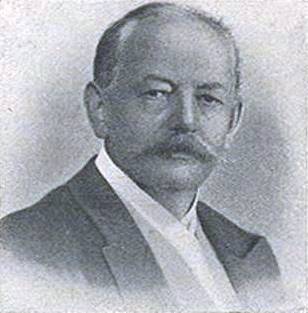
Adolf Engler
0 sources
Summary
Adolf Engler was born on March 25, 1844[1], in Żagań[2]. He died on October 10, 1930[3], in Berlin[4]. He worked as a botanist[5], university teacher[6], botanical illustrator[7], botanical collector[8], and taxonomist[9]. He ranks in the top 0.73% of human entities by monthly Wikipedia readership (415 views/month, #7,267 of 1,000,298).[10]
Key Facts
- Place of burial: Botanic Garden and Botanical Museum Berlin[11]
- Country of citizenship: Weimar Republic[12]
- Occupation: curator[13], scientific collector[14], editor[15]
- Field of work: botany[16], taxonomy[17]
- Position held: professor[18], member of the Sejm of the Polish People's Republic[19]
- Employer: Kiel University[20], Botanic Garden and Botanical Museum Berlin[21], Humboldt-Universität zu Berlin[22], University of Wrocław[23], Technical University of Munich[24]
- Educated at: University of Wrocław[25], Ludwig-Maximilians-Universität München[26], Magdalenaeum Wrocław[27]
- Doctoral advisor: Heinrich Göppert[28]
- Notable work: Engler system[29]
- Award received: Linnean Medal[30]
- Member of: German Academy of Sciences Leopoldina[31], Saint Petersburg Academy of Sciences[32], Academy of Sciences of the USSR[33], Royal Swedish Academy of Sciences[34], Hungarian Academy of Sciences[35], Royal Physiographic Society in Lund[36], American Academy of Arts and Sciences[37], Russian Academy of Sciences[38], Royal Prussian Academy of Sciences[39], Royal Netherlands Academy of Arts and Sciences[40], National Academy of Sciences[41], Munich fraternity Arminia-Rhenania[42], American Philosophical Society[43], French Academy of Sciences[44]
- Sex or gender: male[45]
- Doctoral student: Ludwig Diels[46], Edgar Irmscher[47], Franz Josef Niedenzu[48], Friedrich Markgraf[49], Oskar Eberhard Ulbrich[50], Hermann Harms[51], Kurt Krause[52], Paul Graebner[53], Rudolf Mansfeld[54], Johannes Mattfeld[55], Robert Knud Friedrich Pilger[56], Max Burret[57]
- Commons category: Adolf Engler[58]
- Academic degree: Doctor of Philosophy[59]
- Residence: Germany[60]
- Family name: Engler[61]
- Given name: Adolf[62], Heinrich[63], Gustav[64]
Body
Works and Contributions
Things named for Adolf Engler include Englerophytum[65], Englerodendron[66], Engleromyces[67], Engleria[68], Englerina[69], Englerocharis[70], Englerodaphne[71], and Engler Medal[72].
Why It Matters
Adolf Engler has Wikipedia articles in 23 language editions, a strong signal of global cultural recognition.[73] He is known by 54 alternative names across languages and contexts.[74]
Works attributed to him include Engler system[75], a plant taxonomy[76] and Die natürlichen Pflanzenfamilien[77], a written work[78]. Entities named for him include Englerophytum[65], Englerodendron[66], Engleromyces[67], Engleria[68], Englerina[69], and Englerocharis[70].
His notable doctoral advisees include Ludwig Diels[79], a botanist[80], 1874–1945[81], of German Reich[82], awarded the Goethe Medal for Art and Science[83], specialised in botany[84]; Robert Knud Friedrich Pilger[85], a botanist[86], 1876–1953[87], of Germany[88], specialised in botany[89]; Hermann Harms[90]; Kurt Krause[91]; Paul Graebner[92]; and Max Burret[93].
FAQs
Where was Adolf Engler born?
Adolf Engler's place of birth was Żagań[2].
Where did Adolf Engler die?
Adolf Engler passed away in Berlin[4].
What did Adolf Engler do for work?
Adolf Engler worked as a botanist[5], university teacher[6], botanical illustrator[7], botanical collector[8], and taxonomist[9].
Where did Adolf Engler go to school?
Adolf Engler was educated at University of Wrocław[25], Ludwig-Maximilians-Universität München[26], and Magdalenaeum Wrocław[27].
What awards did Adolf Engler receive?
Honors received include Linnean Medal[30].