
Wilhelm I
0 sources
Summary
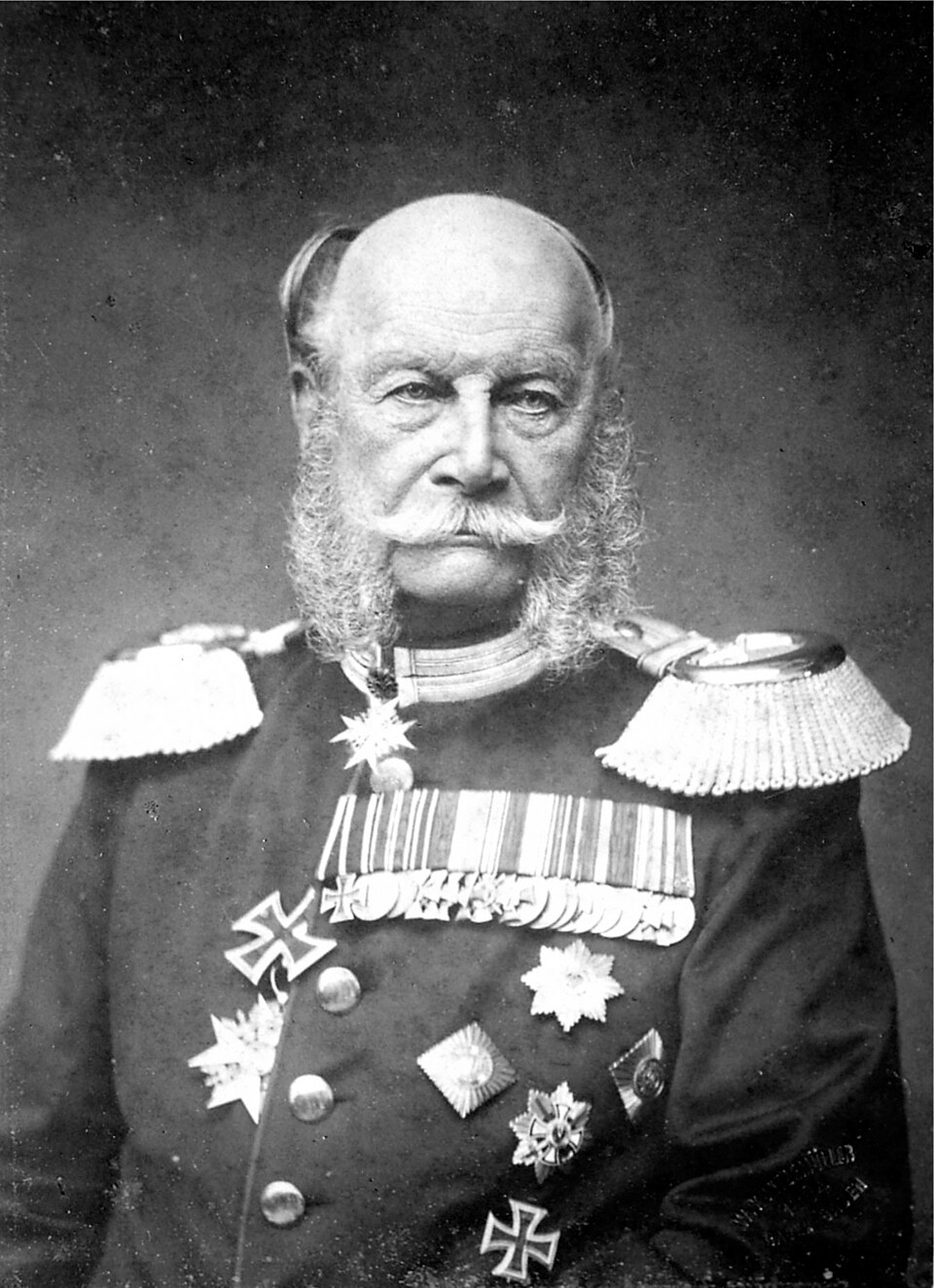
Wilhelm I was born on March 22, 1797[1], in Kronprinzenpalais[2]. He died on March 9, 1888[3], in Berlin[4]. He worked as a monarch[5] and politician[6]. He ranks in the top 0.57% of human entities by monthly Wikipedia readership (23,398 views/month, #5,725 of 1,000,298).[7]
Key Facts
- Place of burial: mausoleum of Charlottenburg Park[8]
- Father: Frederick William III of Prussia[9]
- Mother: Louise of Mecklenburg-Strelitz[10]
- Spouse: Augusta of Saxe-Weimar-Eisenach[11]
- Child: Frederick III, German Emperor[12], Princess Louise of Prussia[13], Agnes Dettman[14]
- Country of citizenship: Kingdom of Prussia[15], German Empire[16]
- Position held: German Emperor[17], King of Prussia[18]
- Award received: Knight of the Order of the Golden Fleece[19], Order of the Black Eagle[20], Order of the White Eagle[21], Order of Saint Alexander Nevsky[22], Order of St. Andrew[23], Order of St. George, 4th class[24], Order of the Red Eagle 1st Class[25], Knight of the Order of the Crown of Italy[26], knight of the Order of Saints Maurice and Lazarus[27], Order of St. Vladimir, 1st class[28], Knight of the Order of the Elephant[29], Order of St. George[30], Order of St. Vladimir[31], Order of the Golden Fleece[32]
- Member of: Russian Academy of Sciences[33]
- Religion or worldview: Prussian Union of Churches[34]
- Sex or gender: male[35]
- Family: House of Hohenzollern[36]
- Noble title: King of Prussia[37], prince[38], German Emperor[39]
- Commons category: Wilhelm I of Germany[40]
- Military, police or special rank: colonel general[41]
- Unmarried partner: Elisa Radziwill[42]
- Participated in conflict: Franco-Prussian War[43], Napoleonic Wars[44], Revolutions of 1848 in the German states[45], Hundred Days[46], War of the Sixth Coalition[47], Battle of Gravelotte[48], Battle of Sedan[49], Battle of Königgrätz[50], Battle of Waterloo[51], Battle of Ligny[52], Battle of Paris[53], Battle of Bar-sur-Aube[54]
- Family name: von Preußen[55]
- Given name: Wilhelm[56], Friedrich[57], Ludwig[58]
Body
Works and Contributions
Things named for Wilhelm I include Kiel Canal[59], a canal[60], in Germany[61]; Kaiser-Wilhelm-Gedächtniskirche[62], a church building[63], in Germany[64], founded in 1891[65]; Year of the Three Emperors[66], a year[67]; Three Emperors Dinner[68], a banquet[69]; Kaiser Wilhelm[70], an apple cultivar[71], founded in 1850[72]; Karl-Liebknecht-Straße[73], a street[74], in Germany[75], founded in 1500[76]; Grunewald Tower[77], a tower[78], in Germany[79], founded in 1898[80]; and SMS Kaiser Wilhelm der Grosse[81], a pre-dreadnought battleship[82].
Why It Matters
Wilhelm I has Wikipedia articles in 29 language editions, a strong signal of global cultural recognition.[83] He is known by 97 alternative names across languages and contexts.[84]
Entities named for him include Kiel Canal[59], a canal[60], in Germany[61]; Kaiser-Wilhelm-Gedächtniskirche[62], a church building[63], in Germany[64], founded in 1891[65]; Year of the Three Emperors[66], a year[67]; Three Emperors Dinner[68], a banquet[69]; Kaiser Wilhelm[70], an apple cultivar[71], founded in 1850[72]; and Karl-Liebknecht-Straße[73], a street[74], in Germany[75], founded in 1500[76].
FAQs
Where was Wilhelm I born?
Wilhelm I's place of birth was Kronprinzenpalais[2].
Where did Wilhelm I die?
Wilhelm I passed away in Berlin[4].
Who were Wilhelm I's parents?
Wilhelm I's father was Frederick William III of Prussia[9]. Wilhelm I's mother was Louise of Mecklenburg-Strelitz[10].
Who was Wilhelm I married to?
Wilhelm I's spouses include Augusta of Saxe-Weimar-Eisenach[11].
What did Wilhelm I do for work?
Wilhelm I worked as a monarch[5] and politician[6].
What awards did Wilhelm I receive?
Honors received include Knight of the Order of the Golden Fleece[19], Order of the Black Eagle[20], Order of the White Eagle[21], and Order of Saint Alexander Nevsky[22].