
Wilhelm Dilthey
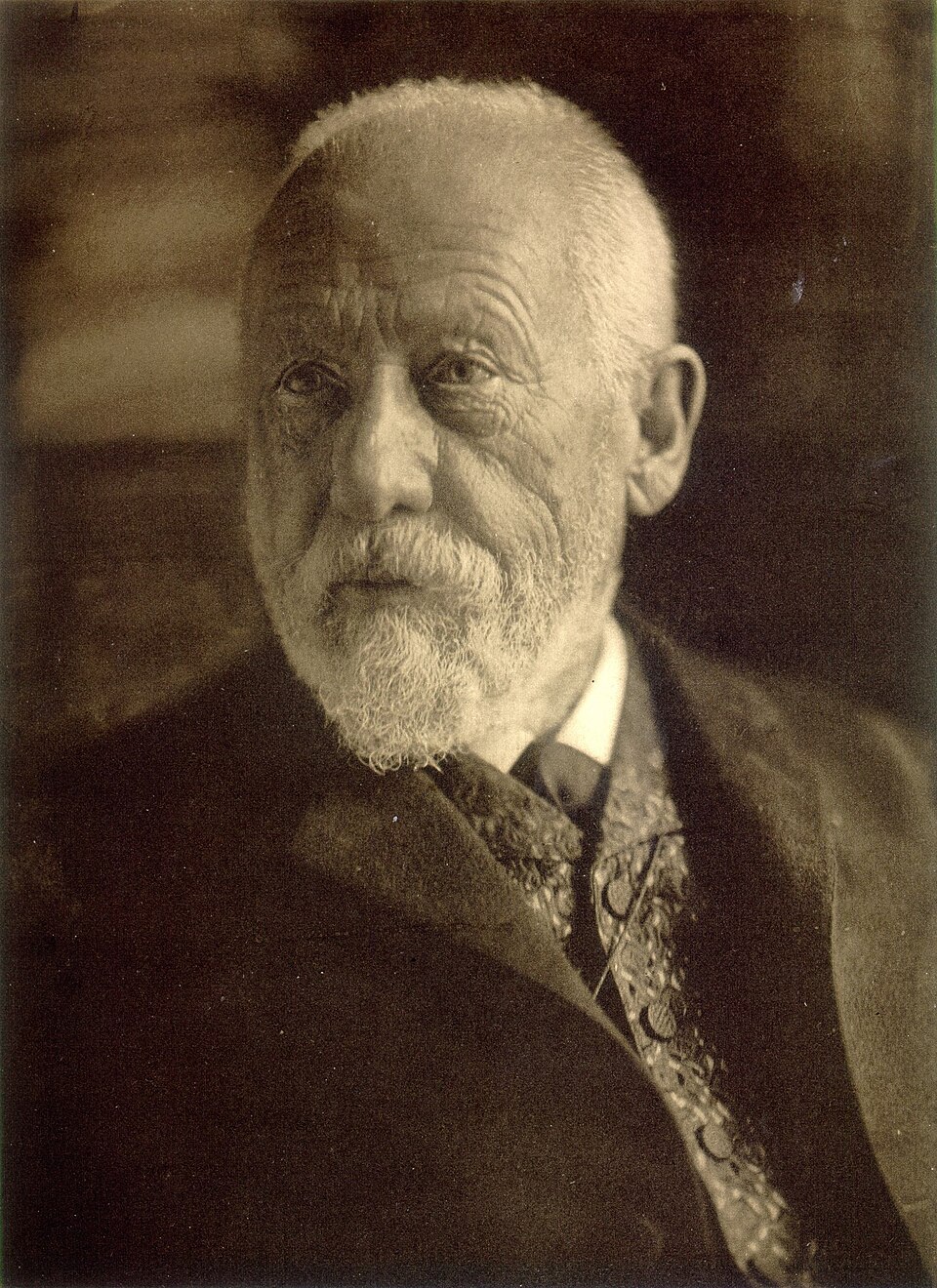
0 sources
Summary
Wilhelm Dilthey was born on November 19, 1833[1], in Biebrich[2]. He died on October 1, 1911[3], in Seis am Schlern[4]. He worked as a philosopher[5], historian[6], psychologist[7], theologian[8], and pedagogue[9]. He ranks in the top 0.71% of human entities by monthly Wikipedia readership (3,693 views/month, #7,148 of 1,000,298).[10]
Key Facts
- Place of burial: Biebrich[11]
- Father: Maximilian Dilthey[12]
- Mother: Maria Laura Dilthey[13]
- Spouse: Katharina Dilthey[14]
- Child: Clara Misch[15]
- Country of citizenship: Kingdom of Prussia[16]
- Occupation: sociologist[17], university teacher[18], literary critic[19], teacher[20], literary historian[21], writer[22]
- Field of work: philosophy[23], intellectual history[24], understanding psychology[25]
- Employer: University of Wrocław[26], University of Basel[27], Humboldt-Universität zu Berlin[28], Kiel University[29]
- Educated at: Heidelberg University[30], Humboldt-Universität zu Berlin[31]
- Award received: Pour le Mérite for Sciences and Arts order[32]
- Member of: Royal Prussian Academy of Sciences[33], Bavarian Academy of Sciences and Humanities[34]
- Religion or worldview: Protestant church[35]
- Influenced by: Immanuel Kant[36], Friedrich Schleiermacher[37], Georg Wilhelm Friedrich Hegel[38], John Stuart Mill[39]
- Sex or gender: male[40]
- Movement: Western philosophy[41]
- Doctoral student: Richard Hamann[42], Leo Baeck[43], Eberhard Gothein[44], Georg Misch[45]
- Commons category: Wilhelm Dilthey[46]
- Archives at: Göttingen State and University Library[47], Q81164803[48]
- Academic degree: Doctor of Sciences[49]
- Family name: Dilthey[50]
- Given name: Wilhelm[51]
- Topic's main category: Category:Wilhelm Dilthey[52]
- Commons gallery: Wilhelm Dilthey[53]
Why It Matters
Wilhelm Dilthey has Wikipedia articles in 26 language editions, a strong signal of global cultural recognition.[54] He is known by 38 alternative names across languages and contexts.[55]
He has been cited as an influence by Martin Heidegger[56], a philosopher[57], 1889–1976[58], of Weimar Republic[59], awarded the Johann-Peter-Hebel-Preis[60], specialised in philosophy[61]; Oswald Spengler[62], a historian[63], 1880–1936[64], of Germany[65]; Hans-Georg Gadamer[66], a philosopher[67], 1900–2002[68], of Germany[69], awarded the Pour le Mérite for Sciences and Arts order[70], specialised in philosophy[71]; Raymond Aron[72], a journalist[73], 1905–1983[74], of France[75], awarded the Pour le Mérite for Sciences and Arts order[76], specialised in international relations[77]; and Anthony Giddens, Baron Giddens[78], a politician[79], b. 1938[80], of United Kingdom[81], awarded the Princess of Asturias Award for Social Sciences[82], specialised in sociology[83].
His notable doctoral advisees include Leo Baeck[84], a philosopher[85], 1873–1956[86], of Germany[87], awarded the Knight Commander's Cross of the Order of Merit of the Federal Republic of Germany[88]; Georg Misch[89], a philosopher[90], 1878–1965[91], of Germany[92], awarded the Commander's Cross of the Order of Merit of the Federal Republic of Germany[93]; Richard Hamann[94]; and Eberhard Gothein[95].
FAQs
Where was Wilhelm Dilthey born?
Wilhelm Dilthey was born in Biebrich[2].
Where did Wilhelm Dilthey die?
Wilhelm Dilthey passed away in Seis am Schlern[4].
Who were Wilhelm Dilthey's parents?
Wilhelm Dilthey's father was Maximilian Dilthey[12]. Wilhelm Dilthey's mother was Maria Laura Dilthey[13].
Who was Wilhelm Dilthey married to?
Wilhelm Dilthey's spouses include Katharina Dilthey[14].
What did Wilhelm Dilthey do for work?
Wilhelm Dilthey worked as a philosopher[5], historian[6], psychologist[7], theologian[8], and pedagogue[9].
Where did Wilhelm Dilthey go to school?
Wilhelm Dilthey was educated at Heidelberg University[30] and Humboldt-Universität zu Berlin[31].
What awards did Wilhelm Dilthey receive?
Honors received include Pour le Mérite for Sciences and Arts order[32].
Who did Wilhelm Dilthey influence?
Wilhelm Dilthey has been cited as an influence by Martin Heidegger[56], Oswald Spengler[62], Hans-Georg Gadamer[66], and Raymond Aron[72].