
Vladimir Bekhterev
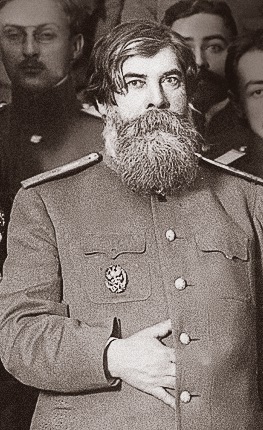
0 sources
Summary
Vladimir Bekhterev was born on January 20, 1857[1], in Saralı[2]. He died on December 24, 1927[3], in Moscow[4]. He worked as a physician[5], psychiatrist[6], university teacher[7], neurologist[8], and psychologist[9]. He ranks in the top 0.72% of human entities by monthly Wikipedia readership (3,123 views/month, #7,227 of 1,000,298).[10]
Key Facts
- Date of birth: February 1, 1857[11]
- Place of burial: Volkovo Cemetery Writer's Walkways[12]
- Child: Peter Bechterev[13]
- Country of citizenship: Russian Empire[14], Russian Soviet Federative Socialist Republic[15], Soviet Union[16], Russia[17]
- Native language: Russian[18]
- Occupation: physiologist[19]
- Field of work: psychiatry[20], neurology[21]
- Position held: professor[22]
- Employer: Kazan Federal University[23], S. M. Kirov Military Medical Academy[24]
- Educated at: Imperial Academy of Medical Surgery[25], S. M. Kirov Military Medical Academy[26]
- Doctoral advisor: Wilhelm Wundt[27]
- Student: Karapet Agadżanian[28], Kolotinskiy, Sergey Diomidovich[29], Ludvig Puusepp[30]
- Notable work: Kollektivnaya refleksologiya[31]
- Award received: Премия имени К. Бэра[32], Order of St. Vladimir[33], Order of Saint Anna, 1st class[34], Order of Saint Stanislaus[35], Honored Scientist of the RSFSR[36]
- Sex or gender: male[37]
- Doctoral student: Olexandr Yushchenko[38], Ludvig Puusepp[39]
- Commons category: Vladimir Bekhterev[40]
- Academic degree: Doctor of Sciences in Medicine[41]
- Residence: Russian Empire[42]
- Family name: Bechterew[43]
- Given name: Vladimir[44]
- Topic's main category: Category:Vladimir Bekhterev[45]
- Student of: Wilhelm Wundt[46], Jan Mierzejewski[47]
- Described by source: Sytin Military Encyclopedia[48], Small Brockhaus and Efron Encyclopedic Dictionary[49], Brockhaus and Efron Encyclopedic Dictionary[50], Pedagogues and Psychologists of the World[51], From Energy to Collectivity: A Commentary on the Development of Bekhterev’s Theoretical Views[52]
Body
Works and Contributions
Things named for Vladimir Bekhterev include Bekhterev–Mendel reflex[53], a reflex[54].
Why It Matters
Vladimir Bekhterev has Wikipedia articles in 21 language editions, a strong signal of global cultural recognition.[55] He is known by 29 alternative names across languages and contexts.[56]
He has been cited as an influence by Vladimir Nikolayevich Myasishchev[57], a psychologist[58], 1893–1973[59], of Russian Empire[60], awarded the Order of Lenin[61], specialised in psychology[62].
Entities named for him include Bekhterev–Mendel reflex[53], a reflex[54].
His notable doctoral advisees include Ludvig Puusepp[63], a surgeon[64], 1875–1942[65], of Russian Empire[66], awarded the Estonian Red Cross Order First Class[67], specialised in neurosurgery[68] and Aleksandr Fedorovich Lazurskyi[69], a physician[70], 1874–1917[71], of Russian Empire[72], specialised in psychology[73].
FAQs
Where was Vladimir Bekhterev born?
Vladimir Bekhterev's place of birth was Saralı[2].
Where did Vladimir Bekhterev die?
Vladimir Bekhterev passed away in Moscow[4].
What did Vladimir Bekhterev do for work?
Vladimir Bekhterev worked as a physician[5], psychiatrist[6], university teacher[7], neurologist[8], and psychologist[9].
Where did Vladimir Bekhterev go to school?
Vladimir Bekhterev was educated at Imperial Academy of Medical Surgery[25] and S. M. Kirov Military Medical Academy[26].
What awards did Vladimir Bekhterev receive?
Honors received include Премия имени К. Бэра[32], Order of St. Vladimir[33], Order of Saint Anna, 1st class[34], and Order of Saint Stanislaus[35].
Who did Vladimir Bekhterev influence?
Vladimir Bekhterev has been cited as an influence by Vladimir Nikolayevich Myasishchev[57].