
To the Christian Nobility of the German Nation
book by Martin Luther
Press Enter · cited answer in seconds
0 sources
To the Christian Nobility of the German Nation
Summary
To the Christian Nobility of the German Nation is a written work[1]. It ranks in the top 7% of written_work entities by monthly Wikipedia readership (53 views/month).[2]
Key Facts
- To the Christian Nobility of the German Nation authored Martin Luther[3].
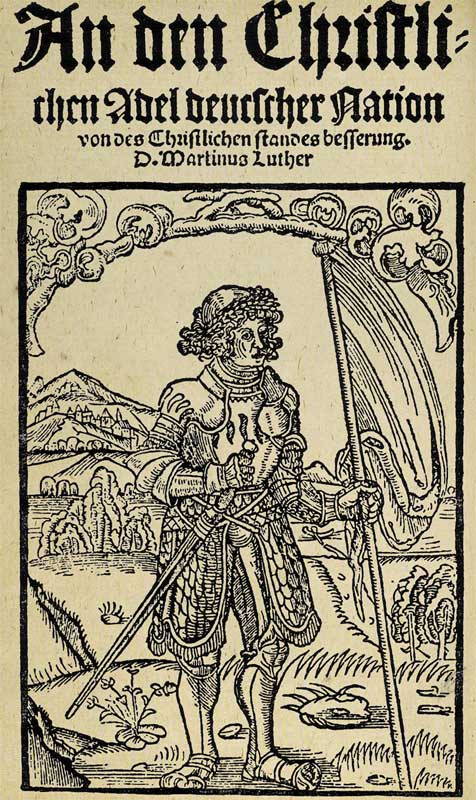
- To the Christian Nobility of the German Nation's image is recorded as Christlicher-Adel-de.jpg[4].
- To the Christian Nobility of the German Nation's image is recorded as An den Christlichenn Adel 1520.jpg[5].
- To the Christian Nobility of the German Nation's instance of is recorded as written work[6].
- To the Christian Nobility of the German Nation's genre is recorded as manifesto[7].
- To the Christian Nobility of the German Nation's VIAF cluster ID is recorded as 178762835[8].
- To the Christian Nobility of the German Nation's GND ID is recorded as 4629022-9[9].
- To the Christian Nobility of the German Nation's Library of Congress authority ID is recorded as n2003075700[10].
- To the Christian Nobility of the German Nation's language of work or name is recorded as Early New High German[11].
- To the Christian Nobility of the German Nation's Freebase ID is recorded as /m/0gpsnc[12].
- To the Christian Nobility of the German Nation's main subject is recorded as doctrine of the two kingdoms[13].
- To the Christian Nobility of the German Nation's main subject is recorded as universal priesthood[14].
- To the Christian Nobility of the German Nation's title is recorded as {'lang': 'de', 'text': 'An den Christlichenn Adel deutscher Nation: von des Christlichen standes Besserung'}[15].
- To the Christian Nobility of the German Nation's Goodreads work ID is recorded as 1501177[16].
Body
Designation and Status
To the Christian Nobility of the German Nation's instance of is recorded as written work[6].
Why It Matters
To the Christian Nobility of the German Nation ranks in the top 7% of written_work entities by monthly Wikipedia readership (53 views/month).[2] It has Wikipedia articles in 12 language editions, a strong signal of global cultural recognition.[17]