
The Tempest
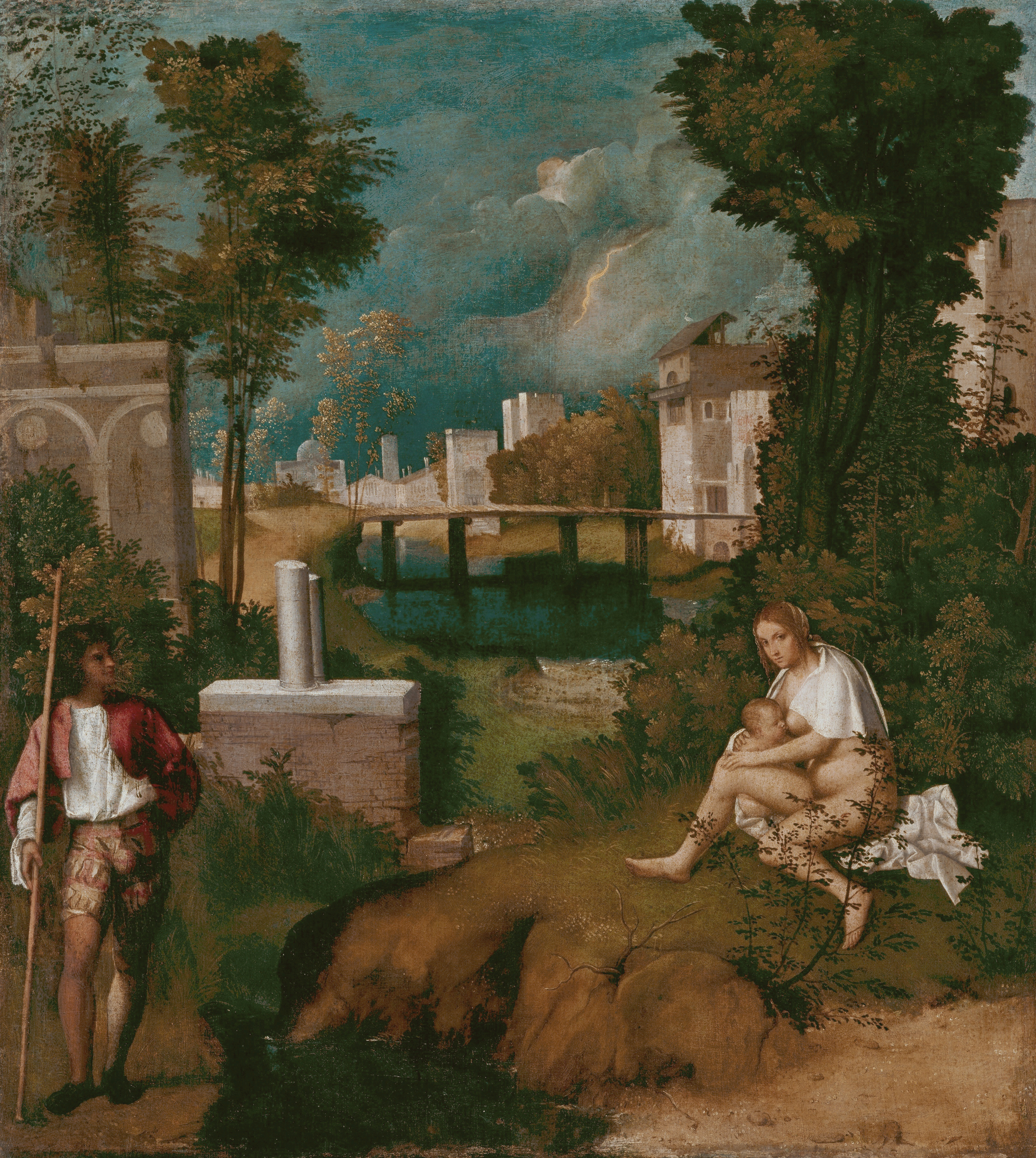
painting by Giorgione in the Gallerie dell'Accademia, Venice
Press Enter · cited answer in seconds
0 sources
The Tempest
Summary
The Tempest is a painting[1]. It has Wikipedia articles in 21 language editions, a strong signal of global cultural recognition.[2]
Key Facts
- The Tempest is the creator of Giorgione[3].
- The Tempest's instance of is recorded as painting[4].
- The Tempest's commissioned by is recorded as Gabriele Vendramin[5].
- The Tempest is owned by Girolamo Manfrin[6].
- The Tempest is owned by Pietro Manfrin[7].
- The Tempest is owned by Giulia-Giovanna Manfrin-Plattis[8].
- The Tempest is owned by Gabriele Vendramin[9].
- The Tempest is owned by Vendramin[10].
- The Tempest is owned by Cristoforo Orsetti[11].
- The Tempest is owned by Italy[12].
- The Tempest is associated with the High Renaissance movement[13].
- The Tempest's genre is landscape painting[14].
- The Tempest's depicts is recorded as thunderstorm[15].
- The Tempest's depicts is recorded as breastfeeding[16].
- The Tempest's depicts is recorded as woman[17].
- The Tempest's depicts is recorded as infant[18].
- The Tempest's depicts is recorded as man[19].
- The Tempest's depicts is recorded as town[20].
- The Tempest's depicts is recorded as stream[21].
- The Tempest's depicts is recorded as lightning[22].
- The Tempest's depicts is recorded as landscape[23].
- The Tempest is made of oil paint[24].
- The Tempest is made of canvas[25].
- The Tempest's collection is recorded as Gallerie dell'Accademia[26].
- The Tempest's collection is recorded as Vendramin Collection[27].
Body
Authorship and Creation
The Tempest is the creator of Giorgione[3].
Publication
The Tempest's genre is landscape painting[14].
Subject and Themes
The Tempest is associated with the High Renaissance movement[13].
Material and Period
Recorded made from material include oil paint[24] and canvas[25]. The Tempest dates from the High Renaissance[28]. Recorded location include Q81687031[29] and Palazzo Priuli Manfrin[30].
Why It Matters
The Tempest has Wikipedia articles in 21 language editions, a strong signal of global cultural recognition.[2] It is known by 9 alternative names across languages and contexts.[31]