
Taha Hussein
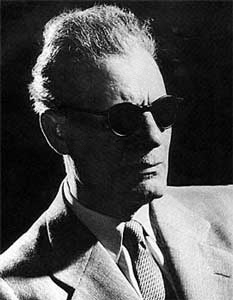
0 sources
Taha Hussein
Summary
Taha Hussein is a human[1]. Born in Minya Governorate[2], he… he was born on November 14, 1889[3]. He passed away in Cairo[4]. He died on October 28, 1973[5]. He worked as a linguist[6], translator[7], writer[8], literary critic[9], and university teacher[10]. He ranks in the top 0.71% of human entities by monthly Wikipedia readership (436 views/month, #7,084 of 1,000,298).[11]
Key Facts
- Taha Hussein was born in Minya Governorate[2].
- Taha Hussein's place of birth was Maghagha[12].
- Taha Hussein died in Cairo[4].
- Taha Hussein was born on November 14, 1889[3].
- Taha Hussein was born on November 15, 1889[13].
- Taha Hussein was born on 1889[14].
- Taha Hussein died on October 28, 1973[5].
- Taha Hussein died on 1973[15].
- Taha Hussein was married to Sūzān Ṭāhā Ḥusayn[16].
- A child of Taha Hussein was Moe͏̈nis Taha-Hussein[17].
- Taha Hussein held citizenship in Ottoman Empire[18].
- Taha Hussein held citizenship in Sultanate of Egypt[19].
- Taha Hussein held citizenship in Kingdom of Egypt[20].
- Taha Hussein held citizenship in Republic of Egypt[21].
- Taha Hussein held citizenship in United Arab Republic[22].
- Taha Hussein held citizenship in Egypt[23].
- Taha Hussein worked as a linguist[6].
- Taha Hussein worked as a translator[7].
- Taha Hussein's professions included writer[8].
- Taha Hussein worked as a literary critic[9].
- Taha Hussein's professions included university teacher[10].
- Taha Hussein's professions included politician[24].
- Taha Hussein's field of work was literary studies[25].
- Taha Hussein's field of work was Arabic studies[26].
- Taha Hussein's field of work was Semitic[27].
Body
Origins and Family
Recorded place of birth include Minya Governorate[2], a governorate of Egypt[28], in Egypt[29] and Maghagha[12], a city[30], in Egypt[31]. Recorded date of birth include November 14, 1889[3], November 15, 1889[13], and 1889[14].
Education
Educated at Faculty of Arts of Paris[32], a faculty[33], in France[34], founded in 1808[35]; University of Montpellier[36], an Experimental Public Establishment (France)[37], in France[38], founded in 1220[39], headquartered in Montpellier[40]; Cairo University[41], a public university[42], in Egypt[43], founded in 1908[44], headquartered in Giza[45]; and Al-Azhar University[46], a public university[47], in Egypt[48], founded in 0970[49], headquartered in Cairo[50]. Taha Hussein earned the academic degree of Doctor of Philosophy[51].
Career and Affiliations
Recorded occupations include linguist[6], translator[7], writer[8], literary critic[9], university teacher[10], and politician[24]. Fields of work include literary studies[25], an academic discipline[52]; Arabic studies[26], a field of study[53]; Semitic[27], a language family[54], founded in -3000[55]; author[56], an occupation[57]; writer[58], a profession[59]; and lecturer[60], a position[61]. Among Taha Hussein's employers was Cairo University[62]. Positions held include Minister of Education of Egypt[63] and president of the Academy of the Arabic Language in Cairo[64]. He supervised Mohammed Abdul Moid Khan as a doctoral student[65].
Recognition
Awards received include Grand Cross of the Civil Order of Alfonso X the Wise[66], a grade of an order[67], in Spain[68]; Grand Cordon of the Order of the Nile[69]; Order of Merit[70]; Grand Cordon of the National Order of the Cedar[71]; Order of Civil Merit of the Syrian Arab Republic[72]; and Order of the Republic[73].
Personal Life
Taha Hussein was married to Sūzān Ṭāhā Ḥusayn[16]. A child of him was Moe͏̈nis Taha-Hussein[17]. His religion is recorded as Islam[74].
Death and Burial
Recorded date of death include October 28, 1973[5] and 1973[15]. Taha Hussein died in Cairo[4].
Why It Matters
Taha Hussein ranks in the top 0.71% of human entities by monthly Wikipedia readership (436 views/month, #7,084 of 1,000,298).[11] He has Wikipedia articles in 22 language editions, a strong signal of global cultural recognition.[75] He is known by 31 alternative names across languages and contexts.[76]
He has been cited as an influence by Naguib Mahfouz[77], a novelist[78], 1911–2006[79], of Khedivate of Egypt[80], awarded the Nobel Prize in Literature[81], specialised in writing[82]; Tawfiq al-Hakim[83], a writer[84], 1898–1987[85], of Egypt[86], specialised in writing[87]; and Gaber Asfour[88], a writer[89], 1944–2021[90], of Kingdom of Egypt[91].
Works attributed to him include The Days[92], a written work[93] and On Pre-Islamic Poetry[94], a literary work[95].
FAQs
Where was Taha Hussein born?
Born in Minya Governorate[2], Taha Hussein…
Where did Taha Hussein die?
Taha Hussein passed away in Cairo[4].
Who was Taha Hussein married to?
Taha Hussein's spouses include Sūzān Ṭāhā Ḥusayn[16].
What did Taha Hussein do for work?
Taha Hussein worked as linguist[6], translator[7], writer[8], literary critic[9], and university teacher[10].
Where did Taha Hussein go to school?
Taha Hussein was educated at Faculty of Arts of Paris[32], University of Montpellier[36], Cairo University[41], and Al-Azhar University[46].
What awards did Taha Hussein receive?
Honors received include Grand Cross of the Civil Order of Alfonso X the Wise[66], Grand Cordon of the Order of the Nile[69], Order of Merit[70], and Grand Cordon of the National Order of the Cedar[71].
Who did Taha Hussein influence?
Taha Hussein has been cited as an influence by Naguib Mahfouz[77], Tawfiq al-Hakim[83], and Gaber Asfour[88].