
Sofia Kovalevskaya
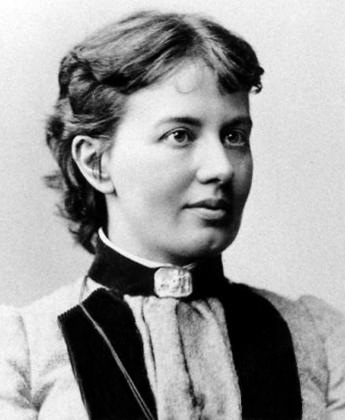
0 sources
Summary
Sofia Kovalevskaya was born on January 15, 1850[1], in Moscow[2]. She died on February 10, 1891[3], in Spain[4]. She worked as a mathematician[5], physicist[6], novelist[7], university teacher[8], and writer[9]. She ranks in the top 0.7% of human entities by monthly Wikipedia readership (3,953 views/month, #7,016 of 1,000,298).[10]
Key Facts
- Place of death: Hedvig Eleonora parish[11]
- Date of birth: January 3, 1850[12]
- Place of burial: Norra begravningsplatsen[13]
- Father: Vasily Vasilyevich Korvin-Krukovsky[14]
- Mother: Yelizaveta Korvin-Krukovskaya[15]
- Spouse: Vladimir Kovalevsky[16]
- Child: Sofia Kovalevskaya[17]
- Country of citizenship: Russian Empire[18], Sweden[19]
- Native language: Russian[20]
- Field of work: mathematics[21], mechanics[22], differential calculus[23], mathematical analysis[24], partial differential equation[25], literature[26]
- Employer: Stockholm University[27]
- Educated at: University of Göttingen[28], Heidelberg University[29], Frederick William University Berlin[30]
- Doctoral advisor: Karl Weierstraß[31]
- Notable work: Cauchy–Kowalevski theorem[32], integrable rigid body[33]
- Award received: Knight of the French Order of Academic Palms[34], Bordin Prize[35]
- Member of: Russian Academy of Sciences[36]
- Sex or gender: female[37]
- Family: Korwin-Krukovsky family[38]
- Doctoral student: Emil Stenberg[39]
- Commons category: Sofia Kovalevskaya[40]
- Cause of death: viral pneumonia[41]
- Academic degree: Doctor of Philosophy[42]
- Residence: Moscow[43], Stockholm[44], Paris[45]
- Family name: Kovalevskaya[46]
- Given name: Sofya[47]
Body
Education
Studied under Gustav Kirchhoff[48], a physicist[49], 1824–1887[50], of Kingdom of Prussia[51], awarded the Pour le Mérite for Sciences and Arts order[52], specialised in physics[53] and Leo Königsberger[54].
Works and Contributions
Things named for Sofia Kovalevskaya include Cauchy–Kowalevski theorem[55], a theorem[56]; Sofia Kovalevskaya Award[57], a science award[58], in Germany[59], founded in 2002[60]; Kovalevskaya Prize[61], a science award[62], in Russia[63]; and Kovalevskaya[64], a lunar crater[65].
Why It Matters
Sofia Kovalevskaya has Wikipedia articles in 29 language editions, a strong signal of global cultural recognition.[66] She is known by 133 alternative names across languages and contexts.[67]
Entities named for her include Cauchy–Kowalevski theorem[55], a theorem[56]; Sofia Kovalevskaya Award[57], a science award[58], in Germany[59], founded in 2002[60]; Kovalevskaya Prize[61], a science award[62], in Russia[63]; and Kovalevskaya[64], a lunar crater[65].
FAQs
Where was Sofia Kovalevskaya born?
Sofia Kovalevskaya was born in Moscow[2].
Where did Sofia Kovalevskaya die?
Sofia Kovalevskaya died in Spain[4].
Who were Sofia Kovalevskaya's parents?
Sofia Kovalevskaya's father was Vasily Vasilyevich Korvin-Krukovsky[14]. Sofia Kovalevskaya's mother was Yelizaveta Korvin-Krukovskaya[15].
Who was Sofia Kovalevskaya married to?
Sofia Kovalevskaya's spouses include Vladimir Kovalevsky[16].
What did Sofia Kovalevskaya do for work?
Sofia Kovalevskaya worked as a mathematician[5], physicist[6], novelist[7], university teacher[8], and writer[9].
Where did Sofia Kovalevskaya go to school?
Sofia Kovalevskaya was educated at University of Göttingen[28], Heidelberg University[29], and Frederick William University Berlin[30].
What awards did Sofia Kovalevskaya receive?
Honors received include Knight of the French Order of Academic Palms[34] and Bordin Prize[35].