
Simón Bolívar
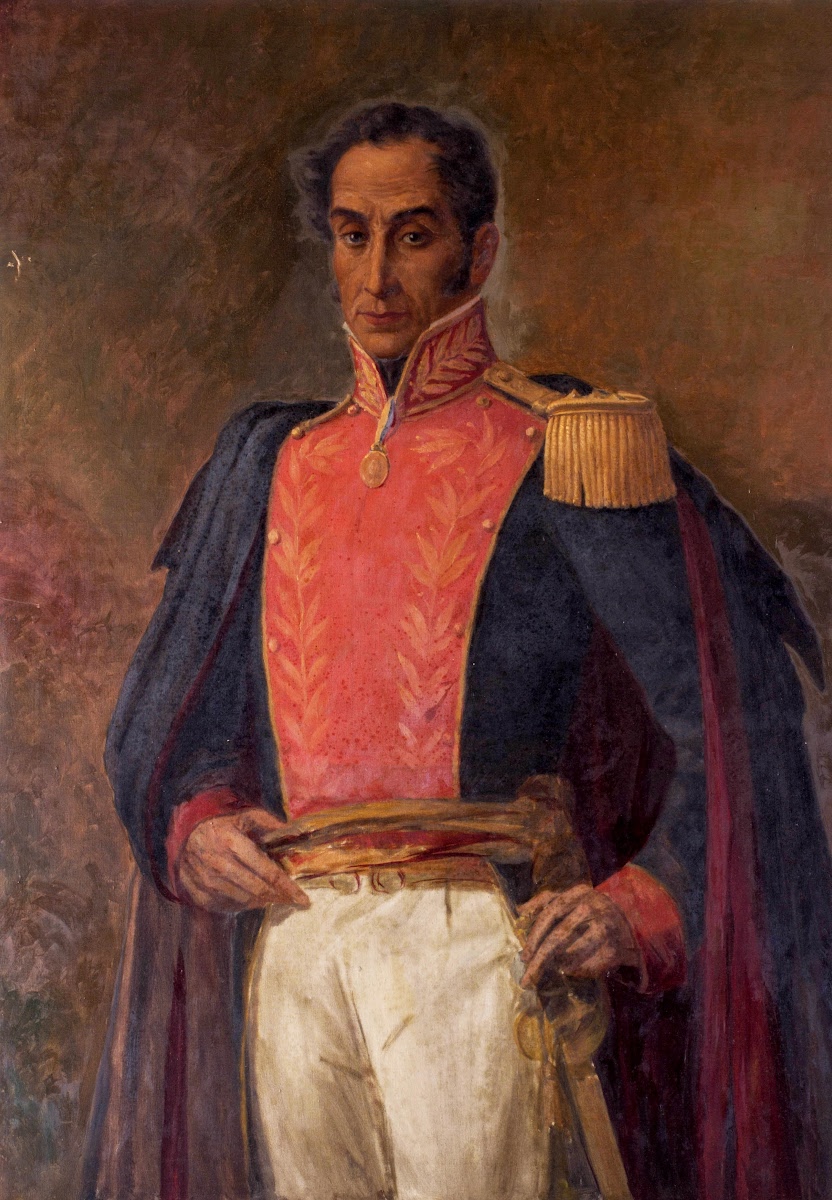
0 sources
Summary
Simón Bolívar was born on July 24, 1783[1], in Caracas[2]. He died on December 17, 1830[3], in Quinta de San Pedro Alejandrino[4]. He worked as a politician[5] and military officer[6]. He ranks in the top 0.4% of human entities by monthly Wikipedia readership (65,021 views/month, #3,956 of 1,000,298).[7]
Key Facts
- Date of death: 1830[8]
- Place of burial: Cathedral of Santa Marta[9], Caracas Cathedral[10], National Pantheon[11]
- Father: Juan Vicente Bolívar y Ponte[12]
- Mother: María Concepción Palacios Aguirre Ariztía - Sojo Blanco Herrera[13]
- Spouse: María Teresa del Toro y Alayza[14]
- Country of citizenship: Spain[15], Venezuela[16], Ecuador[17], Bolivia[18], Gran Colombia[19]
- Native language: Spanish[20]
- Position held: president of Bolivia[21], President of Venezuela[22], President of Peru[23], president[24], President of Colombia[25]
- Award received: Grand Cross of the Order of the Sun of Peru[26], honorary doctorate of the National University of San Marcos[27], liberator of Venezuela[28]
- Religion or worldview: Regular Masonic jurisdictions[29]
- Sex or gender: male[30]
- Commons category: Simón Bolívar[31]
- Military, police or special rank: general[32]
- Unmarried partner: Manuela Sáenz[33]
- Cause of death: tuberculosis[34], typhoid fever[35]
- Residence: Casa del Vínculo y del Retorno[36], Ingenio Bolívar[37]
- Participated in conflict: Spanish American wars of independence[38]
- Family name: Bolívar[39], Ponte[40]
- Given name: Simón[41], José[42]
- Topic's main category: Category:Simón Bolívar[43]
- Commons gallery: Simón Bolívar[44]
- Relative: Hipólita Bolívar[45], Carlos Palacios y Blanco[46], Esteban Palacios y Blanco[47], Fernando Bolívar[48]
Body
Works and Contributions
Things named for Simón Bolívar include Venezuela[49], a sovereign state[50], founded in 1811[51]; Bolivia[52], a sovereign state[53], in Bolivia[54], founded in 1825[55]; Simón Bolívar International Airport[56], an international airport[57], in Venezuela[58]; bolívar[59]; Simon Bolivar Buckner[60]; Bolivarian Revolution[61]; Bolivarianism[62]; and Bolívar Department[63].
Why It Matters
Simón Bolívar has Wikipedia articles in 30 language editions, a strong signal of global cultural recognition.[64] He is known by 30 alternative names across languages and contexts.[65]
He has been cited as an influence by Víctor Andrés Belaúnde[66], a diplomat[67], 1883–1966[68], of Peru[69], awarded the Grand Cross of the Order of Isabella the Catholic[70].
Works attributed to him include Carta de Jamaica[71], a letter[72], in Ecuador[73]; Decree of War to the Death[74], a decree[75], in Venezuela[76]; and Cartagena Manifesto[77], a manifesto[78], in Venezuela[79], founded in 1812[80]. Entities named for him include Venezuela[49], a sovereign state[50], founded in 1811[51]; Bolivia[52], a sovereign state[53], in Bolivia[54], founded in 1825[55]; Simón Bolívar International Airport[56], an international airport[57], in Venezuela[58]; bolívar[59]; Simon Bolivar Buckner[60]; and Bolivarian Revolution[61].
FAQs
Where was Simón Bolívar born?
Simón Bolívar was born in Caracas[2].
Where did Simón Bolívar die?
Simón Bolívar passed away in Quinta de San Pedro Alejandrino[4].
Who were Simón Bolívar's parents?
Simón Bolívar's father was Juan Vicente Bolívar y Ponte[12]. Simón Bolívar's mother was María Concepción Palacios Aguirre Ariztía - Sojo Blanco Herrera[13].
Who was Simón Bolívar married to?
Simón Bolívar's spouses include María Teresa del Toro y Alayza[14].
What did Simón Bolívar do for work?
Simón Bolívar worked as a politician[5] and military officer[6].
What awards did Simón Bolívar receive?
Honors received include Grand Cross of the Order of the Sun of Peru[26], honorary doctorate of the National University of San Marcos[27], and liberator of Venezuela[28].
Who did Simón Bolívar influence?
Simón Bolívar has been cited as an influence by Víctor Andrés Belaúnde[66].