
Ronald Fisher
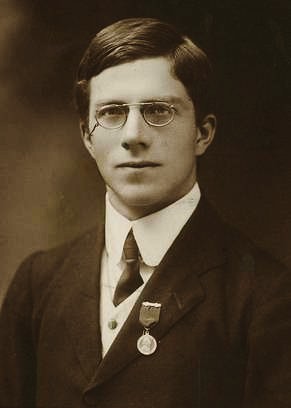
0 sources
Ronald Fisher was born on February 17, 1890, in London[1][2][3][4][5][6][7][8][9][10] and died of colorectal cancer on July 29, 1962, in Adelaide[2][3][4][5][6][11][8]. He was buried at St Peter's Cathedral[12][8]. A citizen of the United Kingdom, he was married to Ruth Eileen Guinness from 1917 onward[7] and had two children, George Fisher Fisher and Joan Fisher Box[13][8].
He was educated at the University of Cambridge, Harrow School, and Gonville and Caius College[3][8][7]. Over his career, he worked as a mathematician, geneticist, statistician, astronomer, biologist, and biostatistician[8][7]. His primary fields were statistics and genetics, and his employers included Rothamsted Research (1919–1933), University College London (1933–1943), University of Cambridge (1943–1959), and University of Adelaide (1959–1962)[3][10].
His professional recognitions included being named a Fellow of the Royal Society and receiving the Copley Medal, Royal Medal, Darwin Medal, Darwin–Wallace Medal, and Croonian Medal and Lecture, along with two additional awards[7][14][15][16]. He served as president of the Royal Statistical Society from 1952 to 1954[17]. He was also a member of the Royal Society, the German Academy of Sciences Leopoldina, the Royal Swedish Academy of Sciences, and the Pontifical Academy of Sciences[18].
Key Facts
- Place of birth: East Finchley[9]
- Place of burial: St Peter's Cathedral[10]
- Spouse: Ruth Eileen Guinness[11]
- Child: George Fisher Fisher[12], Joan Fisher Box[13]
- Country of citizenship: United Kingdom[14]
- Occupation: biostatistician[15]
- Field of work: statistics[16], genetics[17]
- Position held: president of the Royal Statistical Society[18]
- Employer: University College London[19], Rothamsted Research[20], University of Adelaide[21], University of Cambridge[22], Rugby School[23]
- Educated at: University of Cambridge[24], Harrow School[25], Gonville and Caius College[26]
- Discoverer or inventor: population genetics[27], Fisher's principle[28], Fisher's exact test[29], Fisher's inequality[30], Fisher's geometric model[31], Iris flower data set[32], linear discriminant analysis[33], Fisher's equation[34], Fisher information[35], Fisher's method[36], Fisherian runaway[37], Fisher's fundamental theorem of natural selection[38], Fisher's noncentral hypergeometric distribution[39], Fisher's z-distribution[40]
- Award received: Fellow of the Royal Society[41], Copley Medal[42], Royal Medal[43], Darwin Medal[44], Darwin–Wallace Medal[45], Croonian Medal and Lecture[46]
- Religion or worldview: Church of England[47], Anglicanism[48]
- Sex or gender: male[49]
- Noble title: Knight Bachelor[50]
Body
Works and Contributions
Things named for Ronald Fisher include Fisher information[51], Fisher–Yates shuffle[52], F-test[53], Fisher's exact test[54], F-distribution[55], generalized extreme value distribution[56], Fisher's principle[57], and Fisher–Tippett–Gnedenko theorem[58].
Why It Matters
Ronald Fisher has Wikipedia articles in 26 language editions, a strong signal of global cultural recognition.[59] He is known by 67 alternative names across languages and contexts.[60]
He has been cited as an influence by Richard Dawkins[61], an evolutionary biologist[62], b. 1941[63], of United Kingdom[64], awarded the Fellow of the Royal Society[65], specialised in ethology[66]; George E. P. Box[67], a statistician[68], 1919–2013[69], of United Kingdom[70], awarded the British Empire Medal[71]; W. D. Hamilton[72], an evolutionary biologist[73], 1936–2000[74], of United Kingdom[75], awarded the Darwin Medal[76], specialised in biology[77]; Dorian Shainin[78], a military flight engineer[79], 1914–2000[80], of United States[81], specialised in reliability engineering[82]; and J. R. Dunkley[83], a researcher[84], b. 1991[85], of United Kingdom[86], specialised in information geometry[87].
He is credited with the discovery of Fisher information[88], a type of statistic[89] and Fisher's exact test[90], a statistical test[91]. Works attributed to him include Iris flower data set[92], a data set[93] and The Genetical Theory of Natural Selection[94]. Entities named for him include Fisher information[51], Fisher–Yates shuffle[52], F-test[53], Fisher's exact test[54], F-distribution[55], and generalized extreme value distribution[56].
His notable doctoral advisees include Calyampudi Radhakrishna Rao[95], Mary F. Lyon[96], and Walter Bodmer[97].
FAQs
Where was Ronald Fisher born?
Ronald Fisher was born in London[1].
Where did Ronald Fisher die?
Ronald Fisher died in Adelaide[2].
Who was Ronald Fisher married to?
Ronald Fisher's spouses include Ruth Eileen Guinness[11].
What did Ronald Fisher do for work?
Ronald Fisher worked as a mathematician[3], geneticist[4], statistician[5], astronomer[6], and biologist[7].
Where did Ronald Fisher go to school?
Ronald Fisher was educated at University of Cambridge[24], Harrow School[25], and Gonville and Caius College[26].
What awards did Ronald Fisher receive?
Honors received include Fellow of the Royal Society[41], Copley Medal[42], Royal Medal[43], and Darwin Medal[44].
Who did Ronald Fisher influence?
Ronald Fisher has been cited as an influence by Richard Dawkins[61], George E. P. Box[67], W. D. Hamilton[72], and Dorian Shainin[78].
What did Ronald Fisher discover?
Ronald Fisher is credited as discoverer of Fisher information[88] and Fisher's exact test[90].