
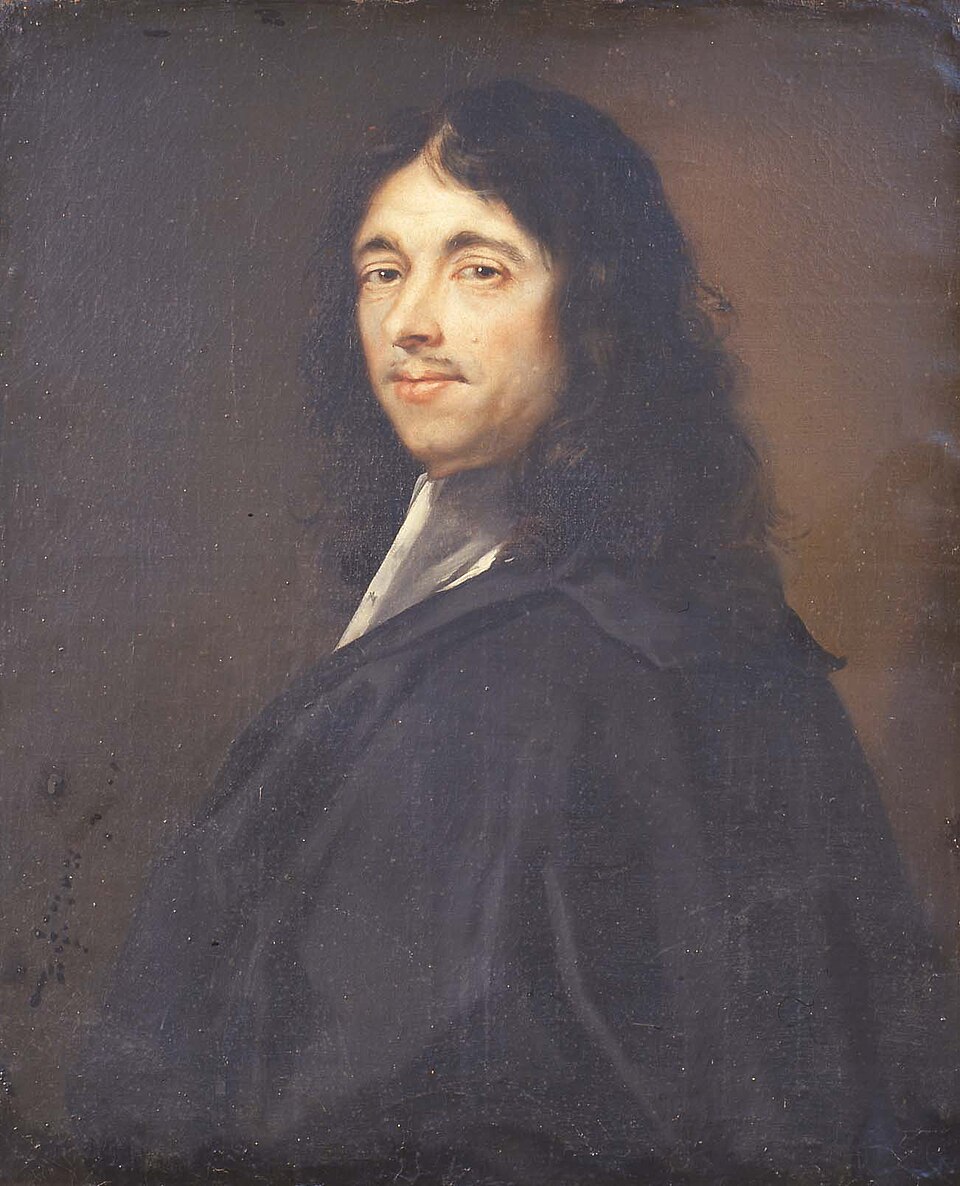
Pierre de Fermat
0 sources
Pierre de Fermat
Summary
Pierre de Fermat is a human[1]. His place of birth was Beaumont-de-Lomagne[2]. He was born on August 17, 1601[3]. He passed away in Castres[4]. He died on January 12, 1665[5]. He worked as a mathematician[6], lawyer[7], judge[8], polyglot[9], and jurist[10]. He ranks in the top 0.69% of human entities by monthly Wikipedia readership (10,555 views/month, #6,859 of 1,000,298).[11]
Key Facts
- Pierre de Fermat was born in Beaumont-de-Lomagne[2].
- Pierre de Fermat passed away in Castres[4].
- Pierre de Fermat was born on August 17, 1601[3].
- Pierre de Fermat was born on 1607[12].
- Pierre de Fermat died on January 12, 1665[5].
- Burial took place at cremation[13].
- Burial took place at Castres[14].
- Pierre de Fermat was married to Louise de Long[15].
- A child of Pierre de Fermat was Samuel de Fermat[16].
- Pierre de Fermat held citizenship in France[17].
- Pierre de Fermat is identified as part of the French ethnic group[18].
- Pierre de Fermat worked as a mathematician[6].
- Pierre de Fermat's professions included lawyer[7].
- Pierre de Fermat worked as a judge[8].
- Pierre de Fermat worked as a polyglot[9].
- Pierre de Fermat's professions included jurist[10].
- Pierre de Fermat's field of work was number theory[19].
- Pierre de Fermat's field of work was statute[20].
- Pierre de Fermat's field of work was mathematics[21].
- Pierre de Fermat's field of work was probability theory[22].
- Pierre de Fermat's field of work was mathematical analysis[23].
- Pierre de Fermat's field of work was analytic geometry[24].
- Among Pierre de Fermat's employers was Parliament of Toulouse[25].
- Pierre de Fermat's education included a stint at Old University of Orléans[26].
- A notable work attributed to Pierre de Fermat is Fermat's principle[27].
Body
Origins and Family
Pierre de Fermat was born in Beaumont-de-Lomagne[2]. Recorded date of birth include August 17, 1601[3] and 1607[12]. He is identified as part of the French ethnic group[18].
Education
Pierre de Fermat's education included a stint at Old University of Orléans[26]. He earned the academic degree of Bachelor of Laws[28].
Career and Affiliations
Recorded occupations include mathematician[6], lawyer[7], judge[8], polyglot[9], and jurist[10]. Fields of work include number theory[19], a branch of mathematics[29]; statute[20], a legal term or legal concept[30]; mathematics[21], an academic discipline[31]; probability theory[22], a branch of mathematics[32]; mathematical analysis[23], an academic discipline[33]; and analytic geometry[24], a branch of mathematics[34]. Pierre de Fermat was employed by Parliament of Toulouse[25].
Works and Contributions
Notable works include Fermat's principle[27], a scientific law[35], founded in 1662[36]; Fermat's Last Theorem[37]; Fermat's little theorem[38]; Fermat point[39]; and Fermat number[40]. Things named for Pierre de Fermat include Fermat's Last Theorem[41], a theorem[42], founded in 1637[43]; Fermat's little theorem[44], a theorem[45], founded in 1640[46]; Fermat's principle[47], a scientific law[48], founded in 1662[49]; Fermat number[50], a Lucas sequence[51]; Euler's theorem[52], a theorem[53]; Fermat's theorem on sums of two squares[54]; Fermat's spiral[55]; and Fermat point[56].
Personal Life
Pierre de Fermat was married to Louise de Long[15]. A child of him was Samuel de Fermat[16].
Death and Burial
Pierre de Fermat died on January 12, 1665[5]. He passed away in Castres[4]. Recorded place of burial include cremation[13] and Castres[14].
Why It Matters
Pierre de Fermat ranks in the top 0.69% of human entities by monthly Wikipedia readership (10,555 views/month, #6,859 of 1,000,298).[11] He has Wikipedia articles in 30 language editions, a strong signal of global cultural recognition.[57] He is known by 68 alternative names across languages and contexts.[58]
He has been cited as an influence by Leonhard Euler[59], a mathematician[60], 1707–1783[61], of Old Swiss Confederacy[62], specialised in mathematical analysis[63] and Gilles de Roberval[64], a mathematician[65], 1602–1675[66], of France[67], specialised in mathematics[68].
He is credited with the discovery of mathematical induction[69], a proof technique[70]. Entities named for him include Fermat's Last Theorem[41], a theorem[42], founded in 1637[43]; Fermat's little theorem[44], a theorem[45], founded in 1640[46]; Fermat's principle[47], a scientific law[48], founded in 1662[49]; Fermat number[50], a Lucas sequence[51]; Euler's theorem[52], a theorem[53]; and Fermat's theorem on sums of two squares[54].
FAQs
Where was Pierre de Fermat born?
Pierre de Fermat's place of birth was Beaumont-de-Lomagne[2].
Where did Pierre de Fermat die?
Pierre de Fermat passed away in Castres[4].
Who was Pierre de Fermat married to?
Pierre de Fermat's spouses include Louise de Long[15].
What did Pierre de Fermat do for work?
Pierre de Fermat worked as mathematician[6], lawyer[7], judge[8], polyglot[9], and jurist[10].
Where did Pierre de Fermat go to school?
Pierre de Fermat was educated at Old University of Orléans[26].
Who did Pierre de Fermat influence?
Pierre de Fermat has been cited as an influence by Leonhard Euler[59] and Gilles de Roberval[64].
What did Pierre de Fermat discover?
Pierre de Fermat is credited as discoverer of mathematical induction[69].