
Philip Neri
0 sources
Summary
Philip Neri was born on July 21, 1515[1], in Florence[2]. He died on May 26, 1595[3], in Rome[4]. He worked as a Catholic priest[5], founder of Catholic religious community[6], and Catholic theologian[7]. He ranks in the top 0.68% of human entities by monthly Wikipedia readership (8,034 views/month, #6,850 of 1,000,298).[8]
Key Facts
- Date of death: May 26, 1595[9], May 27, 1595[10]
- Father: Francesco di Neri[11]
- Mother: Lucrezia di Andrea da Mossiano[12]
- Educated at: Sapienza University of Rome[13]
- Religion or worldview: Catholic Church[14]
- Sex or gender: male[15]
- Movement: Counter-Reformation[16]
- Commons category: Philip Neri[17]
- Canonization status: saint[18], Catholic saint[19]
- Religious order: Oratory of Saint Philip Neri[20]
- Family name: Neri[21]
- Given name: Philippe[22], Filippo[23]
- Feast day: May 26[24]
- Topic's main category: Category:Philip Neri[25]
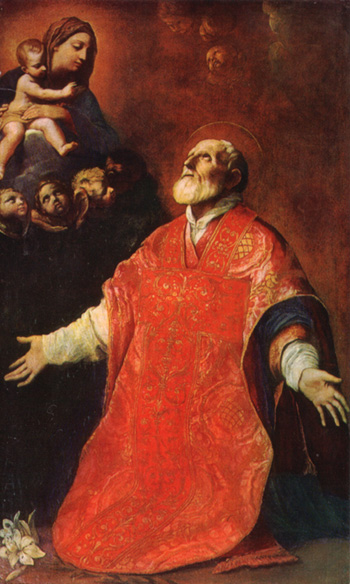
- Depicted by: Communion of Saint Philip Neri[26], St Filippo Neri in Ecstasy[27], Vision of Saint Philip Neri[28]
- Described by source: Brockhaus and Efron Encyclopedic Dictionary[29], Riemann's Music Dictionary[30], The Nuttall Encyclopædia[31], Meyers Konversations-Lexikon, 4th edition (1885–1890)[32], Encyclopædia Britannica 11th edition[33]
- Languages spoken, written or signed: Italian[34], Latin[35]
- Time period: 16th century[36]
- Subject has role: Confessor of the Faith[37]
Body
Works and Contributions
Things named for Philip Neri include Oratory of Saint Philip Neri[38], a society of apostolic life[39], founded in 1564[40], headquartered in Rome[41]; Mandaluyong[42], a highly urbanized city[43], in Philippines[44], founded in 1841[45]; San Felipe de Neri Church[46], a church building[47], in United States[48], founded in 1793[49]; Church of Saint Philip Neri[50], a church building[51], in Spain[52]; Complex of San Firenze[53], a church building[54], in Italy[55]; Oratorio de San Felipe Neri[56], a monument[57], in Spain[58]; San Filippo Neri in Via Giulia[59], a church building[60], in Italy[61], founded in 1603[62]; and Basilica on the Holy Mountain[63], a church building[64], in Poland[65], founded in 1698[66].
Why It Matters
Philip Neri has Wikipedia articles in 22 language editions, a strong signal of global cultural recognition.[67] He is known by 60 alternative names across languages and contexts.[68]
Entities named for him include Oratory of Saint Philip Neri[38], a society of apostolic life[39], founded in 1564[40], headquartered in Rome[41]; Mandaluyong[42], a highly urbanized city[43], in Philippines[44], founded in 1841[45]; San Felipe de Neri Church[46], a church building[47], in United States[48], founded in 1793[49]; Church of Saint Philip Neri[50], a church building[51], in Spain[52]; Complex of San Firenze[53], a church building[54], in Italy[55]; and Oratorio de San Felipe Neri[56], a monument[57], in Spain[58].
FAQs
Where was Philip Neri born?
Philip Neri was born in Florence[2].
Where did Philip Neri die?
Philip Neri passed away in Rome[4].
Who were Philip Neri's parents?
Philip Neri's father was Francesco di Neri[11]. Philip Neri's mother was Lucrezia di Andrea da Mossiano[12].
What did Philip Neri do for work?
Philip Neri worked as a Catholic priest[5], founder of Catholic religious community[6], and Catholic theologian[7].
Where did Philip Neri go to school?
Philip Neri was educated at Sapienza University of Rome[13].