
Louis-Nicolas Davout
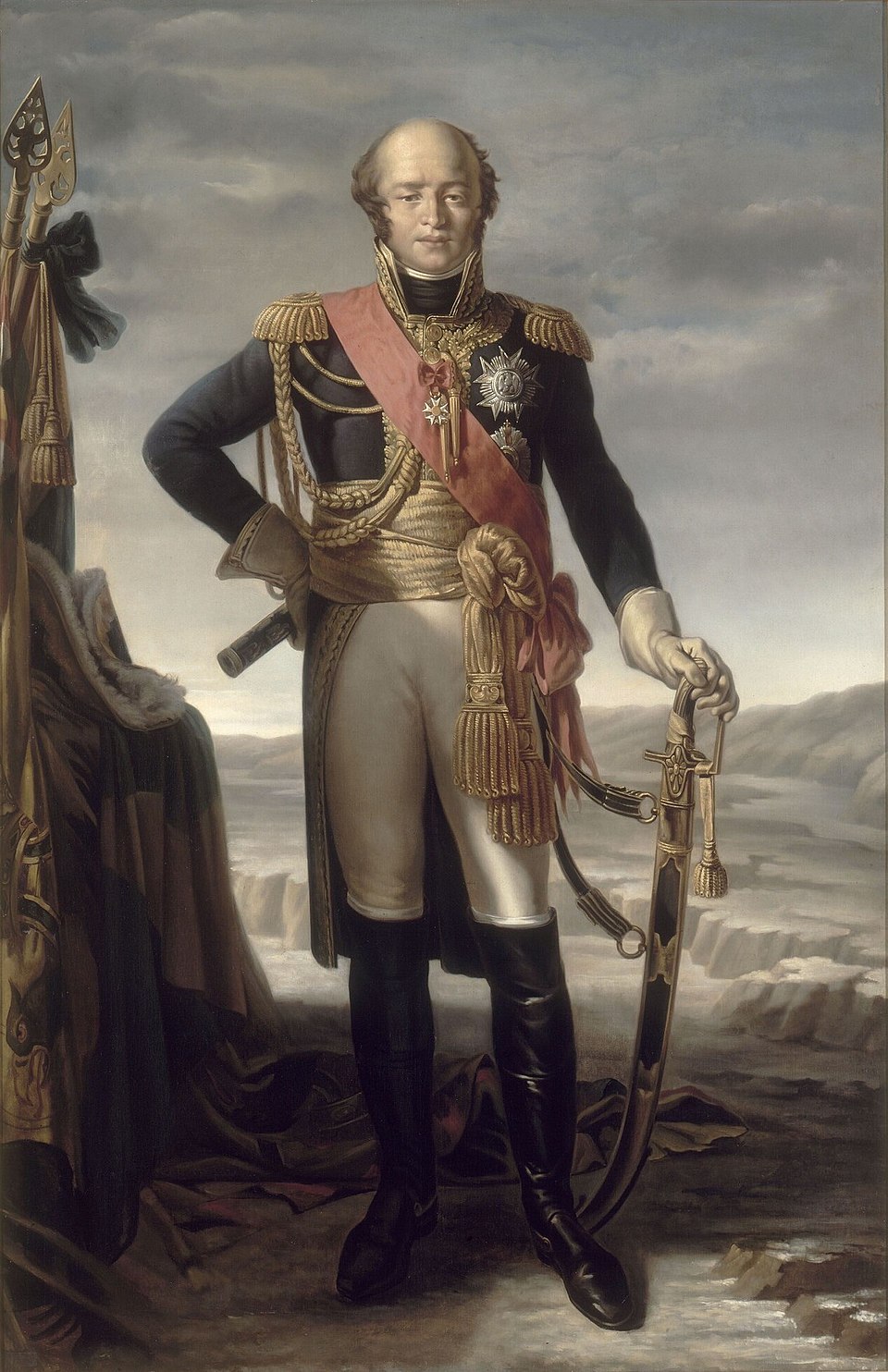
0 sources
Summary
Louis-Nicolas Davout was born on May 10, 1770[1], in Annoux[2]. He died on June 1, 1823[3], in Paris[4]. He worked as a politician[5], military officer[6], military leader[7], and marshal[8]. He ranks in the top 0.65% of human entities by monthly Wikipedia readership (8,554 views/month, #6,526 of 1,000,298).[9]
Key Facts
- Place of burial: Père Lachaise Cemetery[10], Grave of Louis Nicolas Davout[11]
- Father: Jean-François d'Avout[12]
- Mother: Françoise-Adélaïde Minard de Velars[13]
- Spouse: Aimée Davout[14], Adelaide Séguenot[15]
- Child: Adélaïde-Louise d'Eckmühl de Blocqueville[16], Joséphine Davout d'Auerstaedt[17], Napoléon-Louis Davout[18], Adèle Napoléonie Davout d'Eckmühl[19]
- Country of citizenship: France[20]
- Field of work: military affairs[21]
- Position held: Mayor of Savigny-sur-Orge[22], Minister of War[23], Peer of France[24]
- Award received: Grand Cross of the Legion of Honour[25], Marshal of the Empire[26], Knight of the Royal and Military Order of Saint Louis[27], Marshal of France[28], Grand Cross of the Military Order of Maria Theresa[29], list of names inscribed on the Arc de Triomphe[30], Godfather promotion of Special Military School of Saint-Cyr[31], Grand Cross of the Order of Military Virtue[32], Order of the Iron Crown (Austria)[33], Order of Saint Stephen of Hungary[34], Military Order of Maria Theresa[35], Knight Grand Cordon of the Order of Christ[36]
- Sex or gender: male[37]
- Noble title: duke[38]
- Military branch: French Army[39]
- Commons category: Louis-Nicolas Davout[40]
- Military, police or special rank: Marshal of the Empire[41], general[42]
- Archives at: Archives nationales[43], Defence Historical Service[44]
- Cause of death: tuberculosis[45]
- Participated in conflict: French Revolutionary Wars[46], Napoleonic Wars[47]
- Family name: Davout[48]
- Given name: Louis[49]
- Allegiance: France[50]
- Relative: Adalbert de Beaumont[51]
- Manner of death: natural causes[52]
- Depicted by: Q132965448[53]
- Described by source: Nordisk familjebok[54], Hamburg Biographies[55], Great Soviet Encyclopedia (1969–1978)[56], Sytin Military Encyclopedia[57], Brockhaus and Efron Encyclopedic Dictionary[58]
Body
Works and Contributions
Things named for Louis-Nicolas Davout include Penmarc'h Lighthouse[59], a lighthouse[60], in France[61], founded in 1897[62] and boulevard Davout[63], a boulevard[64], in France[65].
Why It Matters
Louis-Nicolas Davout has Wikipedia articles in 27 language editions, a strong signal of global cultural recognition.[66] He is known by 77 alternative names across languages and contexts.[67]
Entities named for him include Penmarc'h Lighthouse[59], a lighthouse[60], in France[61], founded in 1897[62] and boulevard Davout[63], a boulevard[64], in France[65].
FAQs
Where was Louis-Nicolas Davout born?
Louis-Nicolas Davout was born in Annoux[2].
Where did Louis-Nicolas Davout die?
Louis-Nicolas Davout died in Paris[4].
Who were Louis-Nicolas Davout's parents?
Louis-Nicolas Davout's father was Jean-François d'Avout[12]. Louis-Nicolas Davout's mother was Françoise-Adélaïde Minard de Velars[13].
Who was Louis-Nicolas Davout married to?
Louis-Nicolas Davout's spouses include Aimée Davout[14] and Adelaide Séguenot[15].
What did Louis-Nicolas Davout do for work?
Louis-Nicolas Davout worked as a politician[5], military officer[6], military leader[7], and marshal[8].
What awards did Louis-Nicolas Davout receive?
Honors received include Grand Cross of the Legion of Honour[25], Marshal of the Empire[26], Knight of the Royal and Military Order of Saint Louis[27], and Marshal of France[28].