
Kabir
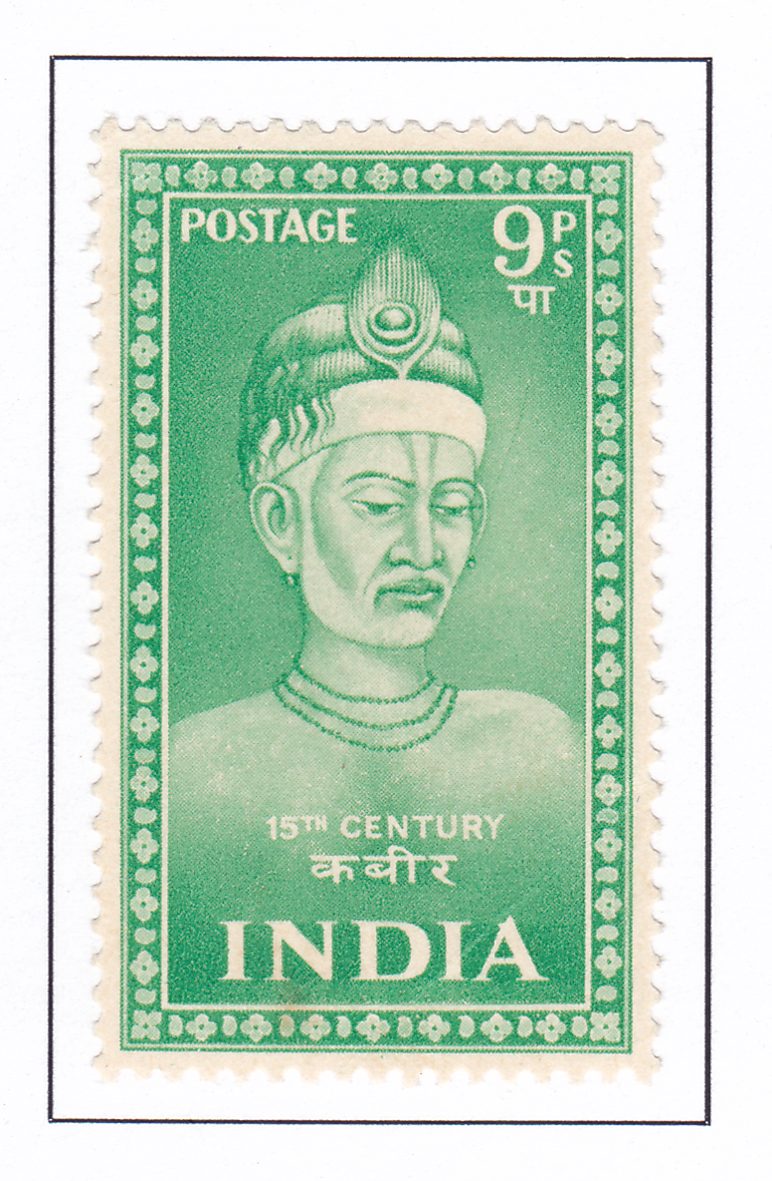
0 sources
Summary
Kabir was born on 1440[1] in Varanasi[2]. He died on January 1, 1518[3], in Maghar[4]. He worked as a weaver[5], poet[6], philosopher[7], and writer[8]. He ranks in the top 0.59% of human entities by monthly Wikipedia readership (5,747 views/month, #5,901 of 1,000,298).[9]
Key Facts
- Date of birth: 1398[10]
- Place of burial: Maghar[11]
- Religion or worldview: Hinduism[12]
- Sex or gender: male[13]
- Movement: bhakti[14], Sant Mat[15]
- Commons category: Kabir[16]
- Canonization status: saint[17]
- Given name: Kabir[18]
- Topic's main category: Category:Kabir[19]
- Described by source: Small Brockhaus and Efron Encyclopedic Dictionary[20], Brockhaus and Efron Encyclopedic Dictionary[21], Encyclopædia Britannica 11th edition[22], TDV Islamic Encyclopedia[23], Granat Encyclopedic Dictionary[24]
- Languages spoken, written or signed: Hindi[25]
- Commons Creator page: Kabir[26]
- Different from: Kabir[27]
- On focus list of Wikimedia project: Wikipedia:Vital articles/Level/4[28]
Body
Works and Contributions
Things named for Kabir include Kabirvad[29], a remarkable tree[30], in India[31] and Sant Kabir Award[32], an award[33], in India[34].
Why It Matters
Kabir has Wikipedia articles in 26 language editions, a strong signal of global cultural recognition.[35] He is known by 31 alternative names across languages and contexts.[36]
He has been cited as an influence by B. R. Ambedkar[37], an economist[38], 1891–1956[39], of British Raj[40], awarded the Bharat Ratna[41], specialised in economics[42].
Works attributed to him include Bijak[43], a compilation[44] and Songs of him[45], a literary work[46]. Entities named for him include Kabirvad[29], a remarkable tree[30], in India[31] and Sant Kabir Award[32], an award[33], in India[34].
FAQs
Where was Kabir born?
Kabir was born in Varanasi[2].
Where did Kabir die?
Kabir died in Maghar[4].
What did Kabir do for work?
Kabir worked as a weaver[5], poet[6], philosopher[7], and writer[8].
Who did Kabir influence?
Kabir has been cited as an influence by B. R. Ambedkar[37].