
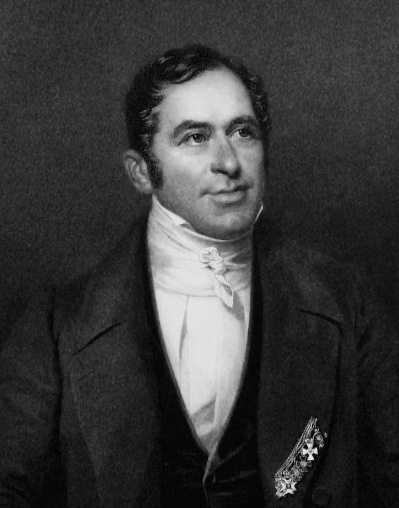
Johann Lukas Schönlein
0 sources
Summary
Johann Lukas Schönlein was born on November 30, 1793[1], in Bamberg[2]. He died on January 23, 1864[3], in Bamberg[4]. He worked as a botanist[5], physician[6], university teacher[7], pathologist[8], and paleobotanist[9]. He ranks in the top 0.73% of human entities by monthly Wikipedia readership (375 views/month, #7,284 of 1,000,298).[10]
Key Facts
- Place of burial: Hauptfriedhof Bamberg[11]
- Spouse: Therese Schönlein[12]
- Child: Philipp Schönlein[13]
- Country of citizenship: Kingdom of Bavaria[14]
- Employer: University of Würzburg[15], University of Zurich[16], Humboldt-Universität zu Berlin[17]
- Educated at: Friedrich Schiller University Jena[18], University of Göttingen[19], University of Würzburg[20]
- Doctoral advisor: Ignaz Döllinger[21], Philipp Franz von Walther[22]
- Student: Ernst von Leyden[23], Hermann Senator[24], Ludwig Traube[25], Rudolf Wagner[26], Johann Julius Friedrich Erdmann[27], Albrecht von Graefe[28]
- Award received: Pour le Mérite for Sciences and Arts order[29]
- Member of: German Academy of Sciences Leopoldina[30], Académie Nationale de Médecine[31]
- Religion or worldview: Catholicism[32]
- Sex or gender: male[33]
- Doctoral student: Rudolf Wagner[34]
- Commons category: Johann Lukas Schönlein[35]
- Archives at: Museum für Naturkunde Berlin, Archive[36], ETH Zurich University Archives[37], Bamberg State Library[38]
- Residence: Kingdom of Bavaria[39]
- Family name: Schönlein[40]
- Given name: Johann[41], Lukas[42]
- Described by source: Allgemeine Deutsche Biographie[43], Brockhaus and Efron Encyclopedic Dictionary[44], Small Brockhaus and Efron Encyclopedic Dictionary[45], Dresdner Hefte[46]
- Languages spoken, written or signed: German[47]
- Name in native language: Johann Lukas Schönlein[48]
Body
Works and Contributions
Things named for Johann Lukas Schönlein include Henoch-Schoenlein purpura[49].
Why It Matters
Johann Lukas Schönlein has Wikipedia articles in 18 language editions, a strong signal of global cultural recognition.[50] He is known by 37 alternative names across languages and contexts.[51]
He has been cited as an influence by Hermann Lebert[52], a botanist[53], 1813–1878[54], of Kingdom of Prussia[55], awarded the Montyon Science Award[56].
Entities named for him include Henoch-Schoenlein purpura[49].
His notable doctoral advisees include Rudolf Wagner[57], an anthropologist[58], 1805–1864[59], of Kingdom of Bavaria[60], specialised in physiology[61] and Hermann Senator[62], a physician[63], 1834–1911[64], of Germany[65], specialised in medicine[66].
FAQs
Where was Johann Lukas Schönlein born?
Johann Lukas Schönlein was born in Bamberg[2].
Where did Johann Lukas Schönlein die?
Johann Lukas Schönlein passed away in Bamberg[4].
Who was Johann Lukas Schönlein married to?
Johann Lukas Schönlein's spouses include Therese Schönlein[12].
What did Johann Lukas Schönlein do for work?
Johann Lukas Schönlein worked as a botanist[5], physician[6], university teacher[7], pathologist[8], and paleobotanist[9].
Where did Johann Lukas Schönlein go to school?
Johann Lukas Schönlein was educated at Friedrich Schiller University Jena[18], University of Göttingen[19], and University of Würzburg[20].
What awards did Johann Lukas Schönlein receive?
Honors received include Pour le Mérite for Sciences and Arts order[29].
Who did Johann Lukas Schönlein influence?
Johann Lukas Schönlein has been cited as an influence by Hermann Lebert[52].