
Horatio Kitchener, 1st Earl Kitchener
0 sources
Summary
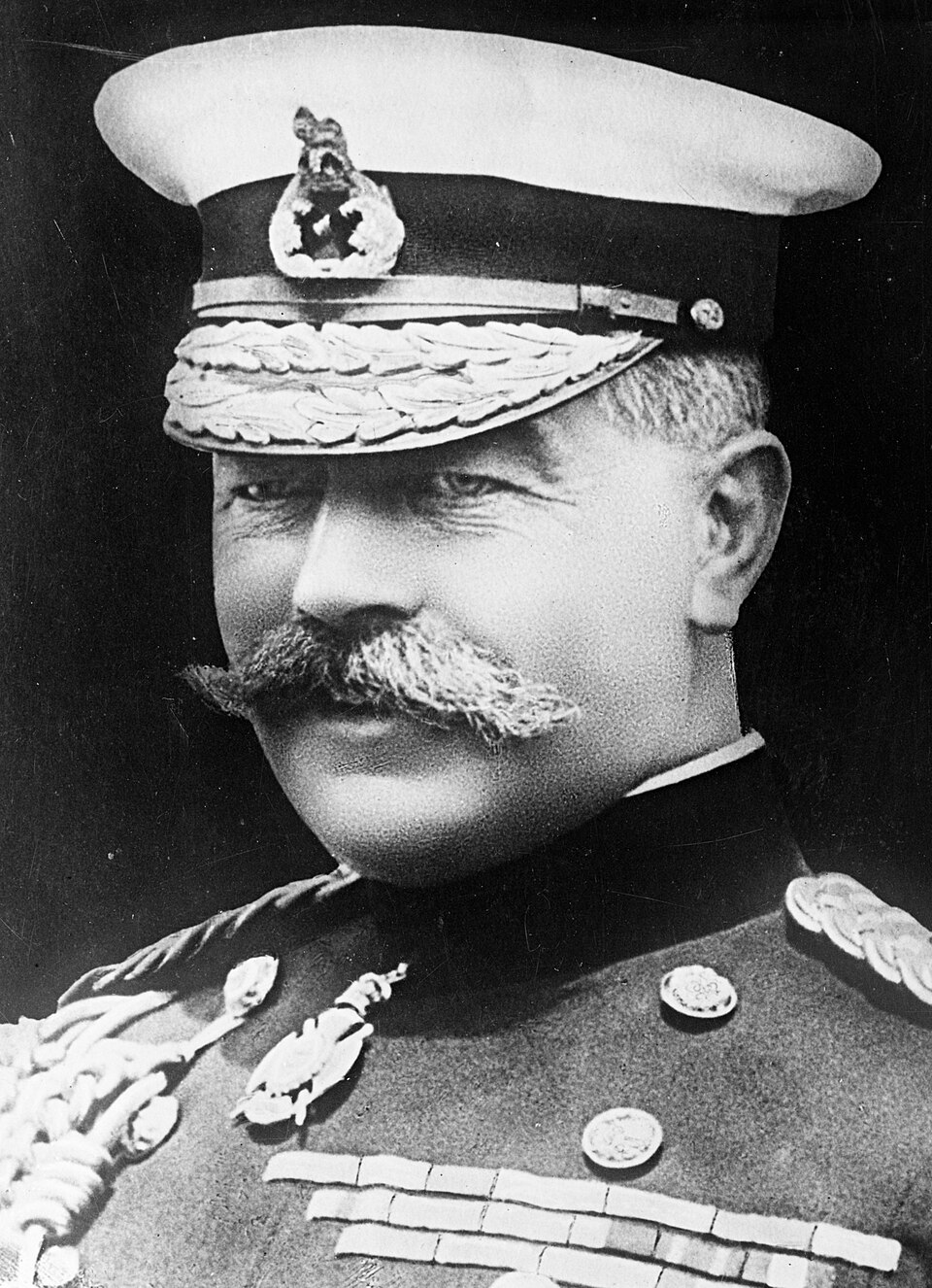
Horatio Kitchener, 1st Earl Kitchener was born on June 24, 1850[1], in Ballylongford[2]. He died on June 5, 1916[3], in North Sea[4]. He worked as a politician[5], diplomat[6], engineer[7], military officer[8], and director of land survey[9]. He ranks in the top 0.57% of human entities by monthly Wikipedia readership (14,078 views/month, #5,704 of 1,000,298).[10]
Key Facts
- Father: Henry Horatio Kitchener[11]
- Mother: Frances Anne Chevallier[12]
- Country of citizenship: United Kingdom of Great Britain and Ireland[13]
- Occupation: army officer[14], general field marshal[15], minister[16]
- Position held: member of the House of Lords[17], Secretary of State for War[18], Member of the Privy Council of the United Kingdom[19], ambassador[20], defence minister[21]
- Educated at: Royal Military Academy, Woolwich[22]
- Notable work: A trigonometrical survey of the island of Cyprus[23]
- Award received: Knight of the Legion of Honour[24], Knight Grand Cross of the Order of the Bath[25], Knight Grand Cross of the Order of St Michael and St George[26], Order of the Garter[27], Livingstone Medal[28], Knight of St. Patrick[29], Knight Grand Commander of the Order of the Star of India[30], Knight Grand Commander of the Order of the Indian Empire[31], Grand Cross of the Legion of Honour[32], 1st class, Order of the Medjidie[33], 2nd class, Order of the Medjidie[34]
- Religion or worldview: Anglicanism[35]
- Sex or gender: male[36]
- Noble title: count[37], Earl Kitchener[38], Viscount Broome[39], Baron Denton[40], Baron Kitchener of Khartoum[41], Viscount Kitchener of Khartoum[42]
- Military branch: British Army[43]
- Commons category: Herbert Kitchener, 1st Earl Kitchener[44]
- Military, police or special rank: field marshal[45], general[46]
- Honorific prefix: The Right Honourable[47]
- Participated in conflict: Franco-Prussian War[48], Mahdist War[49], Battle of Ferkeh[50], Battle of Atbara[51], Battle of Omdurman[52], Second Boer War[53], Battle of Paardeberg[54], World War I[55]
- Family name: Kitchener[56]
- Given name: Horatio[57], Herbert[58]
- Topic's main category: Category:Herbert Kitchener, 1st Earl Kitchener[59]
- Commons gallery: Horatio Herbert Kitchener[60]
- Work location: Khartoum[61], London[62]
Body
Works and Contributions
Things named for Horatio Kitchener, 1st Earl Kitchener include Kitchener[63], a city[64], in Canada[65], founded in 1833[66] and Mount Kitchener[67], a mountain[68], in Canada[69].
Why It Matters
Horatio Kitchener, 1st Earl Kitchener has Wikipedia articles in 28 language editions, a strong signal of global cultural recognition.[70] He is known by 76 alternative names across languages and contexts.[71]
Entities named for him include Kitchener[63], a city[64], in Canada[65], founded in 1833[66] and Mount Kitchener[67], a mountain[68], in Canada[69].
FAQs
Where was Horatio Kitchener, 1st Earl Kitchener born?
Horatio Kitchener, 1st Earl Kitchener was born in Ballylongford[2].
Where did Horatio Kitchener, 1st Earl Kitchener die?
Horatio Kitchener, 1st Earl Kitchener passed away in North Sea[4].
Who were Horatio Kitchener, 1st Earl Kitchener's parents?
Horatio Kitchener, 1st Earl Kitchener's father was Henry Horatio Kitchener[11]. Horatio Kitchener, 1st Earl Kitchener's mother was Frances Anne Chevallier[12].
What did Horatio Kitchener, 1st Earl Kitchener do for work?
Horatio Kitchener, 1st Earl Kitchener worked as a politician[5], diplomat[6], engineer[7], military officer[8], and director of land survey[9].
Where did Horatio Kitchener, 1st Earl Kitchener go to school?
Horatio Kitchener, 1st Earl Kitchener was educated at Royal Military Academy, Woolwich[22].
What awards did Horatio Kitchener, 1st Earl Kitchener receive?
Honors received include Knight of the Legion of Honour[24], Knight Grand Cross of the Order of the Bath[25], Knight Grand Cross of the Order of St Michael and St George[26], and Order of the Garter[27].