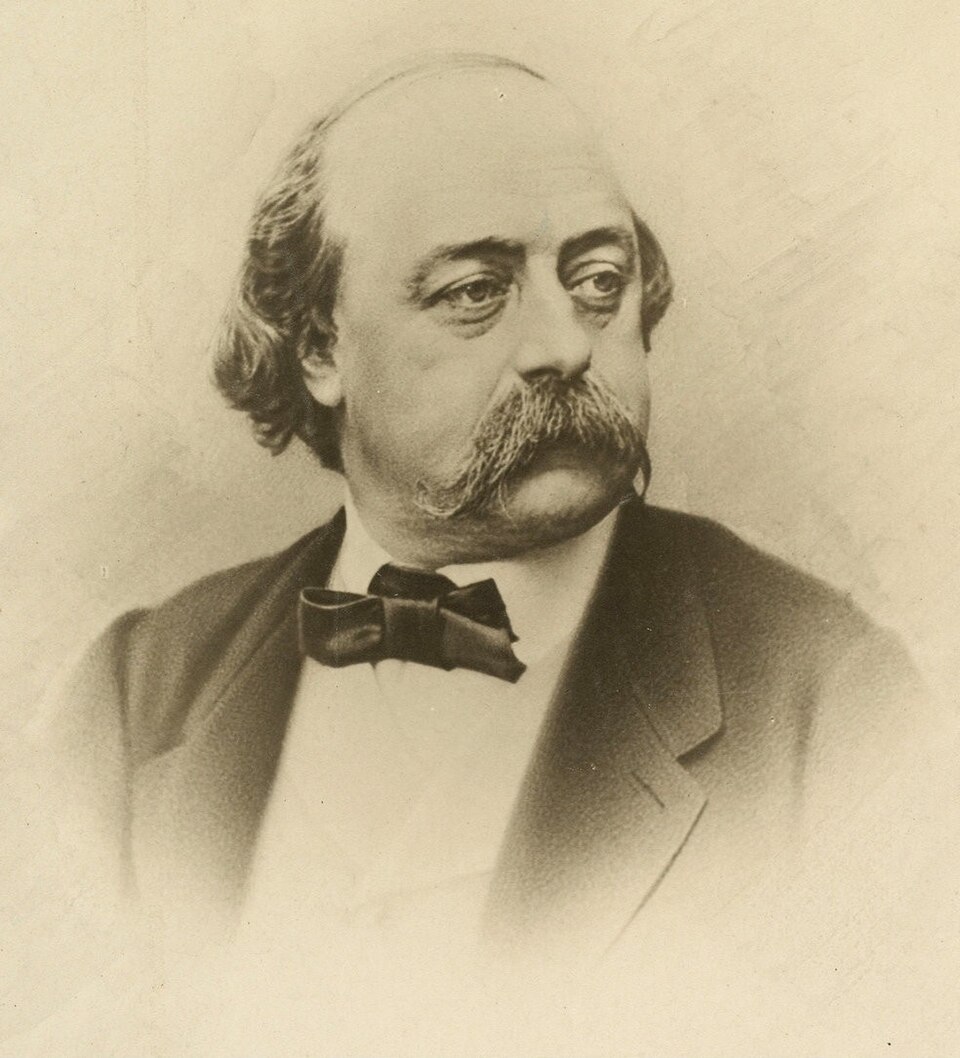
Gustave Flaubert
0 sources
Gustave Flaubert
Summary
Gustave Flaubert is a human[1]. His place of birth was Rouen[2]. He was born on December 12, 1821[3]. He passed away in Croisset[4]. He died on May 8, 1880[5]. He worked as a novelist[6], writer[7], and dramaturge[8]. He ranks in the top 0.64% of human entities by monthly Wikipedia readership (3,740 views/month, #6,408 of 1,000,298).[9]
Key Facts
- Gustave Flaubert was born in Rouen[2].
- Gustave Flaubert died in Croisset[4].
- Gustave Flaubert was born on December 12, 1821[3].
- Gustave Flaubert was born on 1821[10].
- Gustave Flaubert died on May 8, 1880[5].
- Gustave Flaubert died on 1880[11].
- Gustave Flaubert is buried at Cimetière monumental de Rouen[12].
- Gustave Flaubert's father was Achille Cléophas Flaubert[13].
- Gustave Flaubert held citizenship in France[14].
- Gustave Flaubert's professions included novelist[6].
- Gustave Flaubert's professions included writer[7].
- Gustave Flaubert's professions included dramaturge[8].
- Gustave Flaubert's field of work was prose[15].
- Gustave Flaubert's field of work was jurisprudence[16].
- Gustave Flaubert was educated at International lycée François-Ier[17].
- Gustave Flaubert was educated at Paris Law Faculty[18].
- Gustave Flaubert's education included a stint at Lycée Pierre-Corneille[19].
- A notable work attributed to Gustave Flaubert is Madame Bovary[20].
- A notable work attributed to Gustave Flaubert is Salammbô[21].
- A notable work attributed to Gustave Flaubert is Bouvard et Pécuchet[22].
- A notable work attributed to Gustave Flaubert is Sentimental Education[23].
- A notable work attributed to Gustave Flaubert is The Temptation of Saint Anthony[24].
- A notable work attributed to Gustave Flaubert is Three Tales[25].
- Gustave Flaubert received the Knight of the Legion of Honour[26].
- Gustave Flaubert received the Q130762055[27].
Product Details
The following facts are restated verbatim from public-domain and CC0 open-data sources — every line is independently verifiable against the named source's catalog.
MusicBrainz — CC0 open music encyclopedia
-
Type: Person[28]
-
Country: FR[29]
-
Began / founded: 1821-12-12[30]
-
Ended / dissolved: 1880-05-08[31]
-
MusicBrainz ID: 8d1cb829-5591-4286-bea6-61c085db0fbe[32]
Body
Origins and Family
Gustave Flaubert was born in Rouen[2]. Recorded date of birth include December 12, 1821[3] and 1821[10]. His father was Achille Cléophas Flaubert[13].
Education
Educated at International lycée François-Ier[17], a school building[33], in France[34], founded in 1882[35]; Paris Law Faculty[18], a faculty of law[36], in France[37], founded in 1806[38]; and Lycée Pierre-Corneille[19], a building[39], in France[40], founded in 1593[41]. Gustave Flaubert studied under Pierre Adolphe Chéruel[42].
Career and Affiliations
Recorded occupations include novelist[6], writer[7], and dramaturge[8]. Fields of work include prose[15], a literary form[43] and jurisprudence[16], an academic discipline[44].
Works and Contributions
Notable works include Madame Bovary[20], a literary work[45], founded in 1856[46]; Salammbô[21], a literary work[47]; Bouvard et Pécuchet[22], a literary work[48]; Sentimental Education[23], a literary work[49], founded in 1869[50]; The Temptation of Saint Anthony[24], a literary work[51]; and Three Tales[25], a literary work[52]. Things named for Gustave Flaubert include Pont Gustave-Flaubert[53], Flaubert[54], and 11379 Flaubert[55].
Recognition
Awards received include Knight of the Legion of Honour[26], a grade of an order[56], in France[57] and Q130762055[27].
Personal Life
Gustave Flaubert's religion is recorded as Catholic Church[58].
Death and Burial
Recorded date of death include May 8, 1880[5] and 1880[11]. Gustave Flaubert died in Croisset[4]. The cause of death was cerebral hemorrhage[59]. Burial took place at Cimetière monumental de Rouen[12].
Why It Matters
Gustave Flaubert ranks in the top 0.64% of human entities by monthly Wikipedia readership (3,740 views/month, #6,408 of 1,000,298).[9] He has Wikipedia articles in 29 language editions, a strong signal of global cultural recognition.[60] He is known by 42 alternative names across languages and contexts.[61]
He has been cited as an influence by Franz Kafka[62], a novelist[63], 1883–1924[64], of Cisleithania[65], specialised in literature[66]; Anton Chekhov[67], a physician[68], 1860–1904[69], of Russian Empire[70], awarded the Order of Saint Stanislaus, 3rd class[71], specialised in prose[72]; Charles Baudelaire[73], a poet[74], 1821–1867[75], of France[76], awarded the Concours général[77], specialised in poetry[78]; Mario Vargas Llosa[79], a novelist[80], 1936–2025[81], of Peru[82], awarded the Nobel Prize in Literature[83], specialised in literature[84]; Philip Roth[85], a novelist[86], 1933–2018[87], of United States[88], awarded the Guggenheim Fellowship[89], specialised in belletristic literature[90]; and Pierre Bourdieu[91], a philosopher[92], 1930–2002[93], of France[94], awarded the CNRS Gold medal[95], specialised in sociology[96].
Works attributed to him include Madame Bovary[97], Sentimental Education[98], Salammbô[99], The Temptation of Saint Anthony[100], Three Tales[101], and Bouvard et Pécuchet[102]. Entities named for him include Pont Gustave-Flaubert[53], Flaubert[54], and 11379 Flaubert[55].
FAQs
Where was Gustave Flaubert born?
Gustave Flaubert's place of birth was Rouen[2].
Where did Gustave Flaubert die?
Gustave Flaubert passed away in Croisset[4].
Who were Gustave Flaubert's parents?
Gustave Flaubert's father was Achille Cléophas Flaubert[13].
What did Gustave Flaubert do for work?
Gustave Flaubert worked as novelist[6], writer[7], and dramaturge[8].
Where did Gustave Flaubert go to school?
Gustave Flaubert was educated at International lycée François-Ier[17], Paris Law Faculty[18], and Lycée Pierre-Corneille[19].
What awards did Gustave Flaubert receive?
Honors received include Knight of the Legion of Honour[26] and Q130762055[27].
Who did Gustave Flaubert influence?
Gustave Flaubert has been cited as an influence by Franz Kafka[62], Anton Chekhov[67], Charles Baudelaire[73], and Mario Vargas Llosa[79].