
Giuseppe Verdi
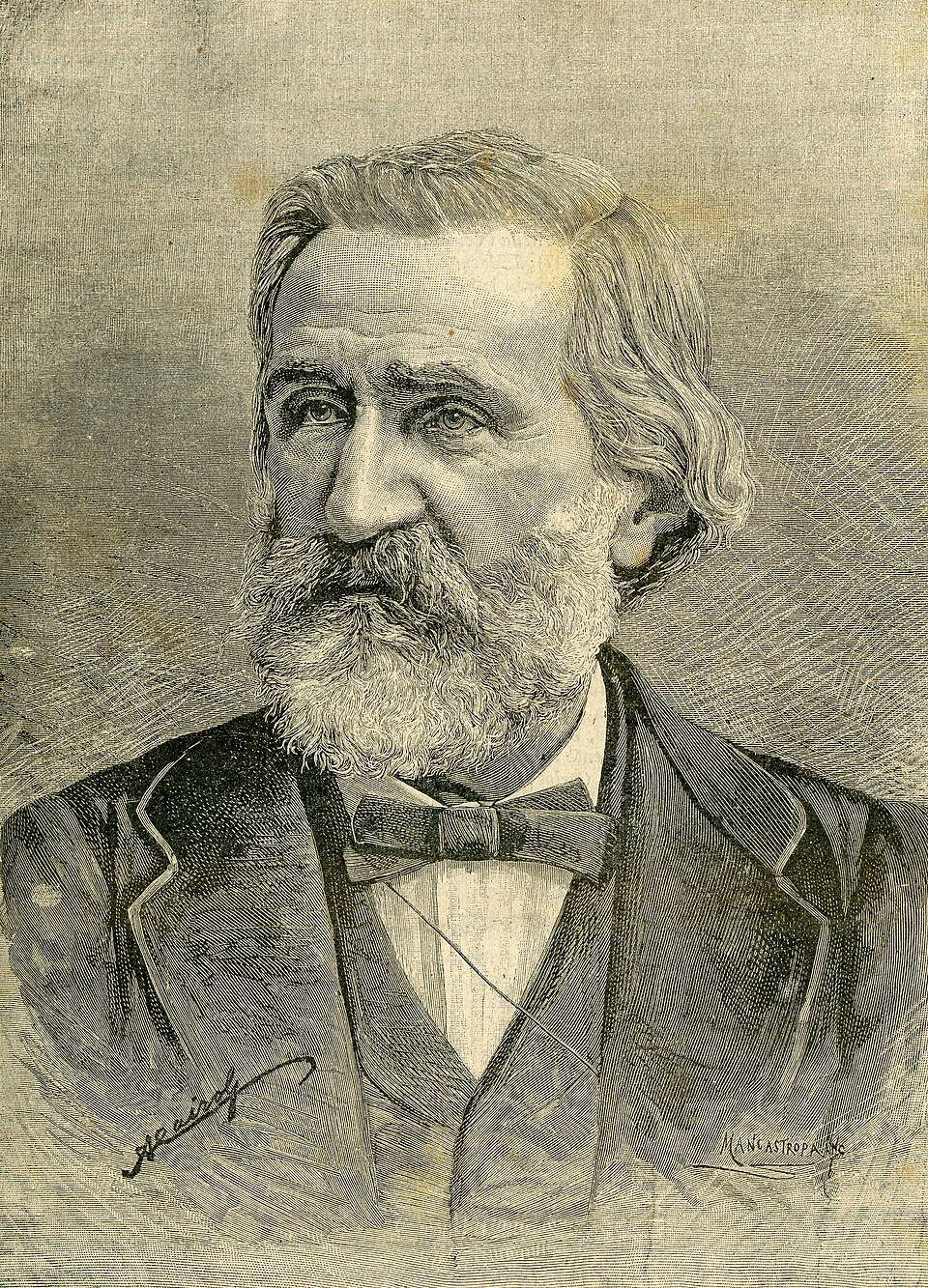
0 sources
Giuseppe Verdi
Summary
Giuseppe Verdi is a human[1]. He was born in Le Roncole[2]. He was born on April 10, 1813[3]. He died in Milan[4]. He died on January 27, 1901[5]. He worked as a composer[6], conductor[7], writer[8], and politician[9]. He ranks in the top 0.62% of human entities by monthly Wikipedia readership (24,587 views/month, #6,177 of 1,000,298).[10]
Key Facts
- Giuseppe Verdi was born in Le Roncole[2].
- Giuseppe Verdi was born in Italy[11].
- Giuseppe Verdi died in Milan[4].
- Giuseppe Verdi was born on April 10, 1813[3].
- Giuseppe Verdi was born on October 10, 1813[12].
- Giuseppe Verdi was born on October 9, 1813[13].
- Giuseppe Verdi died on January 27, 1901[5].
- Giuseppe Verdi is buried at Casa di Riposo per Musicisti[14].
- Among Giuseppe Verdi's spouses was Margherita Barezzi[15].
- Giuseppe Verdi was married to Giuseppina Strepponi[16].
- A child of Giuseppe Verdi was Maria Carrara Verdi[17].
- Giuseppe Verdi held citizenship in Duchy of Parma and Piacenza[18].
- Giuseppe Verdi held citizenship in Kingdom of Italy[19].
- Giuseppe Verdi worked as a composer[6].
- Giuseppe Verdi worked as a conductor[7].
- Giuseppe Verdi's professions included writer[8].
- Giuseppe Verdi's professions included politician[9].
- Giuseppe Verdi's field of work was art music[20].
- Giuseppe Verdi's field of work was music[21].
- Giuseppe Verdi's field of work was opera[22].
- Giuseppe Verdi's field of work was conducting[23].
- Giuseppe Verdi's field of work was politics[24].
- Giuseppe Verdi held the position of member of the Chamber of Deputies of the Kingdom of Italy[25].
- Giuseppe Verdi held the position of senator of the Kingdom of Italy[26].
- A notable work attributed to Giuseppe Verdi is La traviata[27].
Body
Origins and Family
Recorded place of birth include Le Roncole[2], a frazione[28], in Italy[29] and Italy[11], a country[30], in Italy[31], founded in 1946[32]. Recorded date of birth include April 10, 1813[3], October 10, 1813[12], and October 9, 1813[13].
Career and Affiliations
Recorded occupations include composer[6], conductor[7], writer[8], and politician[9]. Fields of work include art music[20], a music genre[33]; music[21], a type of arts[34]; opera[22], a music genre[35], founded in 1600[36]; conducting[23], an activity[37]; and politics[24], an academic discipline[38]. Positions held include member of the Chamber of Deputies of the Kingdom of Italy[25], a position[39], in Kingdom of Italy[40], founded in 1861[41] and senator of the Kingdom of Italy[26], a position[42], in Kingdom of Italy[43], founded in 1861[44].
Works and Contributions
Notable works include La traviata[27] and Rigoletto[45]. Things named for Giuseppe Verdi include Parma Airport[46], an airport[47], in Italy[48]; Milan Conservatory[49], a conservatory[50], in Italy[51], founded in 1807[52]; Teatro Verdi[53], a theatre building[54], in Italy[55]; Teatro Giuseppe Verdi[56]; Verdi Inlet[57]; Verdi[58]; and 3975 Verdi[59].
Recognition
Awards received include Pour le Mérite for Sciences and Arts order[60], a civil decoration[61], in Prussia[62], founded in 1842[63]; Knight Grand Cross of the Order of Saints Maurice and Lazarus[64], a grade of an order[65], in Duchy of Savoy[66]; Order of Saint Stanislaus[67], an order[68], in Polish–Lithuanian Commonwealth[69], founded in 1765[70]; Knight of the Legion of Honour[71], a Q1499804[72], in France[73]; Grand Cross of the Legion of Honour[74], a grade of an order[75], in France[76]; and Civil Order of Savoy[77].
Personal Life
Spouses include Margherita Barezzi[15], a composer[78], 1814–1840[79], of Duchy of Parma and Piacenza[80] and Giuseppina Strepponi[16], an opera singer[81], 1815–1897[82], of Kingdom of Italy[83], specialised in singing[84]. A child of Giuseppe Verdi was Maria Carrara Verdi[17]. His religion is recorded as Roman Catholic[85]. He was affiliated with the Historical Right[86].
Death and Burial
Giuseppe Verdi died on January 27, 1901[5]. He died in Milan[4]. The cause of death was stroke[87]. He is buried at Casa di Riposo per Musicisti[14].
Why It Matters
Giuseppe Verdi ranks in the top 0.62% of human entities by monthly Wikipedia readership (24,587 views/month, #6,177 of 1,000,298).[10] He has Wikipedia articles in 29 language editions, a strong signal of global cultural recognition.[88] He is known by 37 alternative names across languages and contexts.[89]
He has been cited as an influence by Miho Mosulishvili[90], a playwright[91], b. 1962[92], of Soviet Union[93], awarded the Honor Medal[94].
Entities named for him include Parma Airport[46], an airport[47], in Italy[48]; Milan Conservatory[49], a conservatory[50], in Italy[51], founded in 1807[52]; Teatro Verdi[53], a theatre building[54], in Italy[55]; Teatro Giuseppe Verdi[56]; Verdi Inlet[57]; and Verdi[58].
FAQs
Where was Giuseppe Verdi born?
Giuseppe Verdi's place of birth was Le Roncole[2].
Where did Giuseppe Verdi die?
Giuseppe Verdi died in Milan[4].
Who was Giuseppe Verdi married to?
Giuseppe Verdi's spouses include Margherita Barezzi[15] and Giuseppina Strepponi[16].
What did Giuseppe Verdi do for work?
Giuseppe Verdi worked as composer[6], conductor[7], writer[8], and politician[9].
What awards did Giuseppe Verdi receive?
Honors received include Pour le Mérite for Sciences and Arts order[60], Knight Grand Cross of the Order of Saints Maurice and Lazarus[64], Order of Saint Stanislaus[67], and Knight of the Legion of Honour[71].
Who did Giuseppe Verdi influence?
Giuseppe Verdi has been cited as an influence by Miho Mosulishvili[90].