
Gandzasar monastery
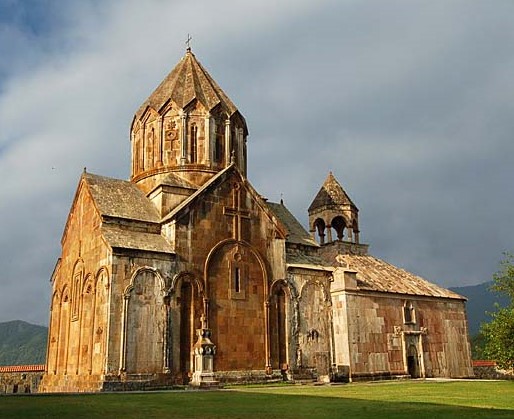
0 sources
Gandzasar monastery
Summary
Gandzasar monastery is a monastery[1]. It has Wikipedia articles in 18 language editions, a strong signal of global cultural recognition.[2]
Key Facts
- Gandzasar monastery's religion is recorded as Armenian Apostolic Church[3].
- Gandzasar monastery is located in Kalbajar District[4].
- Gandzasar monastery is located in Martakert Province[5].
- Gandzasar monastery is in the country of Azerbaijan[6].
- Gandzasar monastery's instance of is recorded as monastery[7].
- Gandzasar monastery's instance of is recorded as cultural property[8].
- Gandzasar monastery's founder is recorded as Hasan Jalal[9].
- Gandzasar monastery's architectural style is recorded as Armenian architecture[10].
- Gandzasar monastery's Commons category is recorded as Gandzasar[11].
- January 17, 1201 marks the founding of Gandzasar monastery[12].
- Gandzasar monastery's coordinate location is recorded as {'lat': 40.056838888889, 'lon': 46.531233333333}[13].
- Gandzasar monastery's located in/on physical feature is recorded as Q21210564[14].
- Gandzasar monastery's diocese is recorded as Diocese of Artsakh[15].
- Gandzasar monastery's service entry is recorded as July 22, 1240[16].
- Gandzasar monastery's official website is recorded as http://www.gandzasar.com/[17].
- Gandzasar monastery's Commons gallery is recorded as Gandzasar[18].
- Gandzasar monastery's time of earliest written record is recorded as 901[19].
Body
Geography
Gandzasar monastery is in the country of Azerbaijan[6]. Located in include Kalbajar District[4], a district of Azerbaijan[20], in Azerbaijan[21], founded in 1930[22] and Martakert Province[5], a Province of the Republic of Artsakh[23], in Republic of Artsakh[24].
Designation and Status
Recorded instance of include monastery[7] and cultural property[8]. Gandzasar monastery's religion is recorded as Armenian Apostolic Church[3].
History and Context
January 17, 1201 marks the founding of Gandzasar monastery[12].
Why It Matters
Gandzasar monastery has Wikipedia articles in 18 language editions, a strong signal of global cultural recognition.[2] It is known by 3 alternative names across languages and contexts.[25]