
Francisco Franco
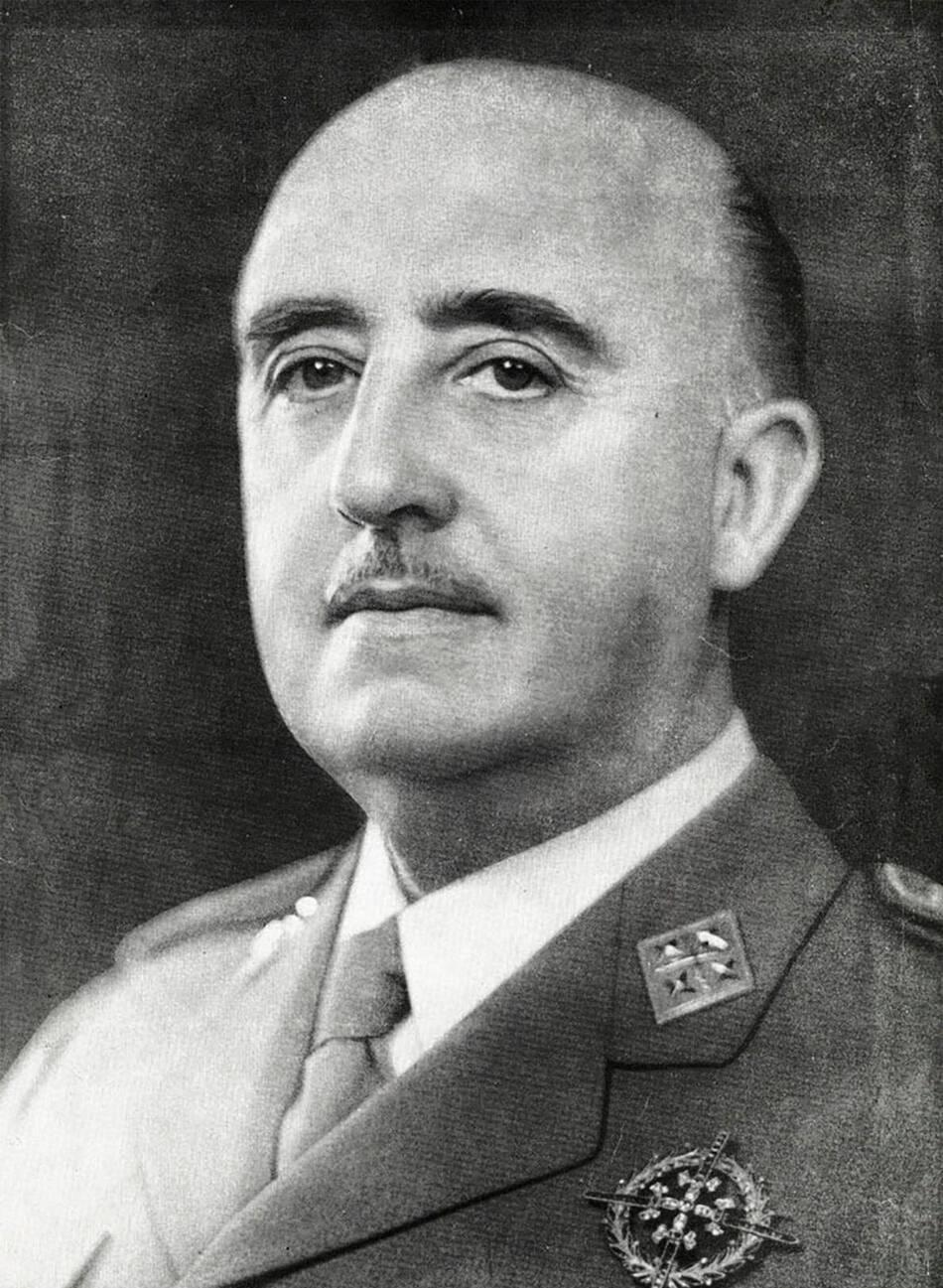
0 sources
Summary
Francisco Franco was born in Ferrol[1]. He died in Madrid[2]. He worked as a military officer[3], spanish legionary[4], military leader[5], politician[6], and governor[7]. He ranks in the top 0.19% of human entities by monthly Wikipedia readership (93,343 views/month, #1,905 of 1,000,298).[8]
Key Facts
- Place of burial: Grave of Francisco Franco at Mingorrubio Cemetery[9], Grave of Francisco Franco in Valle de los Caídos[10]
- Father: Nicolás Franco Salgado-Araújo[11]
- Mother: Pilar Bahamonde y Pardo de Andrade[12]
- Spouse: María del Carmen Polo Martínez-Valdés[13]
- Child: Carmen Franco, 1st Duchess of Franco[14]
- Country of citizenship: Spain[15]
- Native language: Spanish[16]
- Occupation: screenwriter[17], film actor[18]
- Position held: head of government of Spain[19], Chief of Staff of the Army[20], Director of the General Military Academy[21], Head of State of Spain[22], commander-in-chief[23], National Head of the Movement[24], Capitán general de las Islas Baleares[25], General in chief[26], Capitán General de Canarias[27]
- Educated at: Toledo Infantry Academy[28]
- Award received: Imperial Order of the Yoke and Arrows[29], Knight Grand Cross with Collar of the Order of Alfonso X[30], Knight Grand Cross of the Order of Saint Ferdinand[31], Medal of Suffering for the Fatherland[32], War Grand Cross[33], Military Medal of Spain[34], Royal and Military Order of Maria Christina[35], Grand Cross of the Cross of Military Merit with White Decoration[36], Grand Cross of the Aeronautical Merit (Spain) - White Decoration[37], Grand Cross of the Royal and Military Order of Saint Hermenegild[38], Cross of Naval Merit with red badge[39], Cross of Military Merit with Red Decoration[40], Knight Grand Officer of the Order of Saint Hermenegild[41], Cross of the Royal and Military Order of Saint Hermenegild[42]
- Religion or worldview: Catholicism[43]
- Sex or gender: male[44]
- Member of political party: Falange Española Tradicionalista y de las JONS[45]
Body
Works and Contributions
Things named for Francisco Franco include Francoism[46], a regime[47], in Spain[48]; Llanos del Caudillo[49], a municipality of Spain[50], in Spain[51]; and Villafranco del Guadiana[52], a locality[53], in Spain[54], founded in 1955[55].
Why It Matters
Francisco Franco has Wikipedia articles in 30 language editions, a strong signal of global cultural recognition.[56] He is known by 130 alternative names across languages and contexts.[57]
Works attributed to him include Documents associated with the Spanish Civil War[58], a military communications[59], in Spain[60]. Entities named for him include Francoism[46], a regime[47], in Spain[48]; Llanos del Caudillo[49], a municipality of Spain[50], in Spain[51]; and Villafranco del Guadiana[52], a locality[53], in Spain[54], founded in 1955[55].
FAQs
Where was Francisco Franco born?
Francisco Franco's place of birth was Ferrol[1].
Where did Francisco Franco die?
Francisco Franco passed away in Madrid[2].
Who were Francisco Franco's parents?
Francisco Franco's father was Nicolás Franco Salgado-Araújo[11]. Francisco Franco's mother was Pilar Bahamonde y Pardo de Andrade[12].
Who was Francisco Franco married to?
Francisco Franco's spouses include María del Carmen Polo Martínez-Valdés[13].
What did Francisco Franco do for work?
Francisco Franco worked as a military officer[3], spanish legionary[4], military leader[5], politician[6], and governor[7].
Where did Francisco Franco go to school?
Francisco Franco was educated at Toledo Infantry Academy[28].
What awards did Francisco Franco receive?
Honors received include Imperial Order of the Yoke and Arrows[29], Knight Grand Cross with Collar of the Order of Alfonso X[30], Knight Grand Cross of the Order of Saint Ferdinand[31], and Medal of Suffering for the Fatherland[32].