
Felip Pedrell
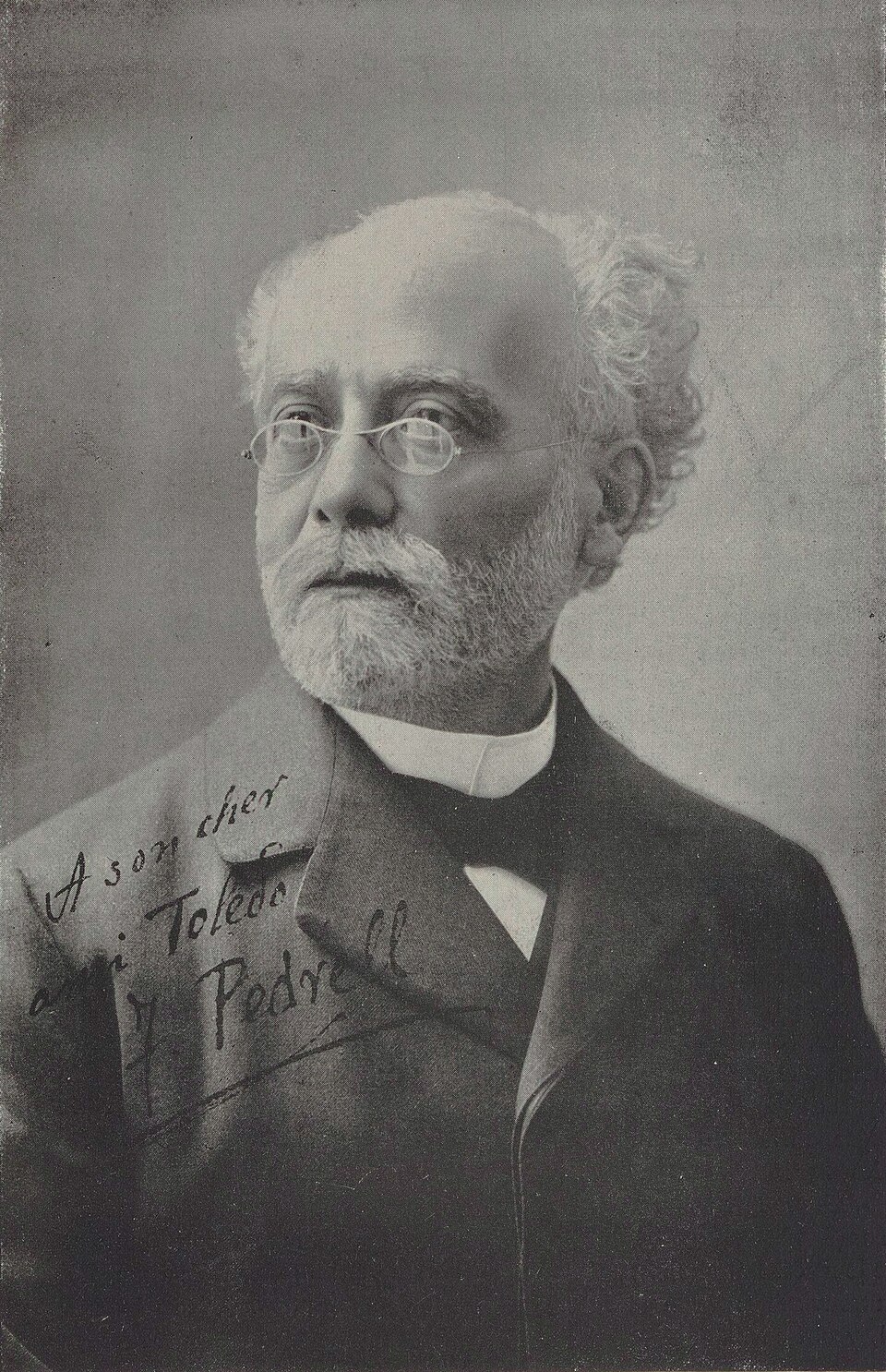
0 sources
Summary
Felip Pedrell was born on February 19, 1841[1], in Tortosa[2]. He died on August 19, 1922[3], in Barcelona[4]. He worked as a composer[5], musicologist[6], music educator[7], and music critic[8]. He ranks in the top 0.73% of human entities by monthly Wikipedia readership (395 views/month, #7,289 of 1,000,298).[9]
Key Facts
- Place of death: Barbezieux-Saint-Hilaire[10]
- Date of birth: January 1, 1841[11]
- Date of death: January 1, 1922[12]
- Place of burial: Sant Gervasi cemetery[13]
- Country of citizenship: Spain[14]
- Position held: Académico de la Real Academia de Bellas Artes de San Fernando[15], member of the Reial Acadèmia de Bones Lletres de Barcelona[16]
- Student: Enrique Granados[17], José María Peris Polo[18], Manuel de Falla[19], Antoni Noguera Balaguer[20], Conrad Abelard Fontova i Planes[21], Fèlix de Santos[22], Cristòfor Taltabull i Balaguer[23], Lluís Millet[24], Isaac Albéniz[25], Robert Gerhard[26], Nemesio Otaño[27], Pedro Blanco López[28], Higini Anglès[29], Rosa García Ascot[30]
- Notable work: La Celestina[31], Els Pirineus[32], L'ultimo Abenzerraggio[33]
- Sex or gender: male[34]
- Genre: opera[35], zarzuela[36], sardana[37]
- Commons category: Felip Pedrell[38]
- Family name: Pedrell[39]
- Given name: Felip[40]
Why It Matters
Felip Pedrell has Wikipedia articles in 17 language editions, a strong signal of global cultural recognition.[41] He is known by 26 alternative names across languages and contexts.[42]
He has been cited as an influence by Cristòfor Taltabull i Balaguer[43], a composer[44], 1888–1964[45], of Spain[46].
FAQs
Where was Felip Pedrell born?
Felip Pedrell was born in Tortosa[2].
Where did Felip Pedrell die?
Felip Pedrell died in Barcelona[4].
What did Felip Pedrell do for work?
Felip Pedrell worked as a composer[5], musicologist[6], music educator[7], and music critic[8].
Who did Felip Pedrell influence?
Felip Pedrell has been cited as an influence by Cristòfor Taltabull i Balaguer[43].