
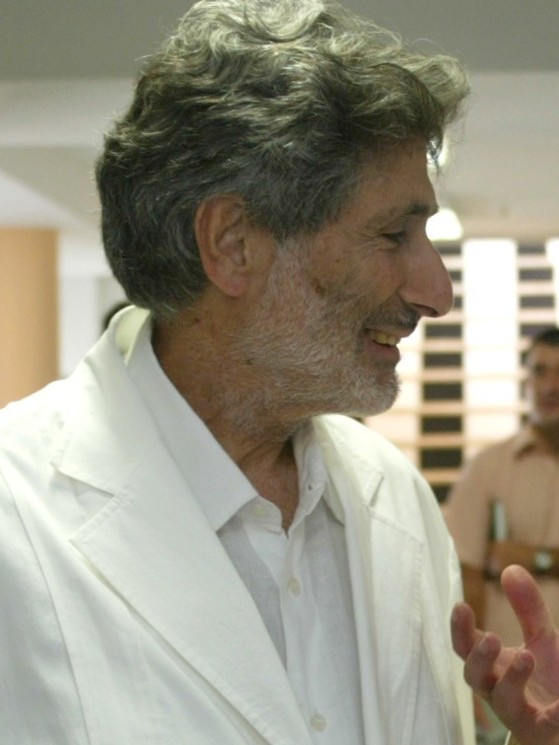
Edward Said
0 sources
Summary
Edward Said was born on November 1, 1935[1], in Jerusalem[2]. He died on September 25, 2003[3], in New York City[4]. He worked as a writer[5], literary critic[6], journalist[7], philosopher[8], and musicologist[9]. He ranks in the top 0.58% of human entities by monthly Wikipedia readership (19,576 views/month, #5,815 of 1,000,298).[10]
Key Facts
- Date of death: September 24, 2003[11]
- Spouse: Mariam C. Said[12], Maire Jaanus[13]
- Child: Wadih Edward Said[14], Najla Said[15]
- Country of citizenship: United States[16], Mandatory Palestine[17]
- Occupation: political scientist[18], translator[19], researcher[20], philologist[21], music critic[22], university teacher[23], musician[24]
- Employer: Columbia University[25]
- Educated at: Harvard University[26], Princeton University[27], Northfield Mount Hermon School[28], Victoria College[29], St. George's School, Palestine[30]
- Notable work: Orientalism[31]
- Award received: Guggenheim Fellowship[32], Princess of Asturias Award for Concord[33], American Book Awards[34], Anisfield-Wolf Book Awards[35], International Nonino Prize[36], Messenger Lectures[37], honorary doctorate from the University of Paris-VII[38]
- Member of: American Academy of Arts and Sciences[39], American Academy of Arts and Letters[40], Arab Academy of Damascus[41], American Philosophical Society[42]
- Influenced by: Michel Foucault[43], Jean-Paul Sartre[44]
- Sex or gender: male[45]
- Commons category: Edward Said[46]
- Archives at: Rare Book and Manuscript Library (Columbia University)[47]
- Cause of death: leukemia[48]
- Academic degree: Doctor of Laws[49]
- Family name: Said[50]
- Given name: Edward[51], Wadie[52]
- Topic's main category: Category:Edward Said[53]
- Work location: New York City[54], Cairo[55]
Body
Works and Contributions
Things named for Edward Said include Barenboim–Said Akademie[56], an academy[57], in Germany[58], founded in 2012[59], headquartered in Berlin[60].
Why It Matters
Edward Said has Wikipedia articles in 30 language editions, a strong signal of global cultural recognition.[61] He is known by 60 alternative names across languages and contexts.[62]
He has been cited as an influence by Christopher Hitchens[63], a journalist[64], 1949–2011[65], of United Kingdom[66], awarded the Richard Dawkins Award[67]; Homi K. Bhabha[68], a philosopher[69], b. 1949[70], of India[71], awarded the Padma Bhushan[72]; Hamid Dabashi[73], a historian[74], b. 1951[75], of Iran[76]; Arturo Escobar[77], an anthropologist[78], b. 1952[79], of United States[80], awarded the Guggenheim Fellowship[81]; and Amina Mama[82], an academic[83], b. 1958[84], of Nigeria[85].
Works attributed to him include Orientalism[86], a history book[87]. Entities named for him include Barenboim–Said Akademie[56], an academy[57], in Germany[58], founded in 2012[59], headquartered in Berlin[60].
FAQs
Where was Edward Said born?
Edward Said was born in Jerusalem[2].
Where did Edward Said die?
Edward Said died in New York City[4].
Who was Edward Said married to?
Edward Said's spouses include Mariam C. Said[12] and Maire Jaanus[13].
What did Edward Said do for work?
Edward Said worked as a writer[5], literary critic[6], journalist[7], philosopher[8], and musicologist[9].
Where did Edward Said go to school?
Edward Said was educated at Harvard University[26], Princeton University[27], Northfield Mount Hermon School[28], and Victoria College[29].
What awards did Edward Said receive?
Honors received include Guggenheim Fellowship[32], Princess of Asturias Award for Concord[33], American Book Awards[34], and Anisfield-Wolf Book Awards[35].
Who did Edward Said influence?
Edward Said has been cited as an influence by Christopher Hitchens[63], Homi K. Bhabha[68], Hamid Dabashi[73], and Arturo Escobar[77].