
Apollo 11
first Moon landing and fifth crewed flight of the United States Apollo program
Press Enter · cited answer in seconds
0 sources
Summary
Apollo 11 is a human spaceflight[1]. It ranks in the top 0.44% of human spaceflight entities by monthly Wikipedia readership (43,796 views/month, #1 of 226).[2]
Key Facts
- Country: United States[3]
- Operator: National Aeronautics and Space Administration[4]
- Follows: Apollo 10[5]
- Followed by: Apollo 12[6]
- Part of: Apollo space program[7]
- Commons category: Apollo 11[8]
- Space launch vehicle: Saturn V[9]
- Type of orbit: lunar orbit[10]
- UTC date of spacecraft launch: July 16, 1969[11]
- UTC date of spacecraft landing: July 24, 1969[12]
- Significant event: rocket launch[13], extra-vehicular activity[14], splashdown[15]
- Topic's main category: Category:Apollo 11[16]
- Commons gallery: Apollo 11[17]
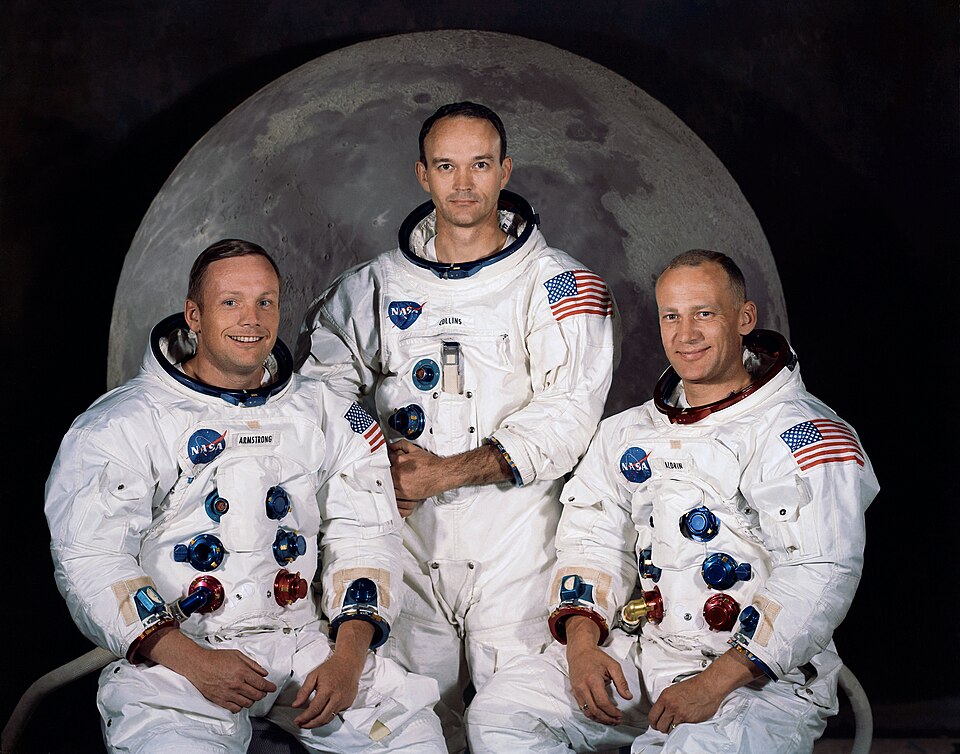
- Crew members: Neil Armstrong[18], Michael Collins[19], Buzz Aldrin[20]
- Location of landing: Pacific Ocean[21]
- Source code repository URL: https://github.com/chrislgarry/Apollo-11[22]
- Described by source: The Star Trek Encyclopedia[23]
- Issue tracker URL: https://github.com/chrislgarry/Apollo-11/issues[24]
- Orbits completed: 30[25]
- Start point: Kennedy Space Center Launch Complex 39A[26]
- Official name: Apollo 11[27]
- Vessel: Apollo 11 Command and Service Module[28], Eagle[29]
- Different from: Apollo 11 Cave[30]
- Orbital inclination: 1.25 degree[31]
- Duration: 703,115 seconds[32]
Body
Outcome and Impact
Things named for Apollo 11 include Prix Tour-Apollo Award[33], a literary award[34], in France[35], founded in 1972[36].
Why It Matters
Apollo 11 has Wikipedia articles in 30 language editions, a strong signal of global cultural recognition.[37] It is known by 63 alternative names across languages and contexts.[38]
Entities named for it include Prix Tour-Apollo Award[33], a literary award[34], in France[35], founded in 1972[36].