
Alphonse de Lamartine
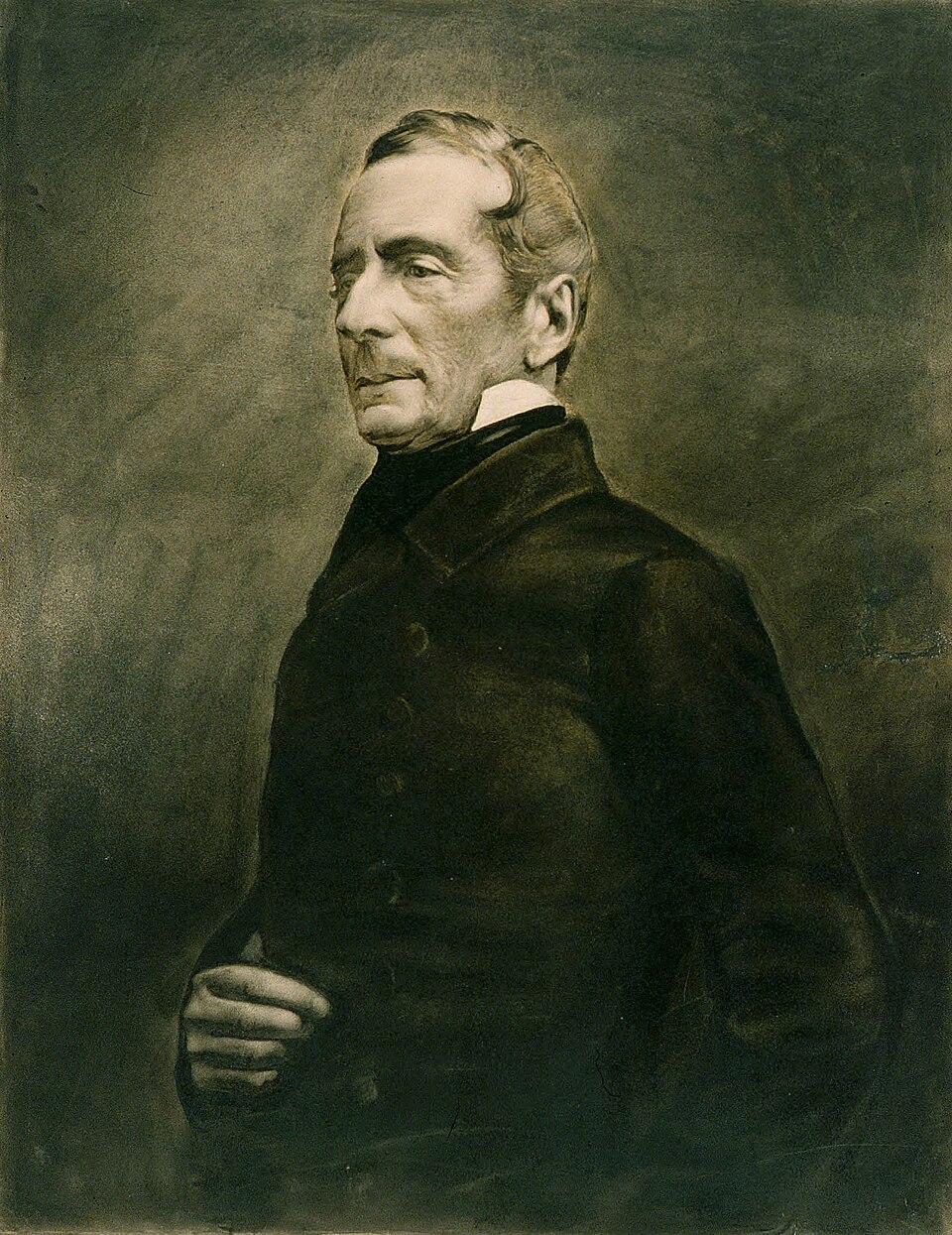
0 sources
Alphonse de Lamartine was born on October 21, 1790, in Mâcon.[1][2][3][4][5][6][7][8][9][10] He held citizenship of France.[10] His occupations included politician, poet, diplomat, writer, historian, and autobiographer.[2][7][11][8][12] He was associated with Romanticism.
His genres included poetry.[10] Notable works include Graziella, Voyage en Orient, Poetical Meditations, The Death of Socrates, Harmonies poetiques et religieuses, and Le Vallon.[13] His awards include Knight Commander of the Order of Saint Joseph and Knight of the Legion of Honour.[14]
He held seat 7 of the Académie française from 1829 to 1869.[15] He served as a member of the French National Assembly in 1833–1837, 1837–1848, and 1848–1849.[15] He was a member of the Académie Française and Académie de Mâcon.[15][16]
His religion was Catholicism.[17] His children were Alphonse de Lamartine and Julia de Lamartine.[7] He died on February 28, 1869, in Paris.[2][3][5][6][7][8][10][9][18][11]
Alphonse de Lamartine
Summary
Alphonse de Lamartine is a human[1]. His place of birth was Mâcon[2]. He was born on October 21, 1790[3]. He passed away in Paris[4]. He died on February 28, 1869[5]. He worked as a politician[6], poet[7], diplomat[8], writer[9], and historian[10]. He ranks in the top 0.71% of human entities by monthly Wikipedia readership (1,686 views/month, #7,086 of 1,000,298).[11]
Key Facts
- Alphonse de Lamartine was born in Mâcon[2].
- Alphonse de Lamartine passed away in Paris[4].
- Alphonse de Lamartine died in Q2874197[12].
- Alphonse de Lamartine was born on October 21, 1790[3].
- Alphonse de Lamartine died on February 28, 1869[5].
- Alphonse de Lamartine died on March 1, 1869[13].
- Alphonse de Lamartine is buried at Saint-Point[14].
- Burial took place at Q110356676[15].
- Alphonse de Lamartine's mother was Alix de Lamartine[16].
- Among Alphonse de Lamartine's spouses was Elisa de Lamartine[17].
- A child of Alphonse de Lamartine was Alphonse de Lamartine[18].
- A child of Alphonse de Lamartine was Julia de Lamartine[19].
- Alphonse de Lamartine held citizenship in France[20].
- French was Alphonse de Lamartine's native language[21].
- Alphonse de Lamartine is identified as part of the French ethnic group[22].
- Alphonse de Lamartine's professions included politician[6].
- Alphonse de Lamartine's professions included poet[7].
- Alphonse de Lamartine's professions included diplomat[8].
- Alphonse de Lamartine worked as a writer[9].
- Alphonse de Lamartine's professions included historian[10].
- Alphonse de Lamartine worked as an autobiographer[23].
- Alphonse de Lamartine held the position of member of the French National Assembly[24].
- Alphonse de Lamartine held the position of Q61315181[25].
- Alphonse de Lamartine held the position of member of the Académie française[26].
- Alphonse de Lamartine held the position of member of the French National Assembly[27].
Product Details
The following facts are restated verbatim from public-domain and CC0 open-data sources — every line is independently verifiable against the named source's catalog.
MusicBrainz — CC0 open music encyclopedia
-
Type: Person[28]
-
Country: FR[29]
-
Began / founded: 1790-10-21[30]
-
Ended / dissolved: 1869-02-28[31]
-
MusicBrainz ID: c699b762-8609-4775-99dd-ecaf85bb5966[32]
Body
Origins and Family
Alphonse de Lamartine was born in Mâcon[2]. He was born on October 21, 1790[3]. His mother was Alix de Lamartine[16]. He is identified as part of the French ethnic group[22]. French was his native language[21].
Career and Affiliations
Recorded occupations include politician[6], poet[7], diplomat[8], writer[9], historian[10], and autobiographer[23]. Positions held include member of the French National Assembly[24], a position[33], in France[34], founded in 1789[35]; Q61315181[25]; member of the Académie française[26]; and Q123222122[36].
Works and Contributions
Notable works include Graziella[37], a literary work[38]; Q19222995[39], a version, edition or translation[40]; Voyage en Orient[41], a literary work[42]; Q16642011[43], a literary work[44]; Poetical Meditations[45], a literary work[46]; and The Death of Socrates[47], a literary work[48]. Things named for Alphonse de Lamartine include Alphonse-de-Lamartine High School[49], a Q12297762[50], in Bulgaria[51], founded in 1961[52] and Lamartine House[53], a museum[54], in Bulgaria[55], founded in 1830[56].
Recognition
Awards received include Knight Commander of the Order of Saint Joseph[57] and Knight of the Legion of Honour[58], a Q1499804[59], in France[60].
Personal Life
Among Alphonse de Lamartine's spouses was Elisa de Lamartine[17]. Children include he[18] and Julia de Lamartine[19]. His religion is recorded as Catholicism[61].
Death and Burial
Recorded date of death include February 28, 1869[5] and March 1, 1869[13]. Recorded place of death include Paris[4], a commune of France[62], in France[63], founded in -0300[64] and Q2874197[12], a road[65], in France[66]. Recorded place of burial include Saint-Point[14] and Q110356676[15].
Why It Matters
Alphonse de Lamartine ranks in the top 0.71% of human entities by monthly Wikipedia readership (1,686 views/month, #7,086 of 1,000,298).[11] He has Wikipedia articles in 28 language editions, a strong signal of global cultural recognition.[67] He is known by 67 alternative names across languages and contexts.[68]
He has been cited as an influence by Narcís Oller[69], a writer[70], 1846–1930[71], of Spain[72]; Grigore Alexandrescu[73], a poet[74], 1810–1885[75], of Romania[76]; and Tovmas Terzian[77], a poet[78], 1840–1909[79], of Ottoman Empire[80].
Works attributed to him include Le Lac[81], a literary work[82], in France[83] and Graziella[84], a literary work[85]. Entities named for him include Alphonse-de-Lamartine High School[49], a Q12297762[50], in Bulgaria[51], founded in 1961[52] and Lamartine House[53], a museum[54], in Bulgaria[55], founded in 1830[56].
FAQs
Where was Alphonse de Lamartine born?
Alphonse de Lamartine's place of birth was Mâcon[2].
Where did Alphonse de Lamartine die?
Alphonse de Lamartine died in Paris[4].
Who were Alphonse de Lamartine's parents?
Alphonse de Lamartine's mother was Alix de Lamartine[16].
Who was Alphonse de Lamartine married to?
Alphonse de Lamartine's spouses include Elisa de Lamartine[17].
What did Alphonse de Lamartine do for work?
Alphonse de Lamartine worked as politician[6], poet[7], diplomat[8], writer[9], and historian[10].
What awards did Alphonse de Lamartine receive?
Honors received include Knight Commander of the Order of Saint Joseph[57] and Knight of the Legion of Honour[58].
Who did Alphonse de Lamartine influence?
Alphonse de Lamartine has been cited as an influence by Narcís Oller[69], Grigore Alexandrescu[73], and Tovmas Terzian[77].